Arno Anna, Barret J P, Harrison Rachael A, Jeschke Marc G
Plastic Surgery Department and Burn Unit, Vall d'Hebron University Hospital, Autonomous University of Barcelona, Spain.
J Burn Care Res. 2012 Sep-Oct;33(5):561-76. doi: 10.1097/BCR.0b013e318247eb06.
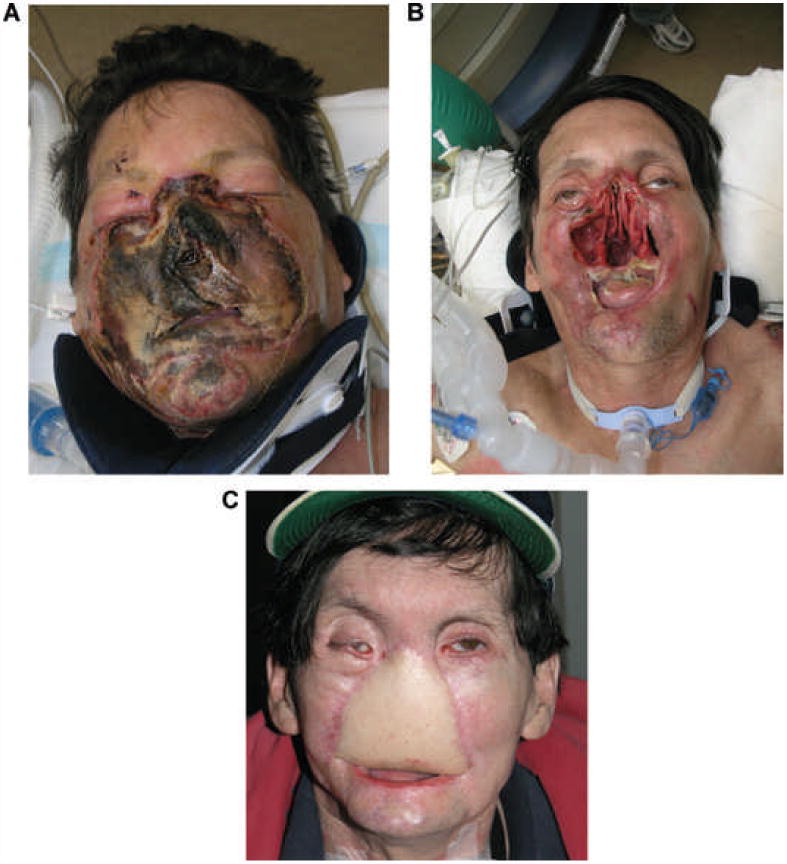
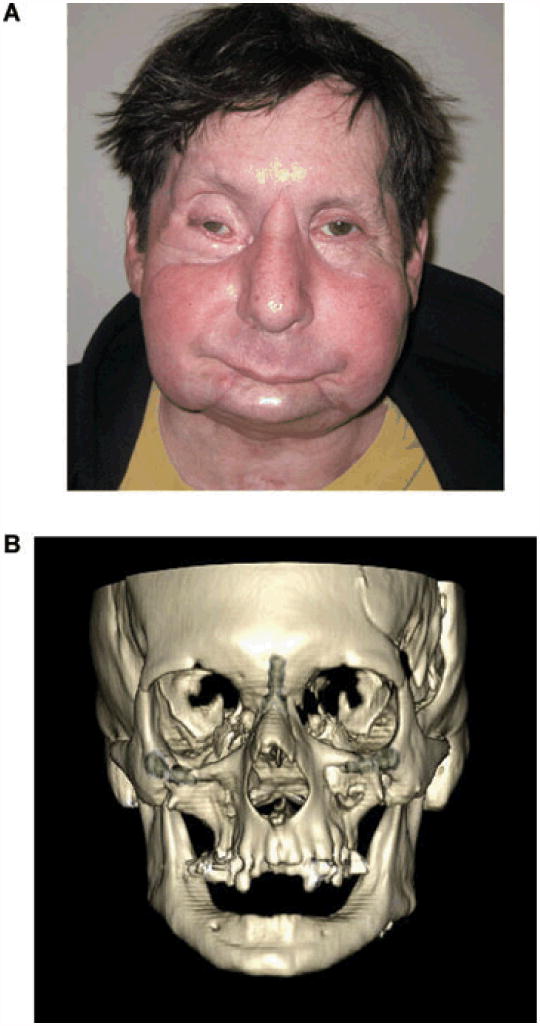
Burns may represent one of the main indications for face allotransplantation. Severely disfigured faces featuring a devastating appearance and great functional impairments are not only seen as burn sequelae but also occur as a result of other traumatic injuries, oncological surgical resections, benign tumors (eg, neurofibromatosis), and major congenital malformations. To date, 20 human face composite tissue allotransplants have been performed with success. Despite the initial scepticism about its applicability, due mainly to ethical and technical reasons, the previous worldwide cases and their associated positive outcomes, including acceptable immunosuppressive regimens, excellent aesthetic and functional results, and good psychological acceptance by the recipient, enable the conclusion that face composite tissue allotransplantation has become another therapeutic strategy in the reconstructive surgical armamentarium, which bears special consideration when dealing with severely disfigured burned patients. The aim of this review is to describe the basics of face composite tissue allotransplantation and give an overview of some of the cases performed until now, with special attention paid to debating the pros and cons of its applicability in burn patients.
烧伤可能是面部同种异体移植的主要指征之一。严重毁容的面部不仅表现为外观极具破坏性,而且功能严重受损,这不仅可见于烧伤后遗症,也可由其他创伤性损伤、肿瘤外科手术切除、良性肿瘤(如神经纤维瘤病)以及严重先天性畸形导致。迄今为止,已成功进行了20例人类面部复合组织同种异体移植。尽管最初由于伦理和技术原因对其适用性存在怀疑,但先前全球范围内的病例及其相关的积极结果,包括可接受的免疫抑制方案、出色的美学和功能效果以及受者良好的心理接受度,使得人们得出结论:面部复合组织同种异体移植已成为重建外科武器库中的另一种治疗策略,在处理严重毁容的烧伤患者时值得特别考虑。本综述的目的是描述面部复合组织同种异体移植的基础知识,并概述迄今为止所进行的一些病例,特别关注讨论其在烧伤患者中应用的利弊。