Department of Biology, University of Hawaii at Manoa, Honolulu, Hawaii, United States of America.
PLoS One. 2012;7(1):e29834. doi: 10.1371/journal.pone.0029834. Epub 2012 Jan 18.
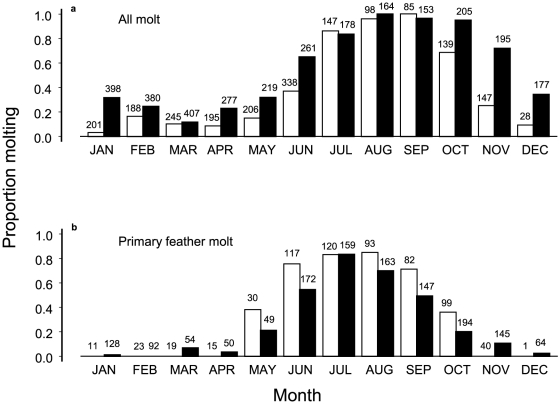
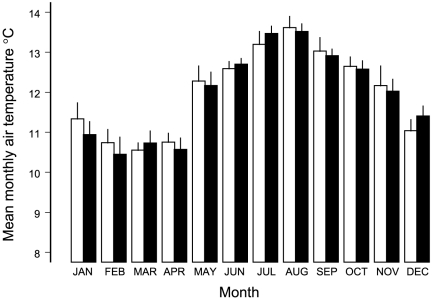
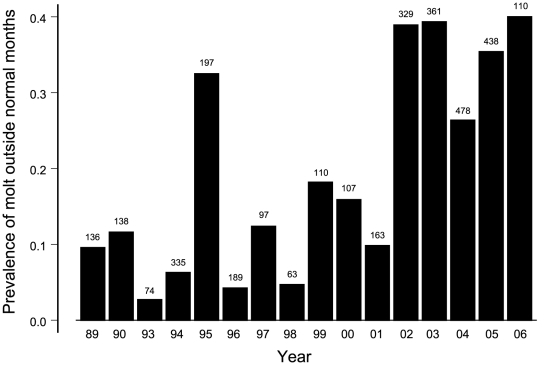
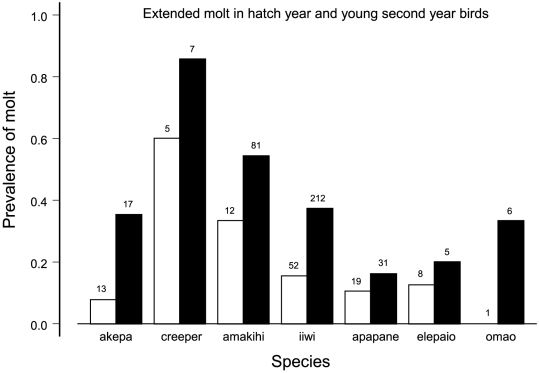
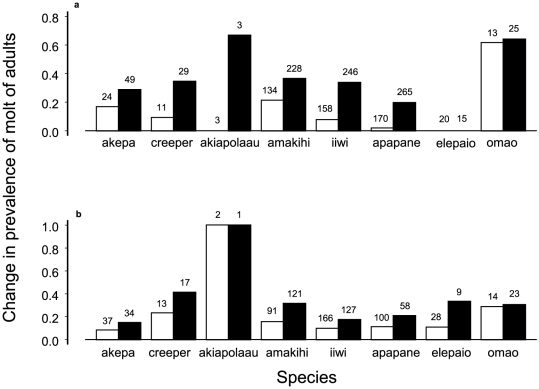
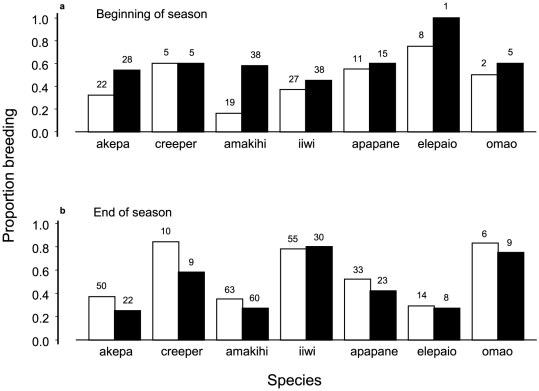
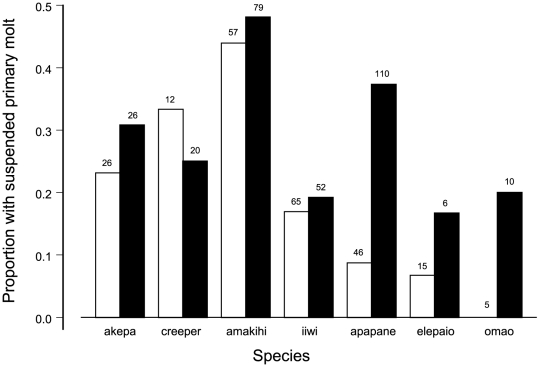
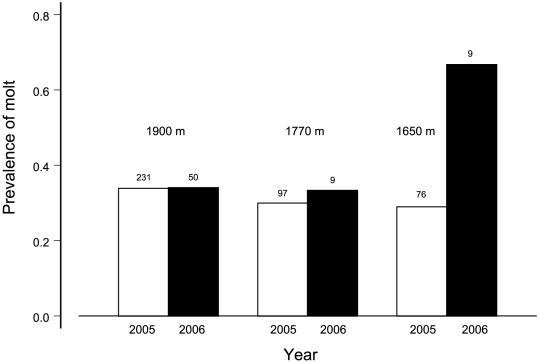
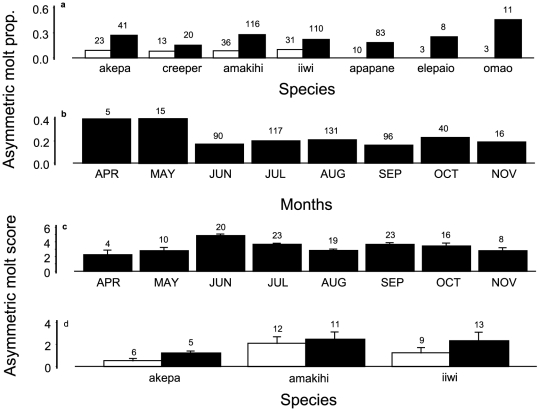
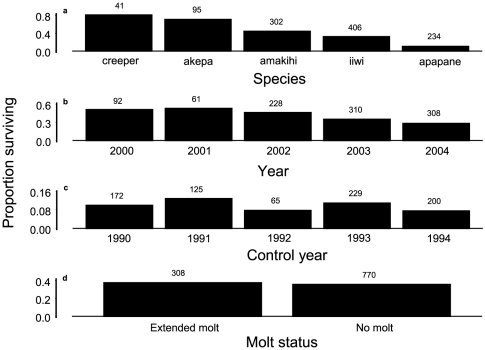
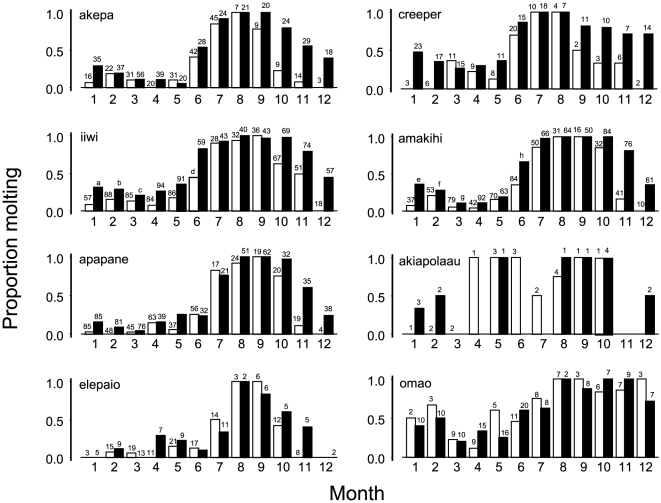
Food limitation greatly affects bird breeding performance, but the effect of nutritive stress on molt has barely been investigated outside of laboratory settings. Here we show changes in molting patterns for an entire native Hawaiian bird community at 1650-1900 m elevation on the Island of Hawaii between 1989-1999 and 2000-2006, associated with severe food limitation throughout the year beginning in 2000. Young birds and adults of all species took longer to complete their molt, including months never or rarely used during the 1989-1999 decade. These included the cold winter months and even the early months of the following breeding season. In addition, more adults of most species initiated their molt one to two months earlier, during the breeding season. Suspended molt, indicated by birds temporarily not molting primary flight feathers during the months of peak primary molt, increased in prevalence. Food limitation reached the point where individuals of all species had asymmetric molt, with different primary flight feathers molted on each wing. These multiple changes in molt, unprecedented in birds, had survival consequences. Adult birds captured during January to March, 2000-2004, had lower survival in four of five species with little effect of extended molt. Extended molt may be adaptive for a nutrient stressed bird to survive warm temperatures but not cool winter temperatures that may obliterate the energy savings. The changing molt of Hawaiian birds has many implications for conservation and for understanding life history aspects of molt of tropical birds.
食物限制极大地影响鸟类的繁殖表现,但营养压力对换羽的影响在实验室以外的环境中几乎没有被研究过。在这里,我们展示了夏威夷大岛海拔 1650-1900 米处的整个本地夏威夷鸟类群落的换羽模式变化,这些变化与 2000 年开始的全年严重食物限制有关。在 2000-2006 年期间,所有物种的幼鸟和成年鸟完成换羽的时间都延长了,包括在 1989-1999 十年间从未或很少使用的月份。这些月份包括寒冷的冬季月份,甚至是下一个繁殖季节的早期月份。此外,大多数物种的成年个体更早地开始换羽,即在繁殖季节提前一到两个月。暂停换羽,表现为鸟类在主要换羽期间的几个月中暂时不换初级飞羽,其发生率增加。食物限制达到了所有物种的个体都出现不对称换羽的程度,每只翅膀上的不同初级飞羽都在换羽。这些在鸟类中前所未有的换羽多重变化产生了生存后果。在 2000 年至 2004 年 1 月至 3 月期间捕获的成年鸟类,在五个物种中有四个物种的存活率较低,而延长换羽的影响很小。对于营养压力下的鸟类来说,延长换羽可能是一种适应性的生存策略,可以适应温暖的温度,但不能适应寒冷的冬季温度,因为寒冷的冬季温度可能会消耗掉节省的能量。夏威夷鸟类的换羽变化对保护和理解热带鸟类换羽的生活史方面有很多影响。