Helmholtz Group for Cell Biology, German Cancer Research Center, Heidelberg, Germany.
Cell Tissue Res. 2012 May;348(2):281-94. doi: 10.1007/s00441-011-1314-3. Epub 2012 Jan 28.
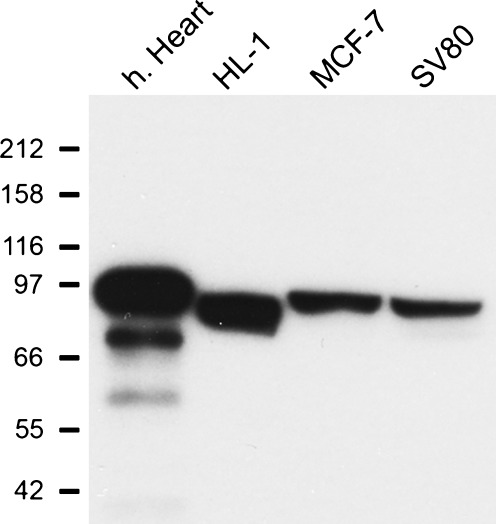
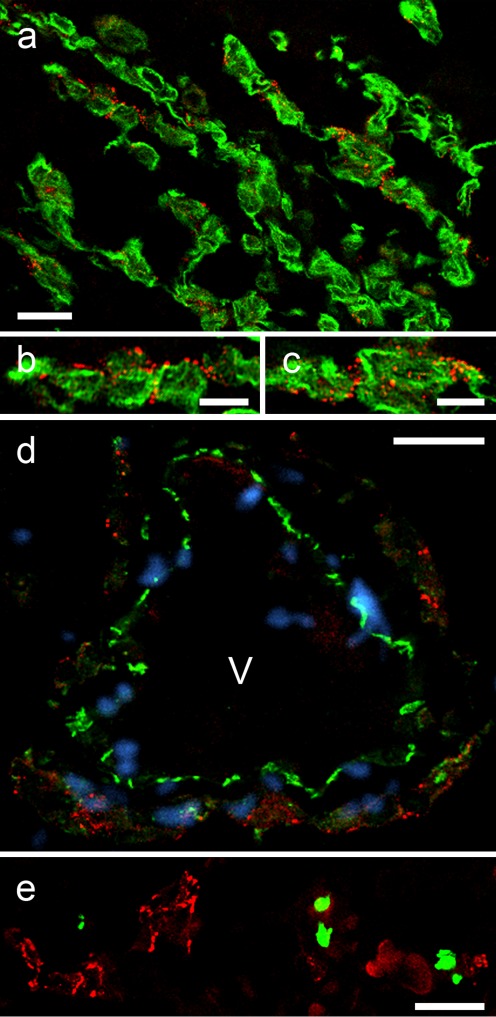
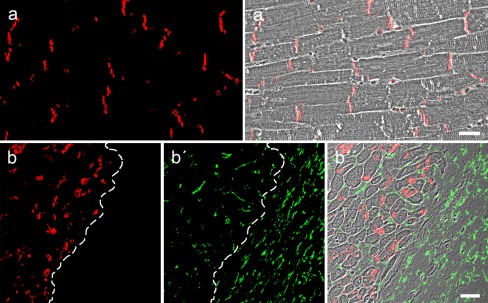
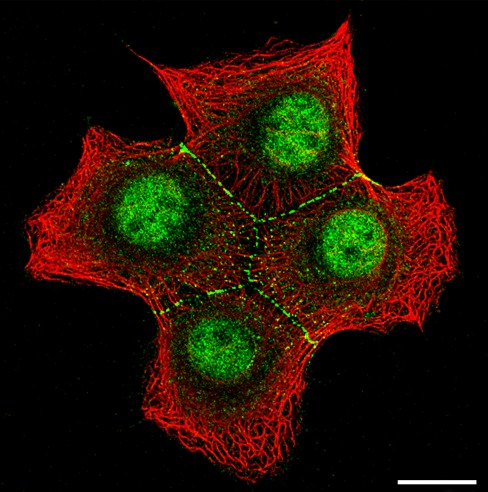
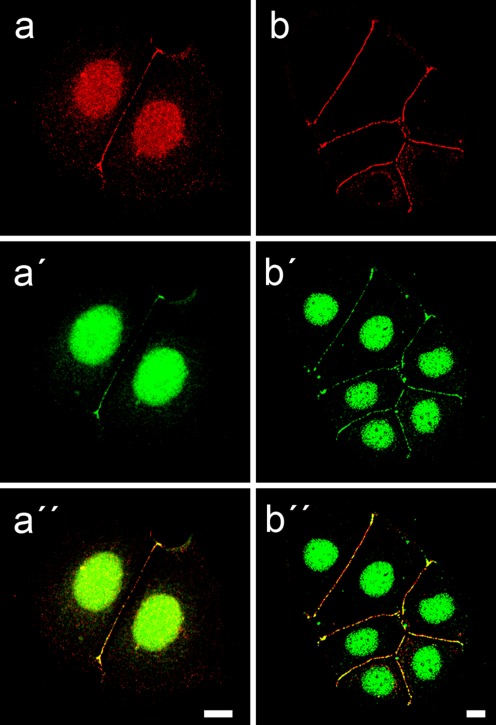
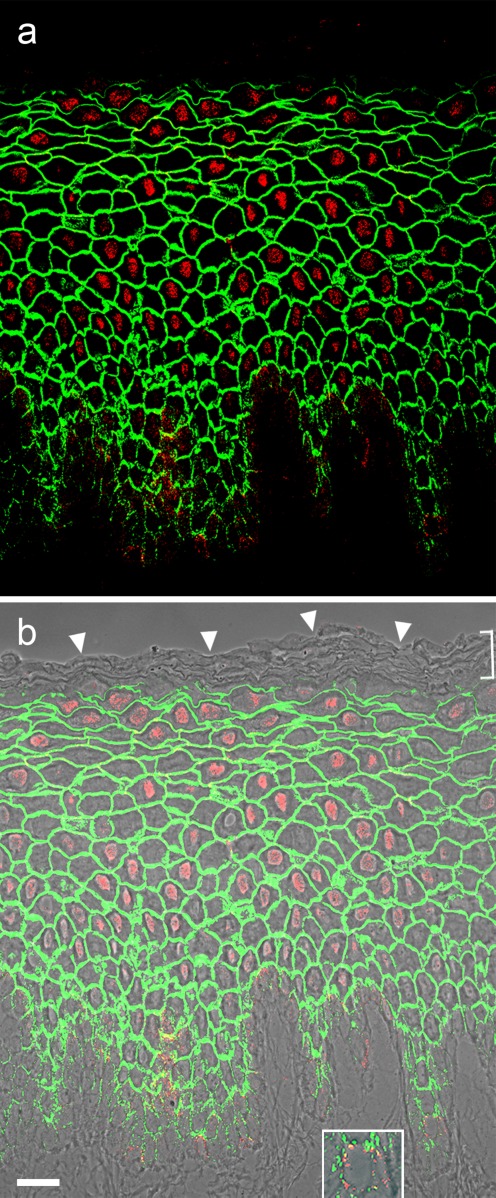
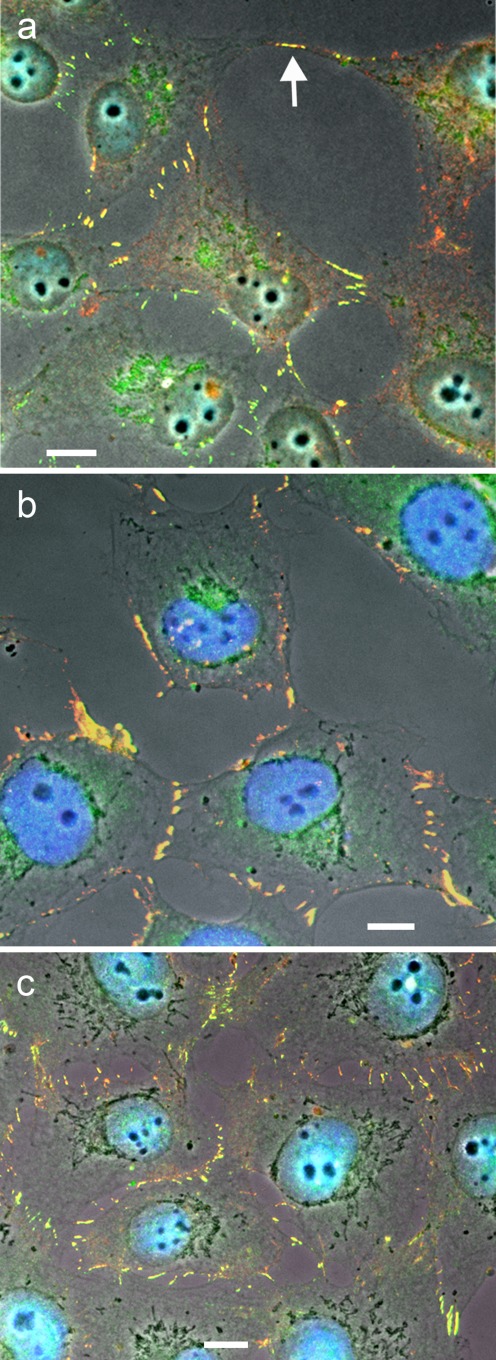
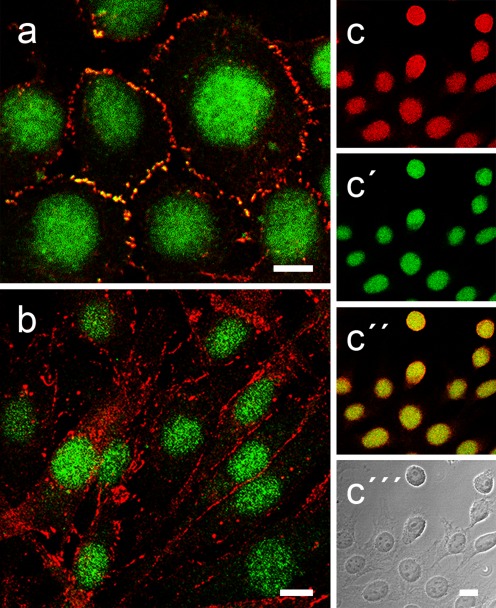
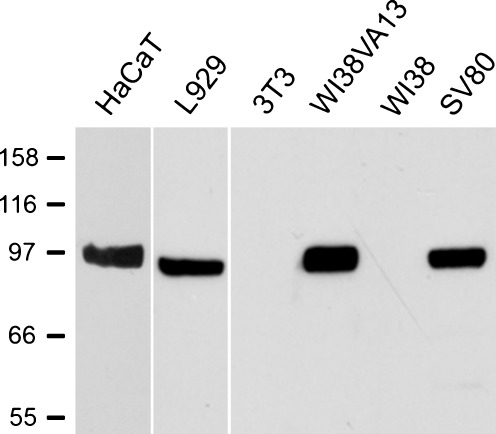
Within the characteristic ensemble of desmosomal plaque proteins, the armadillo protein plakophilin-2 (Pkp2) is known as a particularly important regulatory component in the cytoplasmic plaques of various other cell-cell junctions, such as the composite junctions (areae compositae) of the myocardiac intercalated disks and in the variously-sized and -shaped complex junctions of permanent cell culture lines derived therefrom. In addition, Pkp2 has been detected in certain protein complexes in the nucleoplasm of diverse kinds of cells. Using a novel set of highly sensitive and specific antibodies, both kinds of Pkp2, the junctional plaque-bound and the nuclear ones, can also be localized to the cytoplasmic plaques of diverse non-desmosomal cell-cell junction structures. These are not only the puncta adhaerentia and the fasciae adhaerentes connecting various types of highly proliferative non-epithelial cells growing in culture but also some very proliferative states of cardiac interstitial cells and cardiac myxomata, including tumors growing in situ as well as fetal stages of heart development and cultures of valvular interstitial cells. Possible functions and assembly mechanisms of such Pkp2-positive cell-cell junctions as well as medical consequences are discussed.
在桥粒斑蛋白的特征组合中,板层蛋白 plakophilin-2(Pkp2)是各种其他细胞-细胞连接的细胞质斑中的一个特别重要的调节成分,例如心肌闰盘的复合连接(复合斑)和从中衍生的各种大小和形状的永久性细胞培养系的复杂连接。此外,Pkp2 已在各种细胞的核质中某些蛋白质复合物中被检测到。使用一组新的高度敏感和特异性抗体,既可以将结合在连接斑上的 Pkp2 又可以将核内的 Pkp2 定位到各种非桥粒细胞-细胞连接结构的细胞质斑上。这些不仅是各种高增殖性非上皮细胞在培养中生长的粘着斑和粘着带,而且是一些增殖性很强的心肌间质细胞和心脏粘液瘤,包括原位生长的肿瘤以及心脏发育的胎儿阶段和瓣膜间质细胞的培养。讨论了这种 Pkp2 阳性细胞-细胞连接的可能功能和组装机制以及医学后果。