Department of Pathology and Laboratory Medicine, University of Rochester Medical Center, Rochester, New York 14642, USA.
Stem Cells. 2012 Apr;30(4):709-18. doi: 10.1002/stem.1050.
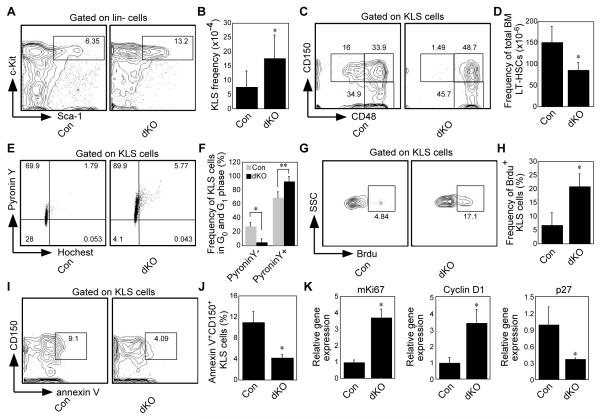
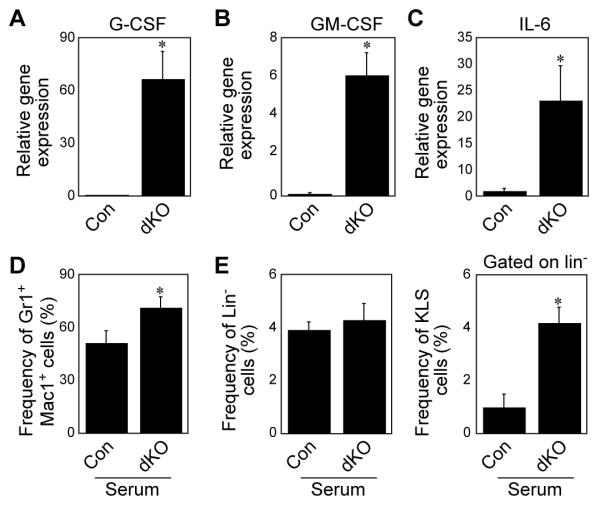
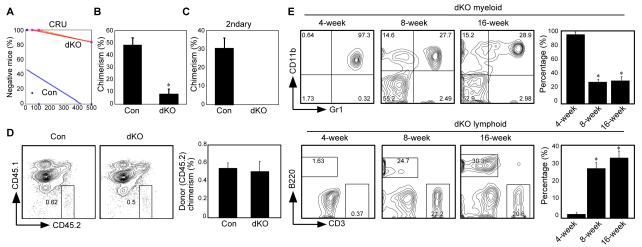
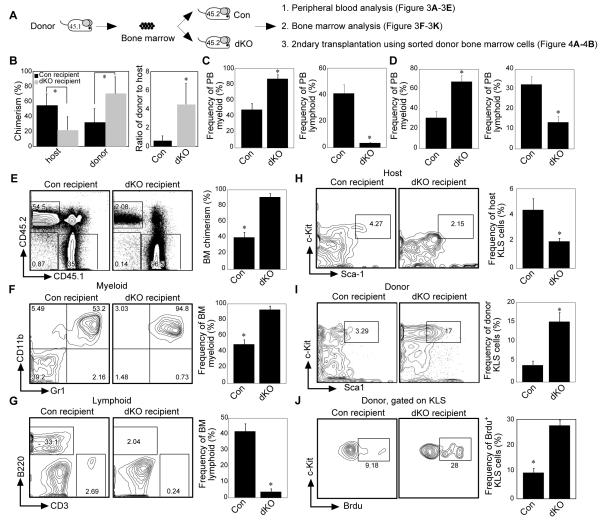
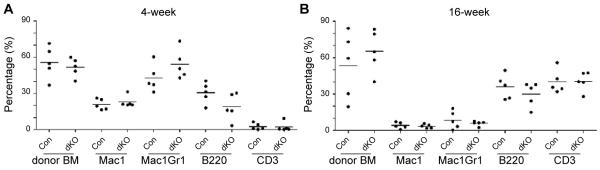
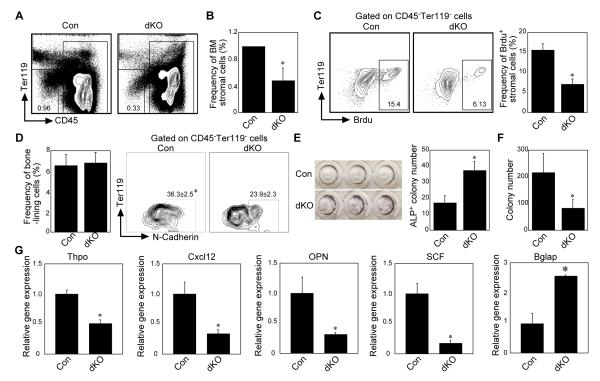
RelB and nuclear factor κB (NF-κB2) are the main effectors of NF-κB noncanonical signaling and play critical roles in many physiological processes. However, their role in hematopoietic stem/progenitor cell (HSPC) maintenance has not been characterized. To investigate this, we generated RelB/NF-κB2 double-knockout (dKO) mice and found that dKO HSPCs have profoundly impaired engraftment and self-renewal activity after transplantation into wild-type recipients. Transplantation of wild-type bone marrow cells into dKO mice to assess the role of the dKO microenvironment showed that wild-type HSPCs cycled more rapidly, were more abundant, and had developmental aberrancies: increased myeloid and decreased lymphoid lineages, similar to dKO HSPCs. Notably, when these wild-type cells were returned to normal hosts, these phenotypic changes were reversed, indicating a potent but transient phenotype conferred by the dKO microenvironment. However, dKO bone marrow stromal cell numbers were reduced, and bone-lining niche cells supported less HSPC expansion than controls. Furthermore, increased dKO HSPC proliferation was associated with impaired expression of niche adhesion molecules by bone-lining cells and increased inflammatory cytokine expression by bone marrow cells. Thus, RelB/NF-κB2 signaling positively and intrinsically regulates HSPC self-renewal and maintains stromal/osteoblastic niches and negatively and extrinsically regulates HSPC expansion and lineage commitment through the marrow microenvironment.
RelB 和核因子 κB(NF-κB2)是 NF-κB 非经典信号的主要效应子,在许多生理过程中发挥关键作用。然而,它们在造血干细胞/祖细胞(HSPC)维持中的作用尚未得到表征。为了研究这一点,我们生成了 RelB/NF-κB2 双敲除(dKO)小鼠,并发现 dKO HSPC 在移植到野生型受体后,其植入和自我更新活性严重受损。将野生型骨髓细胞移植到 dKO 小鼠中以评估 dKO 微环境的作用表明,野生型 HSPC 更快地循环,更丰富,并且具有发育异常:增加髓系和减少淋巴系,类似于 dKO HSPC。值得注意的是,当这些野生型细胞被返回正常宿主时,这些表型变化被逆转,表明 dKO 微环境赋予了强大但短暂的表型。然而,dKO 骨髓基质细胞数量减少,衬里细胞龛支持的 HSPC 扩增比对照少。此外,dKO HSPC 增殖增加与衬里细胞中龛粘附分子表达受损以及骨髓细胞中炎症细胞因子表达增加有关。因此,RelB/NF-κB2 信号正向且内在地调节 HSPC 自我更新,并维持基质/成骨细胞龛,通过骨髓微环境负向外调节 HSPC 扩增和谱系决定。