School of Nursing, Li Ka Shing Faculty of Medicine, University of Hong Kong, China.
BMJ. 2012 Jan 30;344:e70. doi: 10.1136/bmj.e70.
To systematically evaluate the effects of physical activity in adult patients after completion of main treatment related to cancer.
Meta-analysis of randomised controlled trials with data extraction and quality assessment performed independently by two researchers.
Pubmed, CINAHL, and Google Scholar from the earliest possible year to September 2011. References from meta-analyses and reviews.
Randomised controlled trials that assessed the effects of physical activity in adults who had completed their main cancer treatment, except hormonal treatment.
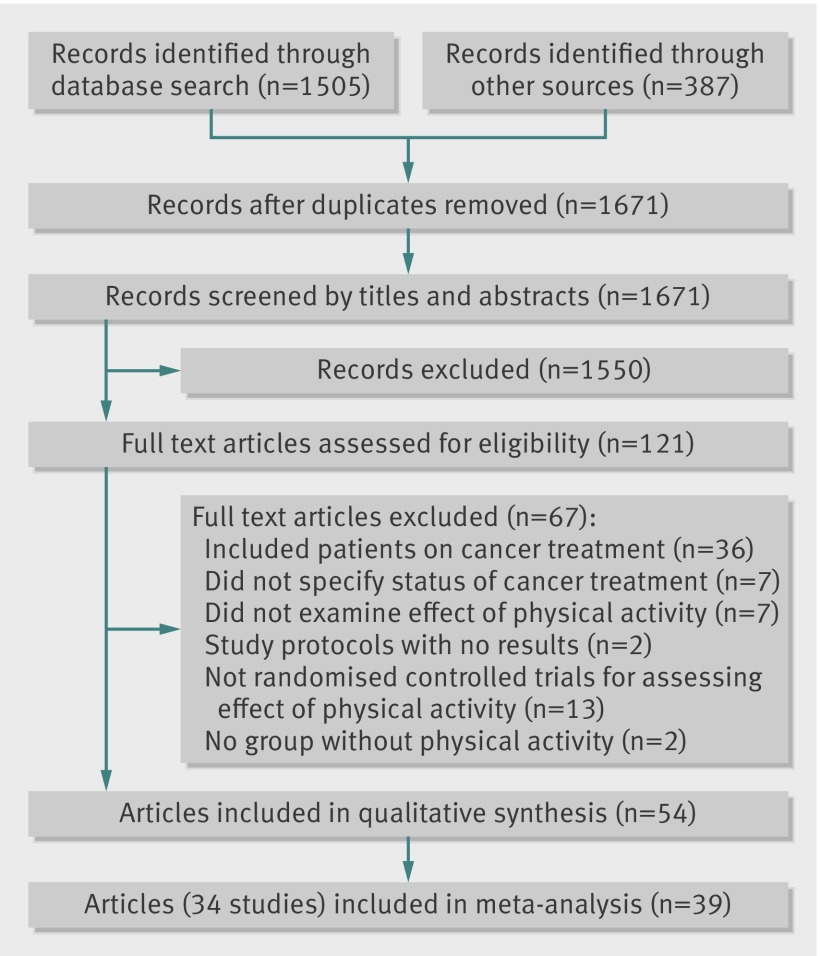
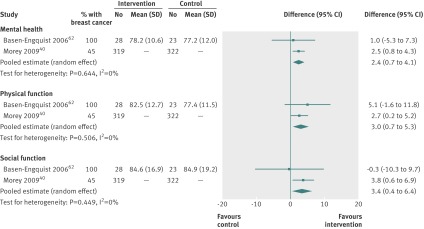
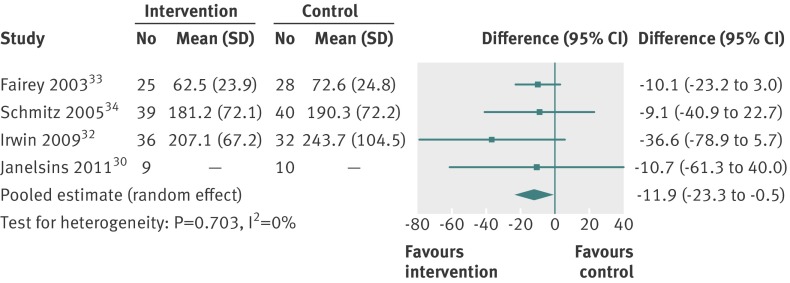
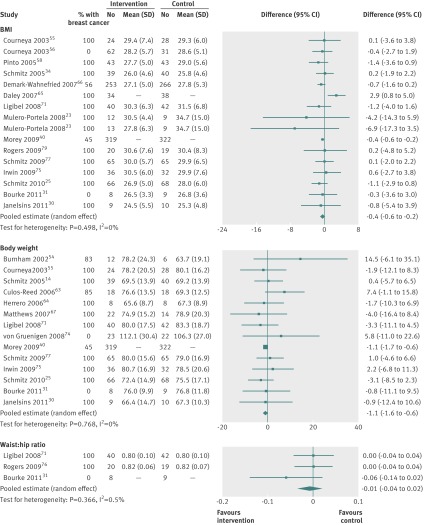
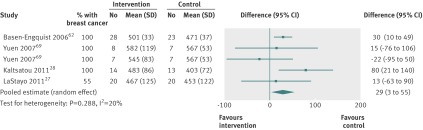
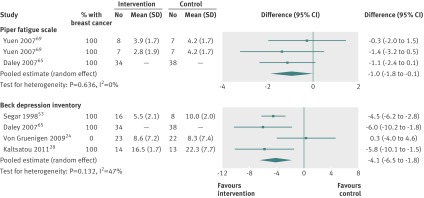
There were 34 randomised controlled trials, of which 22 (65%) focused on patients with breast cancer, and 48 outcomes in our meta-analysis. Twenty two studies assessed aerobic exercise, and four also included resistance or strength training. The median duration of physical activity was 13 weeks (range 3-60 weeks). Most control groups were considered sedentary or were assigned no exercise. Based on studies on patients with breast cancer, physical activity was associated with improvements in insulin-like growth factor-I, bench press, leg press, fatigue, depression, and quality of life. When we combined studies on different types of cancer, we found significant improvements in body mass index (BMI), body weight, peak oxygen consumption, peak power output, distance walked in six minutes, right handgrip strength, and quality of life. Sources of study heterogeneity included age, study quality, study size, and type and duration of physical activity. Publication bias did not alter our conclusions.
Physical activity has positive effects on physiology, body composition, physical functions, psychological outcomes, and quality of life in patients after treatment for breast cancer. When patients with cancer other than breast cancer were also included, physical activity was associated with reduced BMI and body weight, increased peak oxygen consumption and peak power output, and improved quality of life.
系统评价癌症主要治疗完成后成年患者的身体活动效果。
对随机对照试验进行荟萃分析,由两名研究人员独立进行数据提取和质量评估。
Pubmed、CINAHL 和 Google Scholar,最早可追溯至 2011 年 9 月。荟萃分析和综述的参考文献。
评估除激素治疗以外完成主要癌症治疗的成年人身体活动效果的随机对照试验。
共纳入 34 项随机对照试验,其中 22 项(65%)侧重于乳腺癌患者,meta 分析共纳入 48 项结局。22 项研究评估了有氧运动,4 项研究还包括抗阻或力量训练。身体活动的中位持续时间为 13 周(范围 3-60 周)。大多数对照组被认为是久坐不动或未被分配运动。基于乳腺癌患者的研究,身体活动与胰岛素样生长因子-I、卧推、腿举、疲劳、抑郁和生活质量的改善相关。当我们将不同类型癌症的研究结合起来时,我们发现身体质量指数(BMI)、体重、峰值摄氧量、峰值功率输出、六分钟步行距离、右手握力和生活质量均有显著改善。研究异质性的来源包括年龄、研究质量、研究规模以及身体活动的类型和持续时间。发表偏倚并未改变我们的结论。
身体活动对乳腺癌治疗后患者的生理、身体成分、身体功能、心理结局和生活质量有积极影响。当纳入非乳腺癌癌症患者时,身体活动与 BMI 和体重降低、峰值摄氧量和峰值功率输出增加以及生活质量改善相关。