Centre for Health Services and Nursing Research, Katholieke Universiteit Leuven, Kapucijnenvoer 35 box 7001, B-3000 Leuven, Belgium.
Sensors (Basel). 2010;10(3):1652-60. doi: 10.3390/s100301652. Epub 2010 Mar 2.
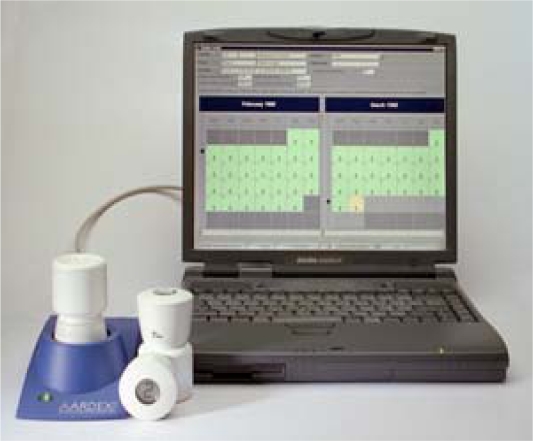
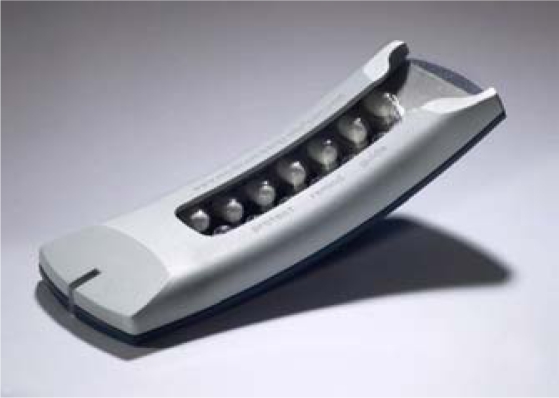
In a prospective descriptive laboratory study, 25 Helping Hand(™) (HH) (10 without and 15 with reminder system) and 50 Medication Event Monitoring Systems (MEMS) (25 with 18-month and 25 with 2-year battery life) were manipulated twice daily following a predefined protocol during 3 consecutive weeks. Accuracy was determined using the fixed manipulation scheme as the reference. Perfect functioning (i.e., total absence of missing registrations and/or overregistrations) was observed in 70% of the HH without, 87% of the HH with reminder, 20% MEMS with 18 months, and 100% with 2-year battery life respectively.
在一项前瞻性描述性实验室研究中,每天两次按照预设方案操纵 25 个 Helping Hand(™)(10 个无提醒系统和 15 个有提醒系统)和 50 个 Medication Event Monitoring Systems(MEMS)(25 个 18 个月电池寿命和 25 个 2 年电池寿命),持续 3 周。使用固定操纵方案作为参考来确定准确性。无提醒系统的 Helping Hand 中,有 70%的操作完全准确(即完全没有缺失记录和/或重复记录),有提醒系统的 Helping Hand 中,有 87%的操作完全准确,18 个月电池寿命的 MEMS 中,有 20%的操作完全准确,2 年电池寿命的 MEMS 中,有 100%的操作完全准确。