Department of Dermatology, University of Alabama at Birmingham, Alabama, United States of America.
PLoS One. 2012;7(1):e31093. doi: 10.1371/journal.pone.0031093. Epub 2012 Jan 27.
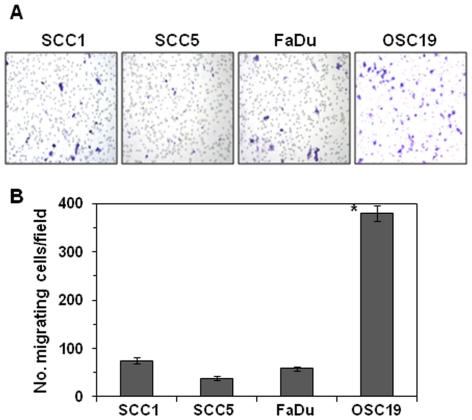
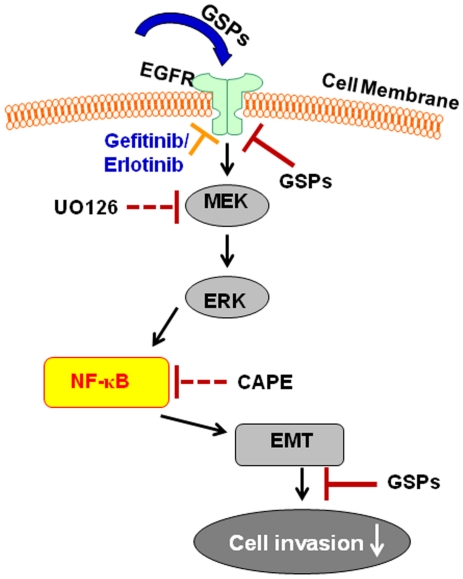
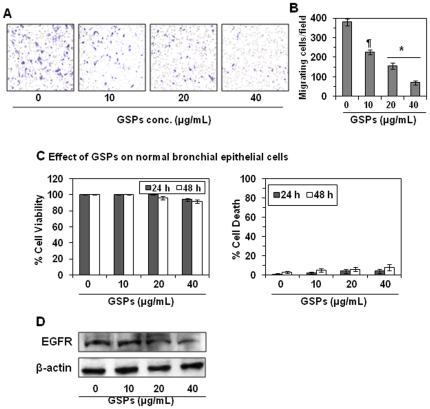
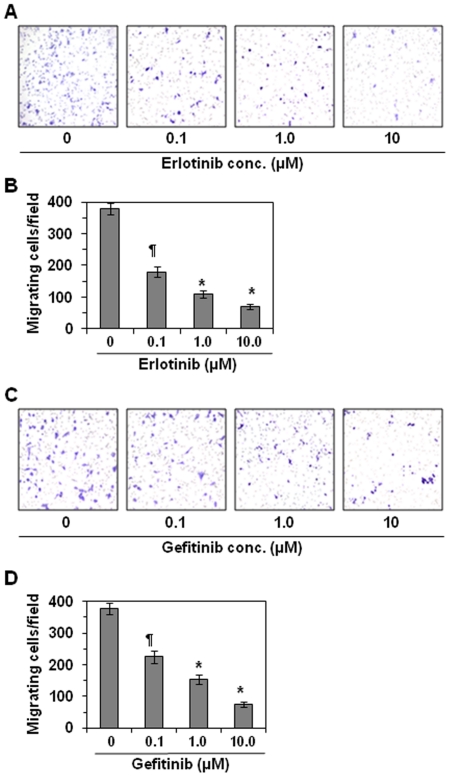
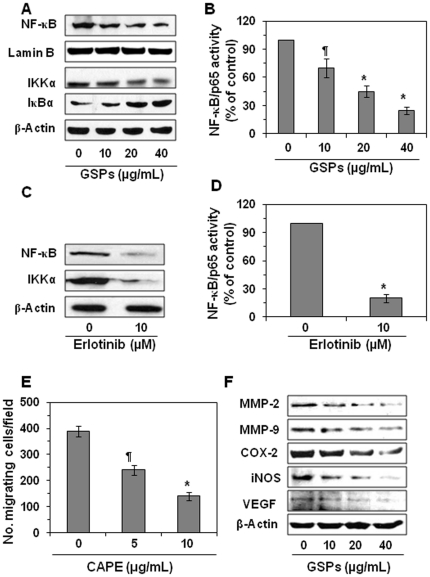
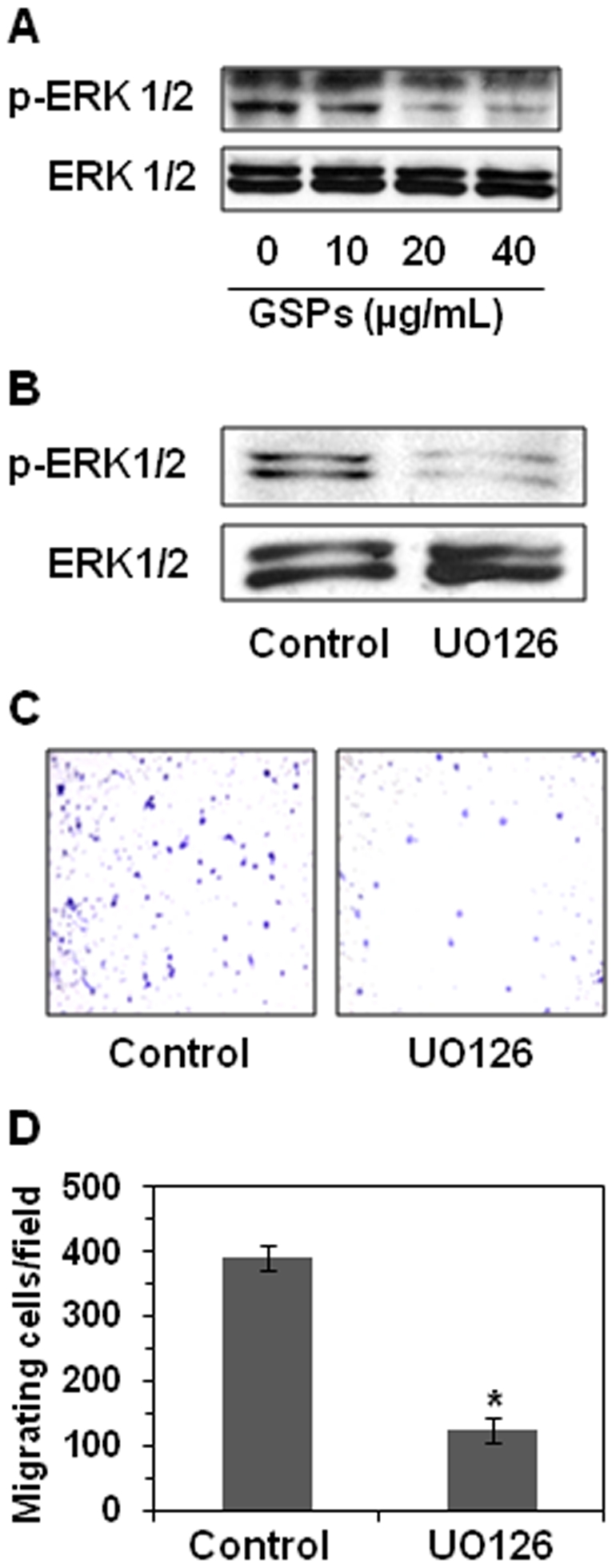
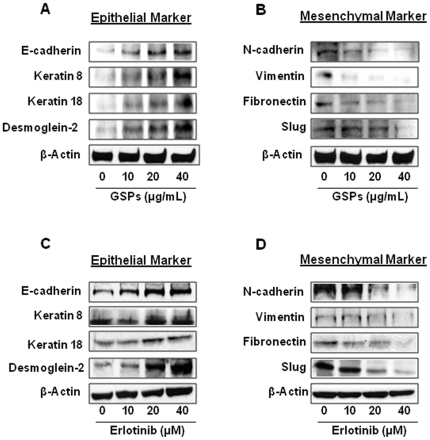
Head and neck squamous cell carcinoma (HNSCC) is responsible for approximately 20,000 deaths per year in the United States. Most of the deaths are due to the metastases. To develop more effective strategies for the prevention of metastasis of HNSCC cells, we have determined the effect of grape seed proanthocyanidins (GSPs) on the invasive potential of HNSCC cell and the mechanisms underlying these effects using OSC19 cells as an in vitro model. Using cell invasion assays, we established that treatment of the OSC19 cells with GSPs resulted in a dose-dependent inhibition of cell invasion. EGFR is over-expressed in 90% of HNSCCs and the EGFR inhibitors, erlotinib and gefitinib, are being explored as therapies for this disease. We found that GSPs treatment reduced the levels of expression of EGFR in the OSC19 cells as well as reducing the activation of NF-κB/p65, a downstream target of EGFR, and the expression of NF-κB-responsive proteins. GSPs treatment also reduced the activity of ERK1/2, an upstream regulator of NF-κB and treatment of the cells with caffeic acid phenethyl ester, an inhibitor of NF-κB, inhibited cell invasion. Overexpression of EGFR and high NF-κB activity play a key role in the epithelial-to-mesenchymal transition, which is of critical importance in the processes underlying metastasis, and we found treatment with GSPs enhanced the levels of epithelial (E-cadherin, cytokeratins and desmoglein-2) and reduced the levels of mesenchymal (vimentin, fibronectin, N-cadherin and Slug) biomarkers in the OSC19 cells. These results indicate that GSPs have the ability to inhibit HNSCC cell invasion, and do so by targeting the expression of EGFR and activation of NF-κB as well as inhibiting the epithelial-to-mesenchymal transition.
头颈部鳞状细胞癌(HNSCC)是美国每年约 20000 人死亡的原因。大多数死亡是由于转移。为了开发更有效的策略来预防 HNSCC 细胞的转移,我们已经确定了葡萄籽原花青素(GSPs)对 HNSCC 细胞侵袭潜力的影响,以及这些影响的机制,使用 OSC19 细胞作为体外模型。通过细胞侵袭实验,我们确定了 GSPs 处理 OSC19 细胞可导致细胞侵袭的剂量依赖性抑制。EGFR 在 90%的 HNSCC 中过表达,EGFR 抑制剂厄洛替尼和吉非替尼被探索作为该疾病的治疗方法。我们发现 GSPs 处理降低了 OSC19 细胞中 EGFR 的表达水平,降低了 EGFR 的下游靶标 NF-κB/p65 的激活以及 NF-κB 反应蛋白的表达。GSPs 处理还降低了 ERK1/2 的活性,ERK1/2 是 NF-κB 的上游调节剂,用咖啡酸苯乙酯处理细胞,一种 NF-κB 的抑制剂,抑制细胞侵袭。EGFR 的过表达和 NF-κB 活性的增加在上皮间质转化中起关键作用,这在转移过程中至关重要,我们发现 GSPs 处理增强了 OSC19 细胞中上皮(E-钙粘蛋白、细胞角蛋白和桥粒蛋白-2)的水平,并降低了间质(波形蛋白、纤连蛋白、N-钙粘蛋白和 Slug)生物标志物的水平。这些结果表明,GSPs 具有抑制 HNSCC 细胞侵袭的能力,其通过靶向 EGFR 的表达和 NF-κB 的激活以及抑制上皮间质转化来实现。