Department of Molecular and Biomolecular Science and Technology (STEMBIO) University of Palermo, Italy.
Cell Div. 2012 Feb 3;7(1):2. doi: 10.1186/1747-1028-7-2.
Aneuploidy has been acknowledged as a major source of genomic instability in cancer, and it is often considered the result of chromosome segregation errors including those caused by defects in genes controlling the mitotic spindle assembly, centrosome duplication and cell-cycle checkpoints. Aneuploidy and chromosomal instability has been also correlated with epigenetic alteration, however the molecular basis of this correlation is poorly understood.
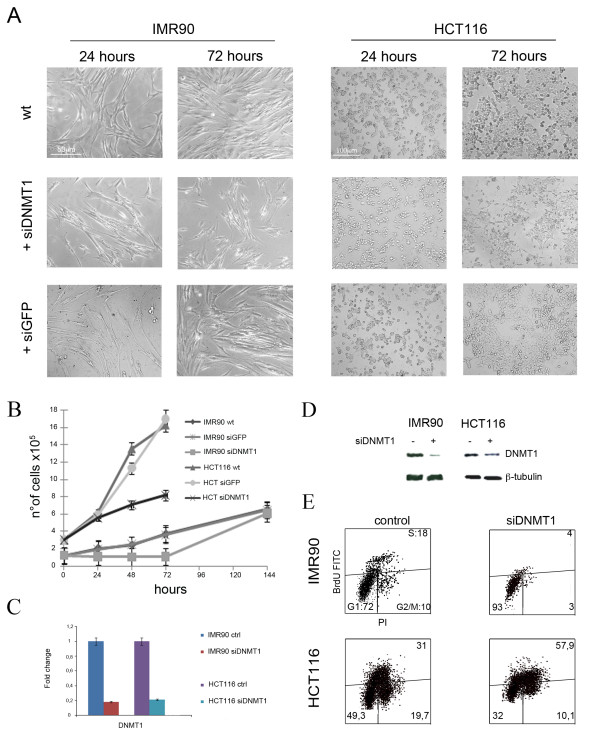
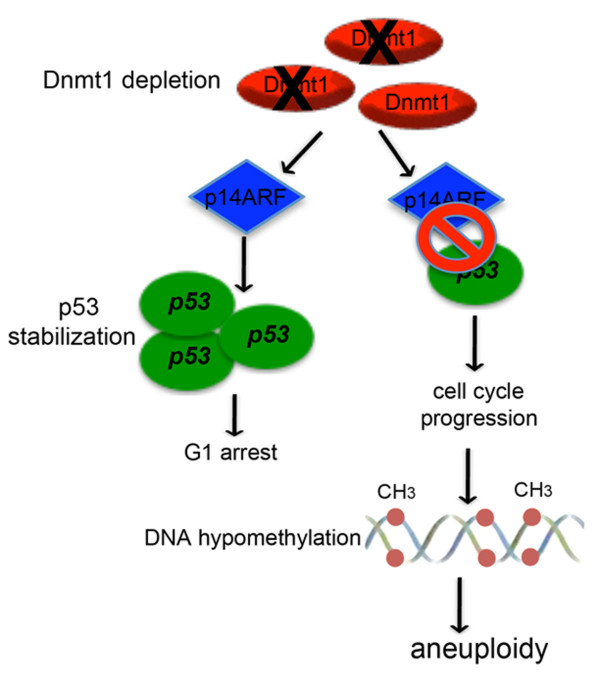
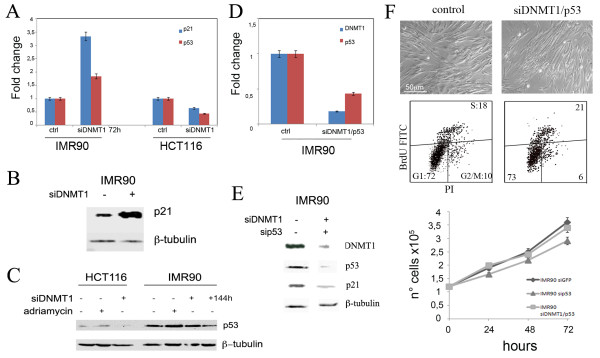
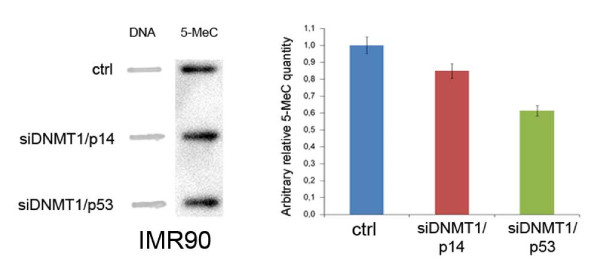
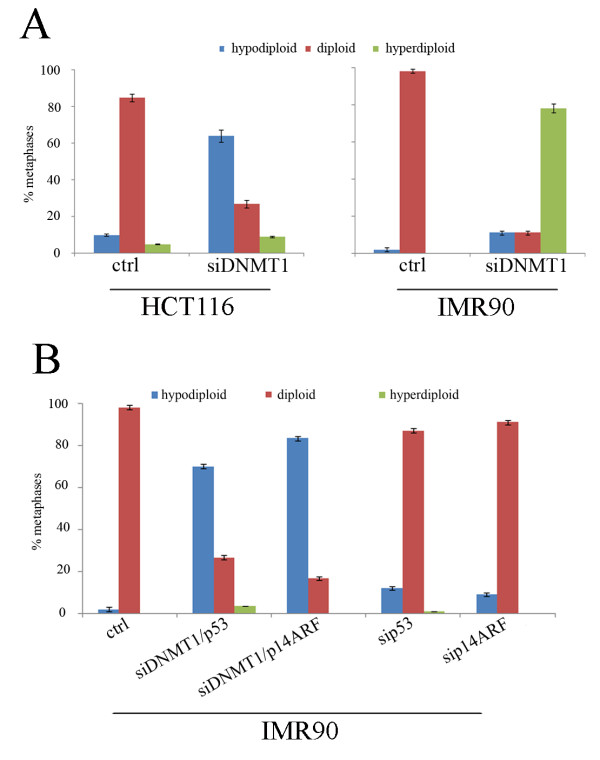
To address the functional connection existing between epigenetic changes and aneuploidy, we used RNA-interference to silence the DNMT1 gene, encoding for a highly conserved member of the DNA methyl-transferases. DNMT1 depletion slowed down proliferation of near-diploid human tumor cells (HCT116) and triggered G1 arrest in primary human fibroblasts (IMR90), by inducing p53 stabilization and, in turn, p21waf1 transactivation. Remarkably, p53 increase was not caused by DNA damage and was not observed after p14-ARF post-transcriptional silencing. Interestingly, DNMT1 silenced cells with p53 or p14-ARF depleted did not arrest in G1 but, instead, underwent DNA hypomethylation and became aneuploid.
Our results suggest that DNMT1 depletion triggers a p14ARF/p53 dependent cell cycle arrest to counteract the aneuploidy induced by changes in DNA methylation.
非整倍性已被认为是癌症中基因组不稳定性的主要来源,它通常被认为是染色体分离错误的结果,包括那些由控制有丝分裂纺锤体组装、中心体复制和细胞周期检查点的基因缺陷引起的错误。非整倍体和染色体不稳定性也与表观遗传改变有关,但这种相关性的分子基础还了解甚少。
为了解决表观遗传变化与非整倍体之间存在的功能联系,我们使用 RNA 干扰沉默编码高度保守的 DNA 甲基转移酶的 DNMT1 基因。DNMT1 耗竭通过诱导 p53 稳定,进而激活 p21waf1 反式激活,从而减缓近二倍体人类肿瘤细胞(HCT116)的增殖并引发人原代成纤维细胞(IMR90)的 G1 期阻滞。值得注意的是,p53 的增加不是由 DNA 损伤引起的,也不是在 p14-ARF 转录后沉默后观察到的。有趣的是,沉默 DNMT1 的细胞在耗尽 p53 或 p14-ARF 后不会在 G1 期停滞,而是经历 DNA 低甲基化并成为非整倍体。
我们的结果表明,DNMT1 耗竭触发 p14ARF/p53 依赖性细胞周期阻滞,以抵消由 DNA 甲基化变化引起的非整倍体。