Department of Pharmaceutical Sciences, University of Colorado Denver , Aurora, Colorado, United States.
J Proteome Res. 2012 Mar 2;11(3):1633-43. doi: 10.1021/pr2008384. Epub 2012 Feb 21.
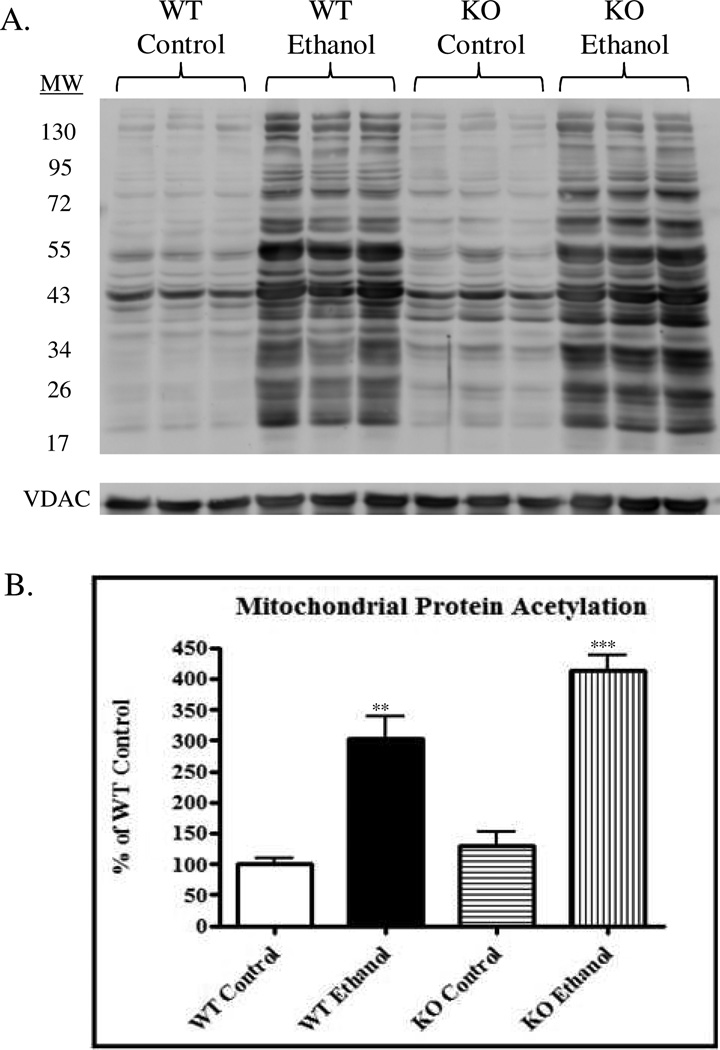
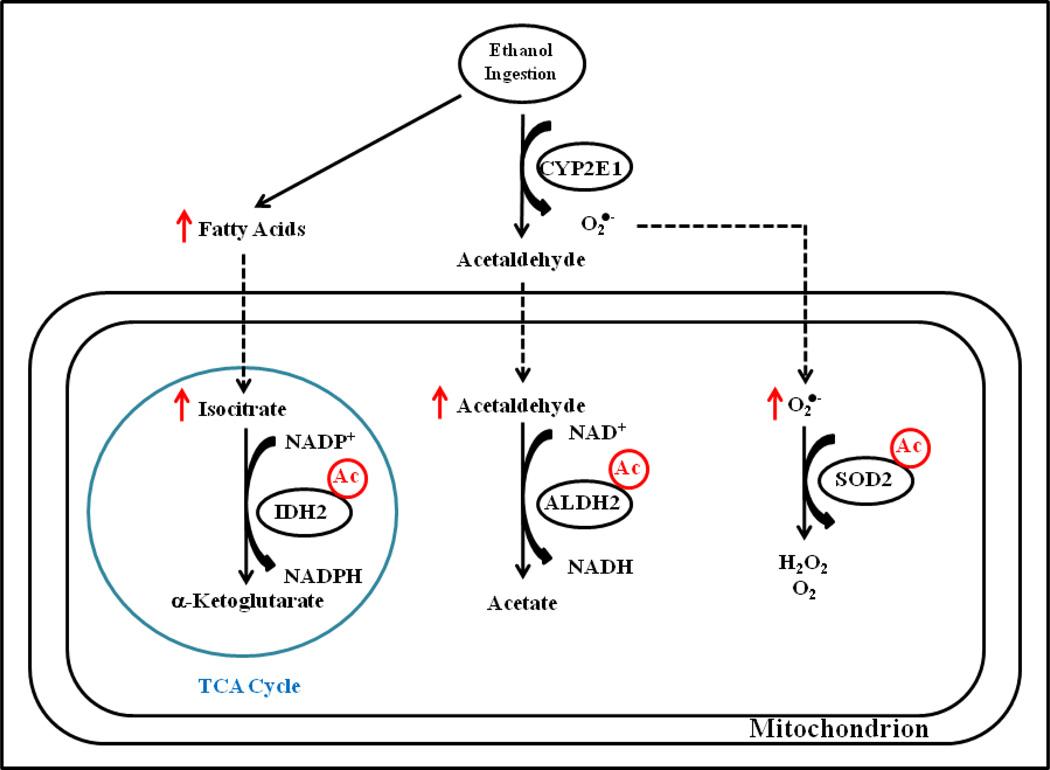
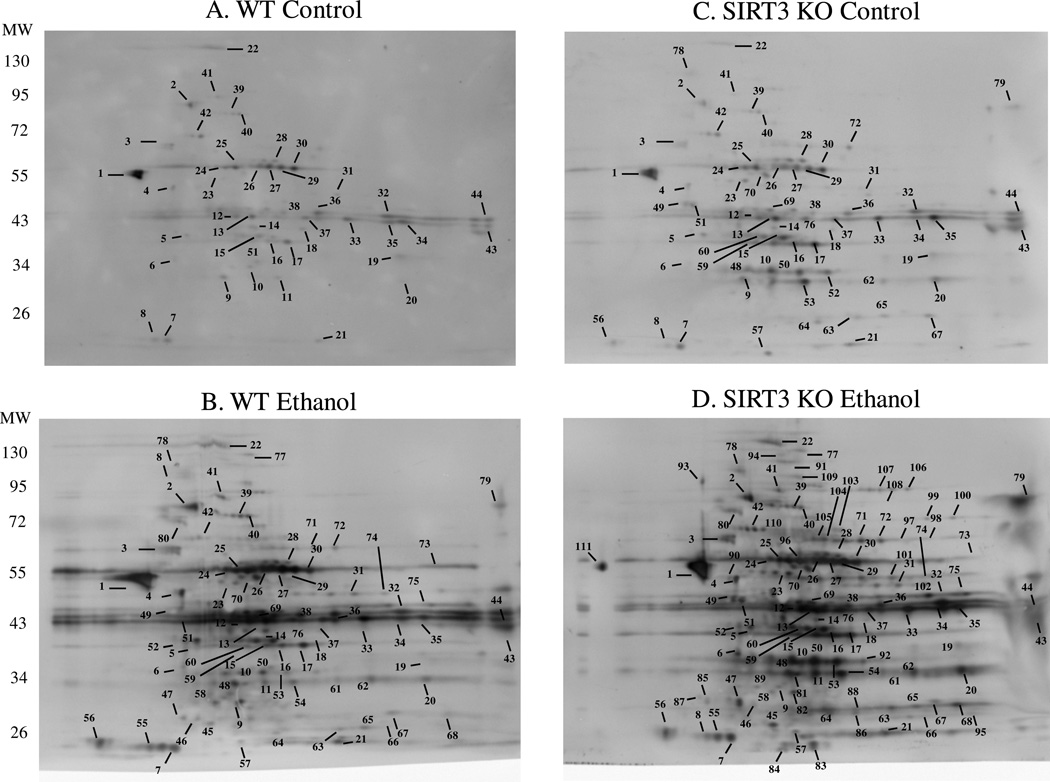
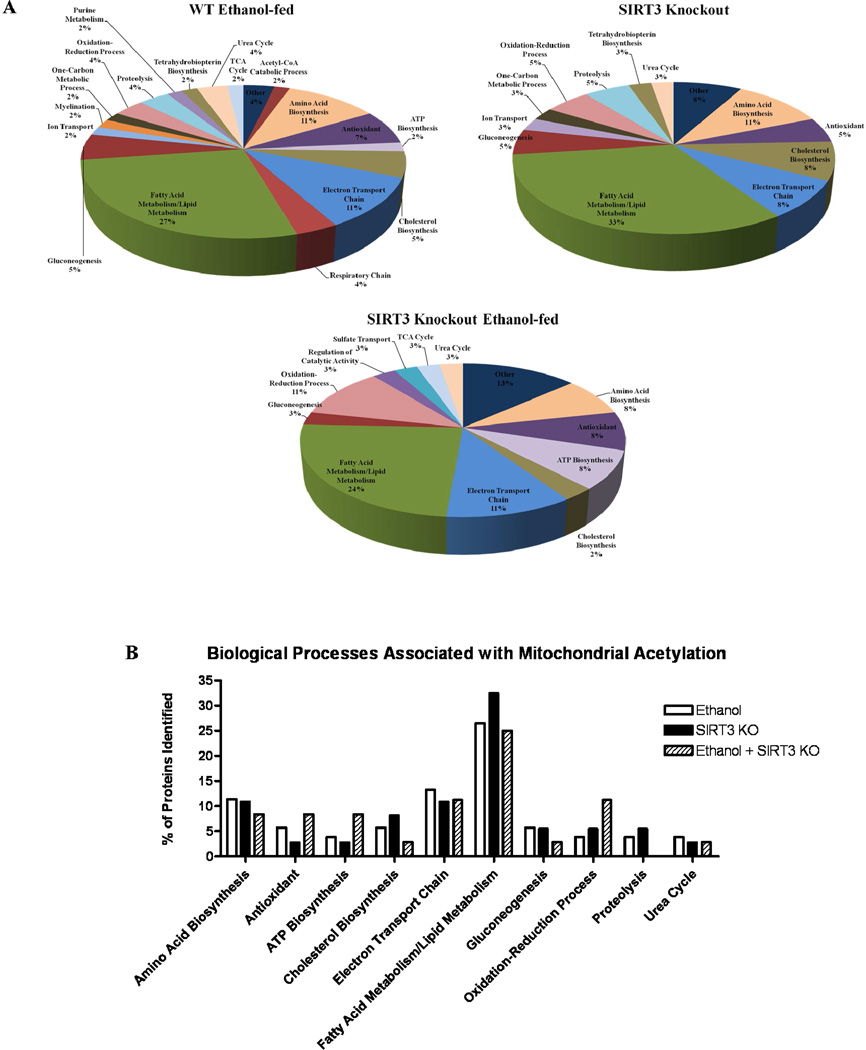
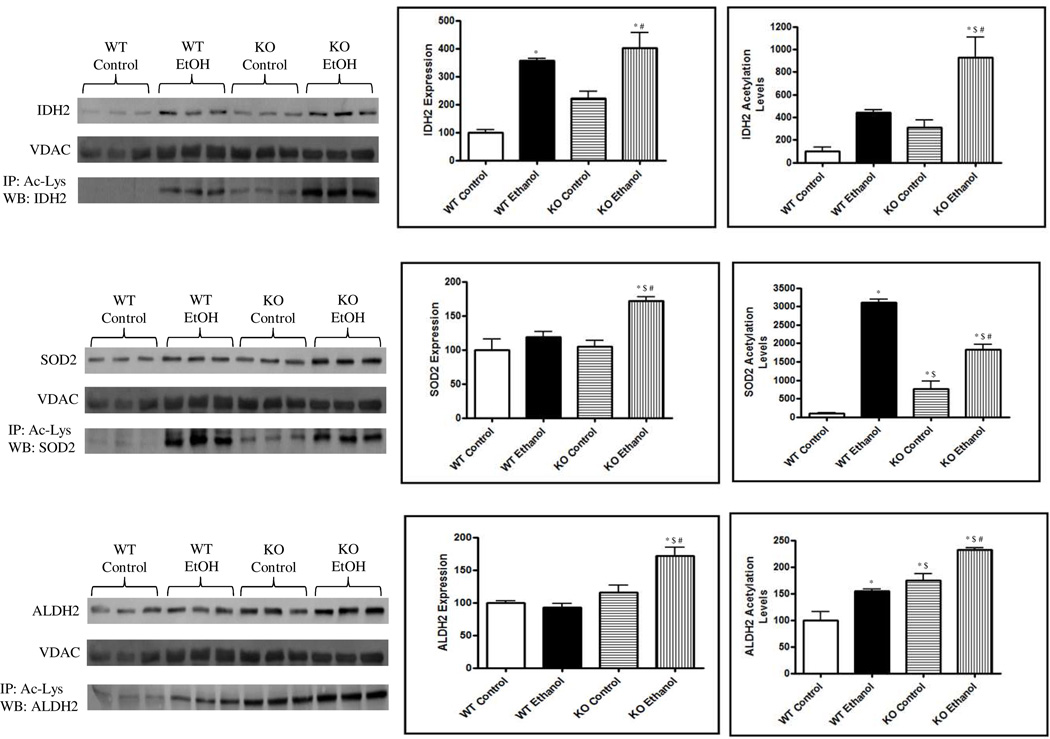
Mitochondrial protein hyperacetylation is a known consequence of sustained ethanol consumption and has been proposed to play a role in the pathogenesis of alcoholic liver disease (ALD). The mechanisms underlying this altered acetylome, however, remain unknown. The mitochondrial deacetylase sirtuin 3 (SIRT3) is reported to be the major regulator of mitochondrial protein deacetylation and remains a central focus for studies on protein acetylation. To investigate the mechanisms underlying ethanol-induced mitochondrial acetylation, we employed a model for ALD in both wild-type (WT) and SIRT3 knockout (KO) mice using a proteomics and bioinformatics approach. Here, WT and SIRT3 KO groups were compared in a mouse model of chronic ethanol consumption, revealing pathways relevant to ALD, including lipid and fatty acid metabolism, antioxidant response, amino acid biosynthesis and the electron-transport chain, each displaying proteins with altered acetylation. Interestingly, protein hyperacetylation resulting from ethanol consumption and SIRT3 ablation suggests ethanol-induced hyperacetylation targets numerous biological processes within the mitochondria, the majority of which are known to be acetylated through SIRT3-dependent mechanisms. These findings reveal overall increases in 91 mitochondrial targets for protein acetylation, identifying numerous critical metabolic and antioxidant pathways associated with ALD, suggesting an important role for mitochondrial protein acetylation in the pathogenesis of ALD.
线粒体蛋白乙酰化过度是持续摄入乙醇的已知后果,并且被认为在酒精性肝病 (ALD) 的发病机制中起作用。然而,这种乙酰化组改变的机制仍然未知。线粒体去乙酰化酶 SIRT3(SIRT3)据报道是线粒体蛋白去乙酰化的主要调节剂,仍然是蛋白质乙酰化研究的核心焦点。为了研究乙醇诱导的线粒体乙酰化的机制,我们采用了野生型(WT)和 SIRT3 敲除(KO)小鼠的 ALD 模型,采用蛋白质组学和生物信息学方法。在这里,WT 和 SIRT3 KO 组在慢性乙醇消耗的小鼠模型中进行了比较,揭示了与 ALD 相关的途径,包括脂质和脂肪酸代谢、抗氧化反应、氨基酸生物合成和电子传递链,每个途径都显示出乙酰化改变的蛋白质。有趣的是,乙醇消耗和 SIRT3 缺失导致的蛋白质乙酰化过度表明,乙醇诱导的超乙酰化作用针对线粒体中的许多生物过程,其中大多数通过 SIRT3 依赖性机制被乙酰化。这些发现揭示了 91 个线粒体蛋白乙酰化靶标的总体增加,确定了与 ALD 相关的许多关键代谢和抗氧化途径,表明线粒体蛋白乙酰化在 ALD 的发病机制中起重要作用。