University of Maryland Baltimore County, Department of Biological Sciences, Baltimore, MD 21250, United States.
Semin Cancer Biol. 2012 Aug;22(4):275-81. doi: 10.1016/j.semcancer.2012.01.011. Epub 2012 Feb 1.
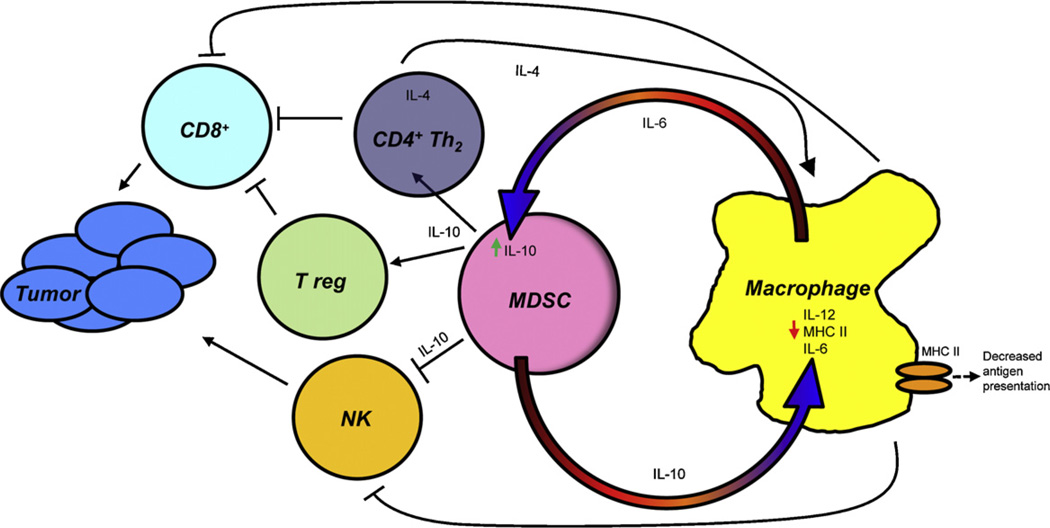
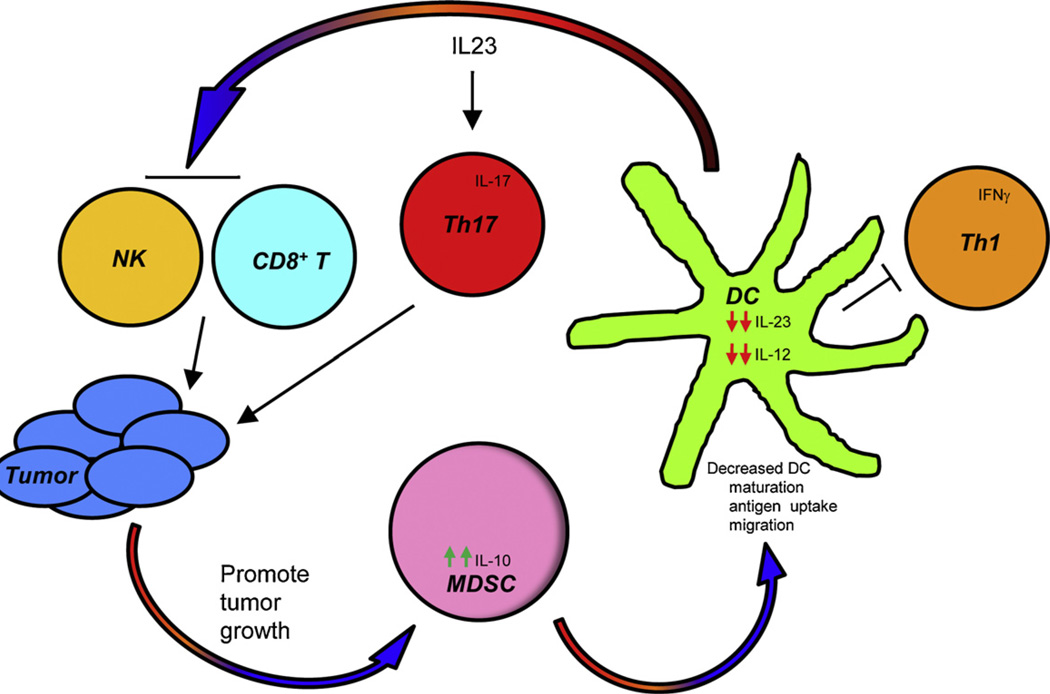
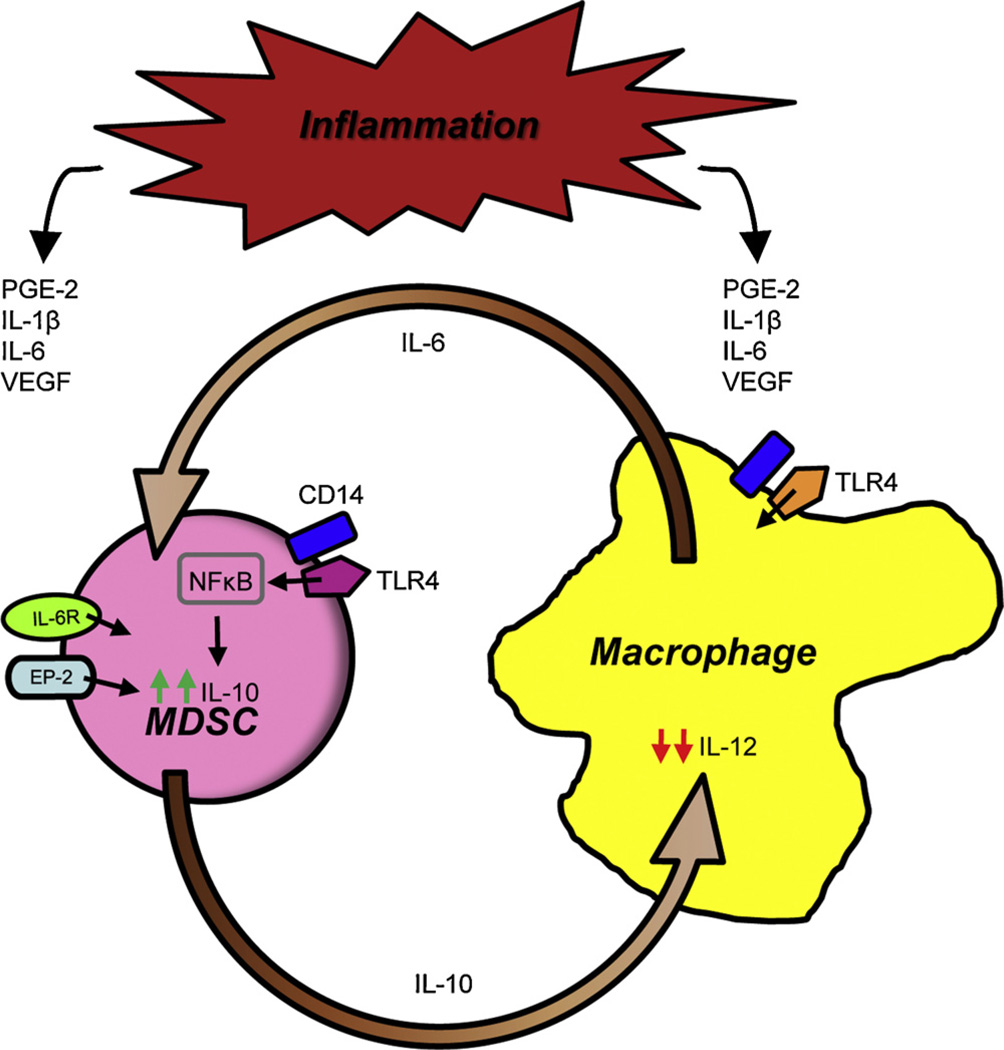
The tumor microenvironment is a complex milieu of tumor and host cells. Host cells can include tumor-reactive T cells capable of killing tumor cells. However, more frequently the tumor and host components interact to generate a highly immune suppressive environment that frustrates T cell cytotoxicity and promotes tumor progression through a variety of immune and non-immune mechanisms. Myeloid-derived suppressor cells (MDSC) are a major host component contributing to the immune suppressive environment. In addition to their inherent immune suppressive function, MDSC amplify the immune suppressive activity of macrophages and dendritic cells via cross-talk. This article will review the cell-cell interactions used by MDSC to inhibit anti-tumor immunity and promote progression, and the role of inflammation in promoting cross-talk between MDSC and other cells in the tumor microenvironment.
肿瘤微环境是一个复杂的肿瘤和宿主细胞环境。宿主细胞可以包括能够杀伤肿瘤细胞的肿瘤反应性 T 细胞。然而,更常见的是,肿瘤和宿主成分相互作用,产生高度免疫抑制的环境,这种环境挫败了 T 细胞的细胞毒性,并通过多种免疫和非免疫机制促进肿瘤进展。髓源性抑制细胞(MDSC)是促进免疫抑制环境的主要宿主成分之一。除了其固有的免疫抑制功能外,MDSC 通过细胞间通讯增强巨噬细胞和树突状细胞的免疫抑制活性。本文将综述 MDSC 抑制抗肿瘤免疫和促进进展所利用的细胞间相互作用,以及炎症在促进 MDSC 与肿瘤微环境中其他细胞之间的细胞间通讯中的作用。