Department of Radiology, Radboud University Nijmegen Medical Center, Nijmegen, The Netherlands.
Eur Radiol. 2012 Apr;22(4):746-57. doi: 10.1007/s00330-011-2377-y. Epub 2012 Feb 10.
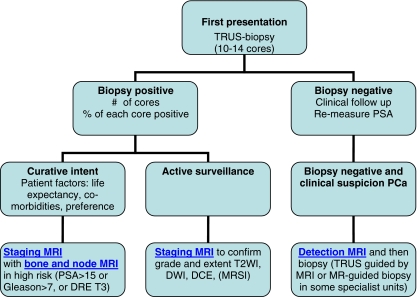
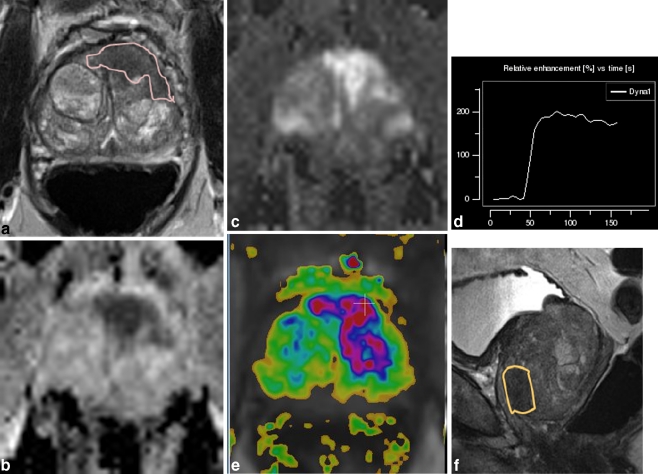
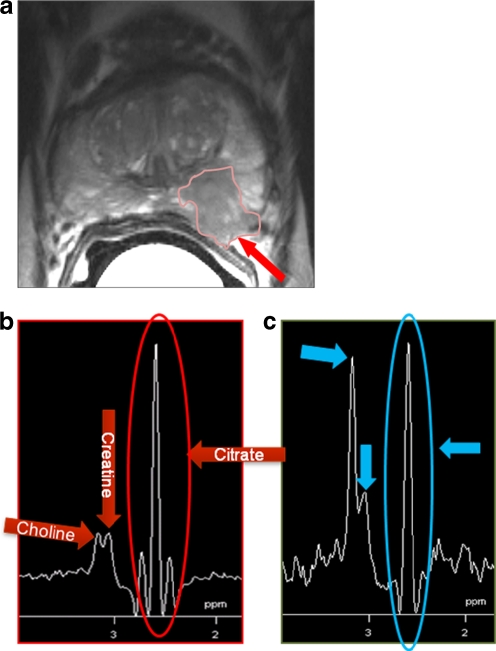
The aim was to develop clinical guidelines for multi-parametric MRI of the prostate by a group of prostate MRI experts from the European Society of Urogenital Radiology (ESUR), based on literature evidence and consensus expert opinion. True evidence-based guidelines could not be formulated, but a compromise, reflected by "minimal" and "optimal" requirements has been made. The scope of these ESUR guidelines is to promulgate high quality MRI in acquisition and evaluation with the correct indications for prostate cancer across the whole of Europe and eventually outside Europe. The guidelines for the optimal technique and three protocols for "detection", "staging" and "node and bone" are presented. The use of endorectal coil vs. pelvic phased array coil and 1.5 vs. 3 T is discussed. Clinical indications and a PI-RADS classification for structured reporting are presented.
This report provides guidelines for magnetic resonance imaging (MRI) in prostate cancer. Clinical indications, and minimal and optimal imaging acquisition protocols are provided. A structured reporting system (PI-RADS) is described.
目的是由欧洲泌尿生殖放射学会(ESUR)的一组前列腺 MRI 专家基于文献证据和共识专家意见,制定前列腺多参数 MRI 的临床指南。由于缺乏真实的循证医学指南,因此制定了一个妥协方案,反映了“最低”和“最佳”要求。这些 ESUR 指南的范围是在整个欧洲甚至欧洲以外地区推广高质量的 MRI 采集和评估,并具有正确的前列腺癌适应证。本文介绍了最佳技术指南以及用于“检测”、“分期”和“淋巴结和骨骼”的三个协议。讨论了直肠内线圈与盆腔相控阵线圈以及 1.5T 与 3T 的使用。还介绍了临床适应证和用于结构化报告的 PI-RADS 分类。
本报告提供了前列腺癌磁共振成像(MRI)的指南。提供了临床适应证、最低和最佳成像采集方案,并描述了一种结构化报告系统(PI-RADS)。