Boys Town National Research Hospital, Lied Learning and Technology Center, 425 North 30th Street, Omaha, NE 68131, USA.
Hear Res. 2012 Mar;285(1-2):46-57. doi: 10.1016/j.heares.2012.01.010. Epub 2012 Feb 8.
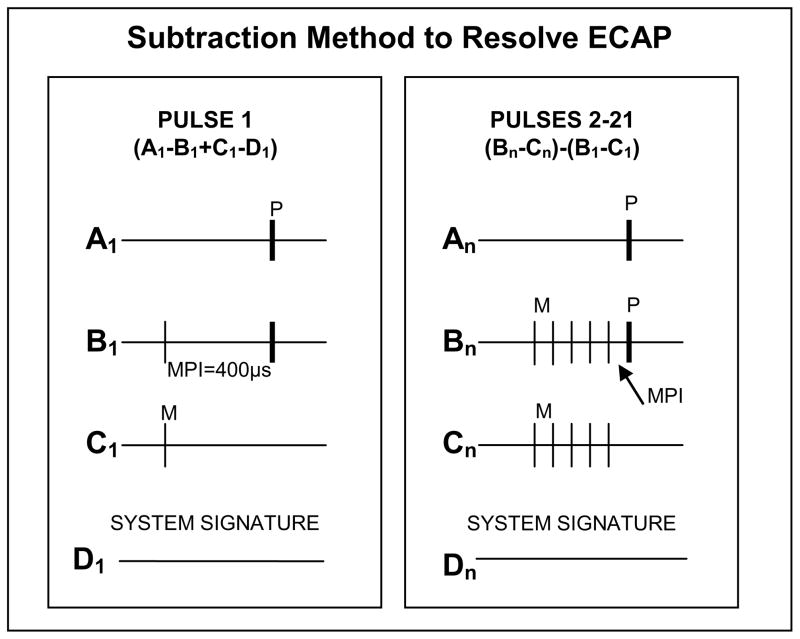
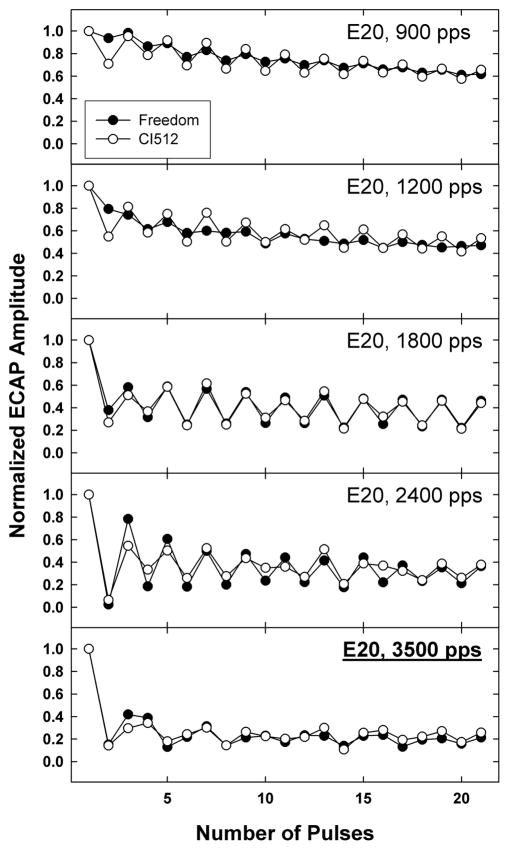
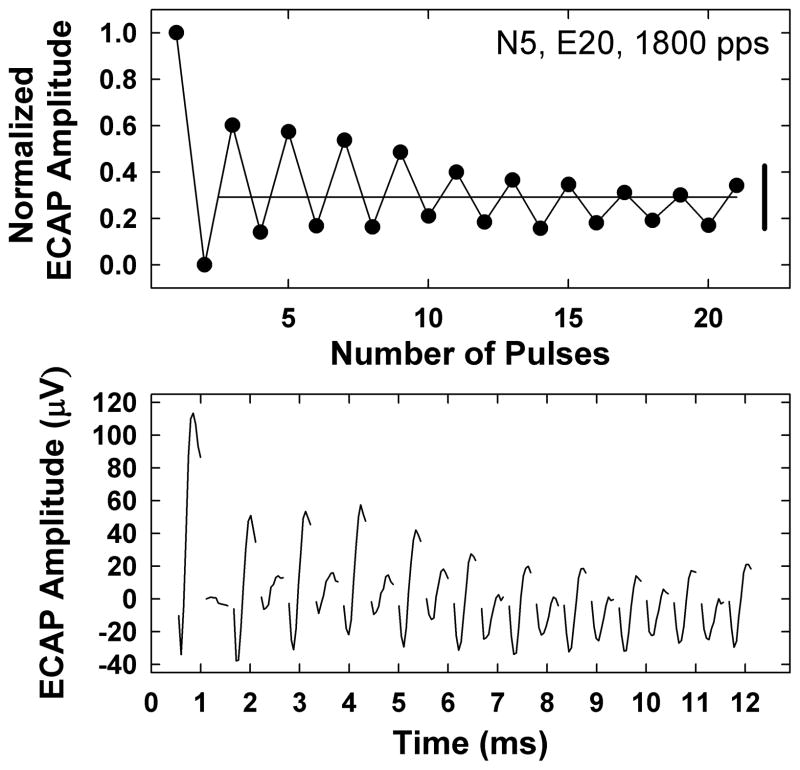
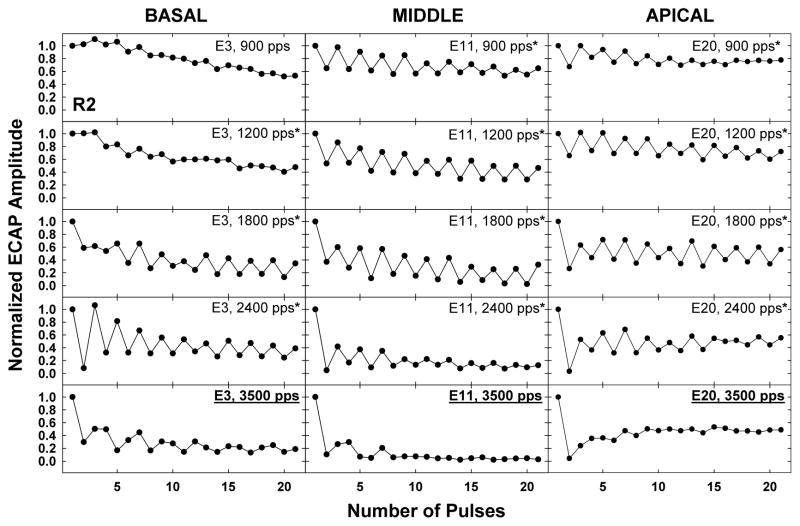
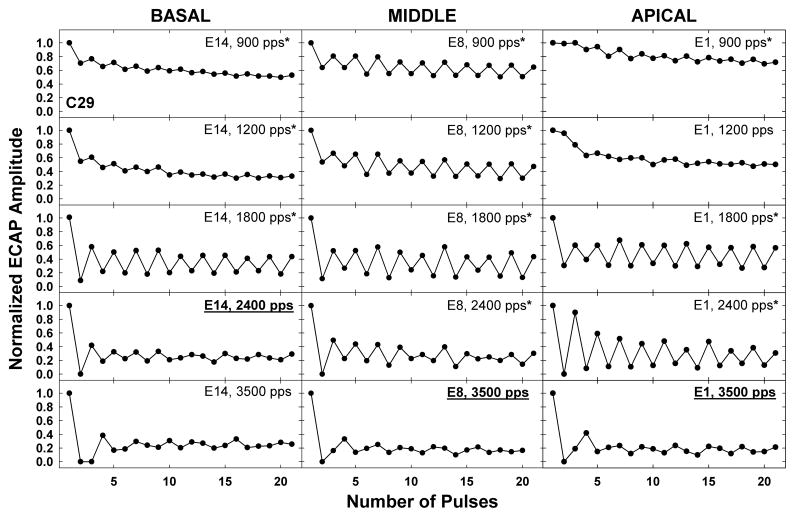
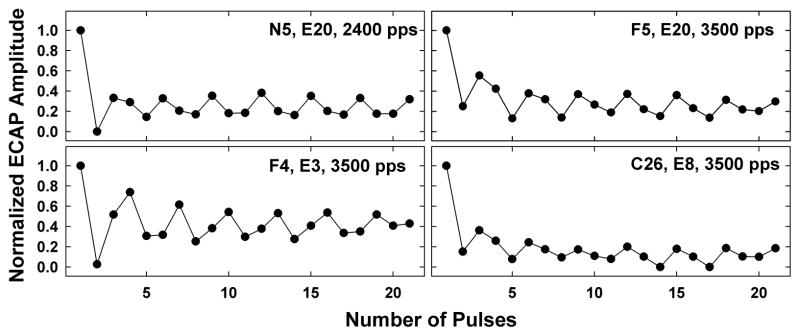
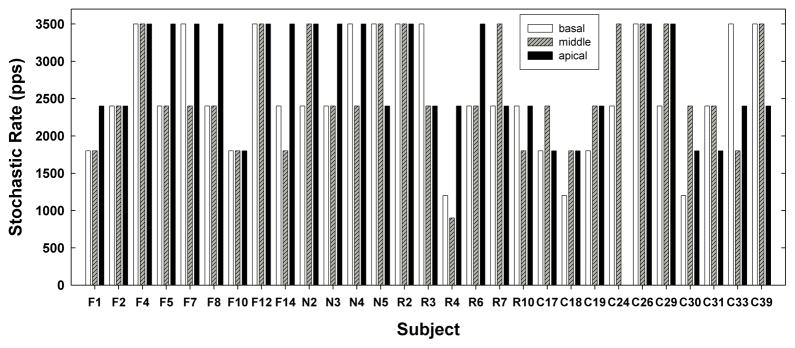
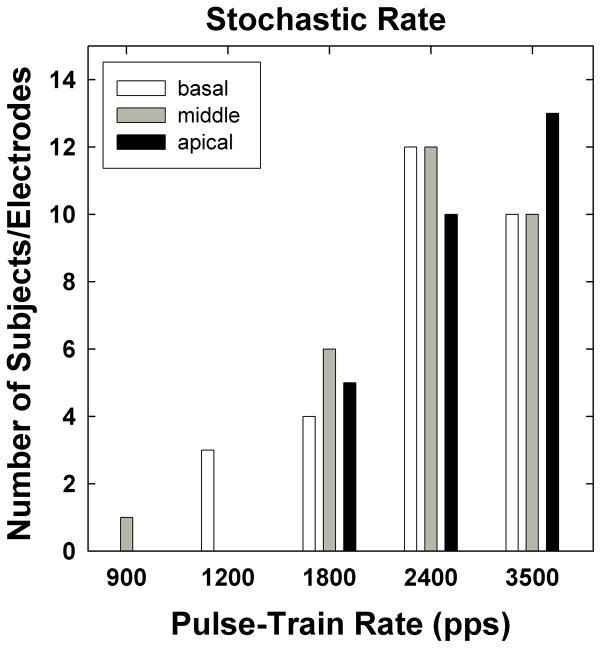
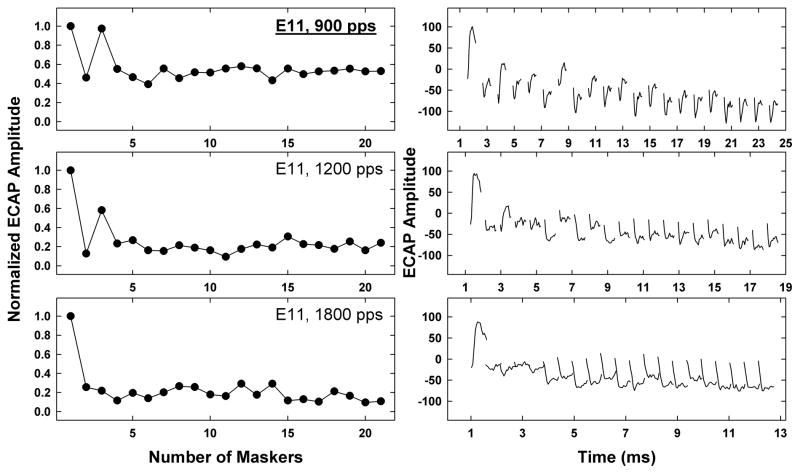
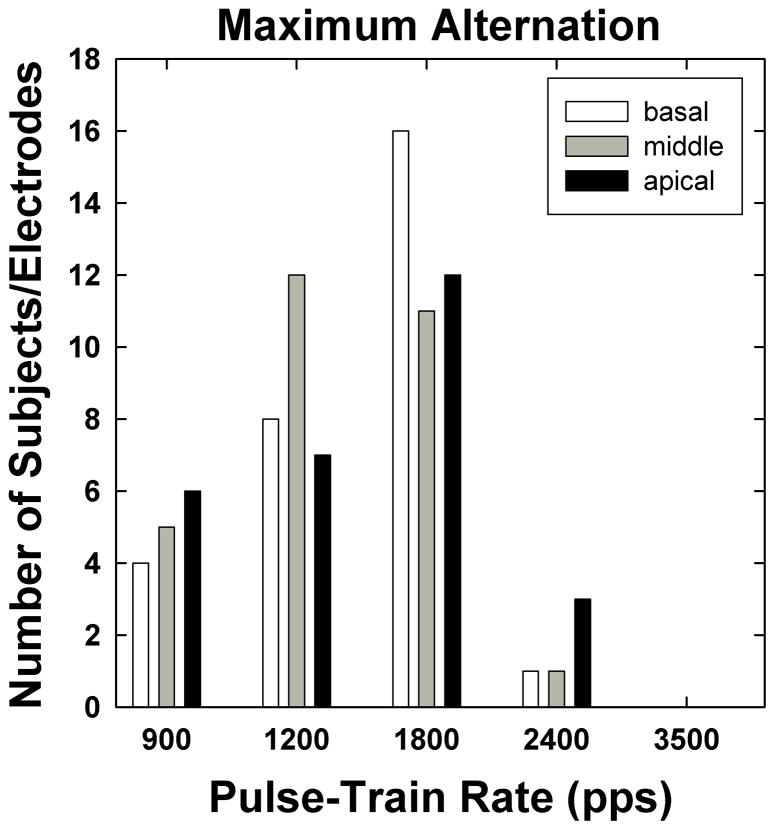
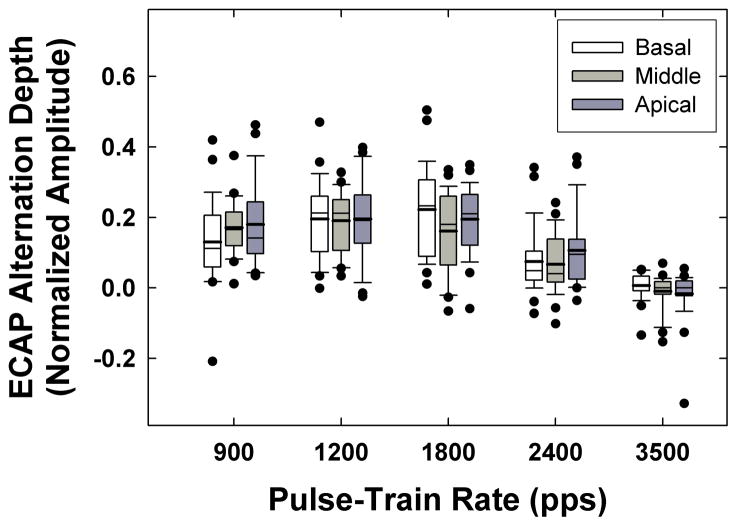
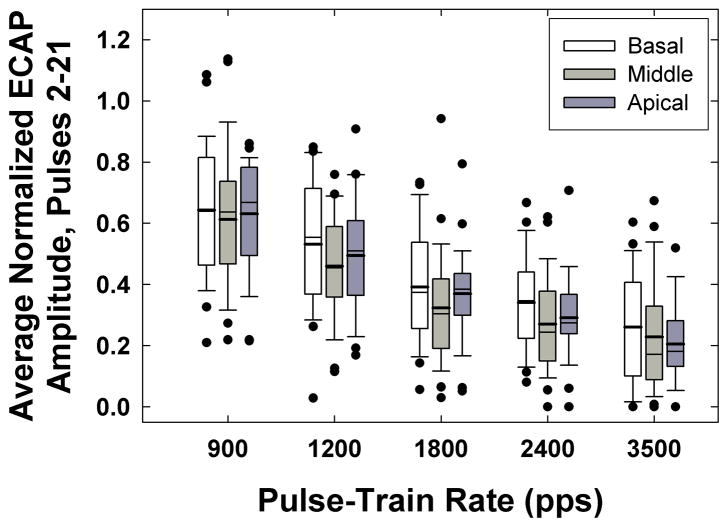
The primary goal of this study was to characterize the variability in auditory-nerve temporal response patterns obtained with the electrically evoked compound action potential (ECAP) within and across a relatively large group of cochlear-implant recipients. ECAPs were recorded in response to each of 21 pulses in a pulse train for five rates (900, 1200, 1800, 2400, and 3500 pps) and three cochlear regions (basal, middle, and apical). An alternating amplitude pattern was typically observed across the pulse train for slower rates, reflecting refractory properties of individual nerve fibers. For faster rates, the alternation ceased and overall amplitudes were substantially lower relative to the first pulse in the train, reflecting cross-fiber desynchronization. The following specific parameters were examined: (1) the rate at which the alternating pattern ceased (termed stochastic rate), (2) the alternation depth and the rate at which the maximum alternation occurred, and (3) the average normalized ECAP amplitude across the pulse train (measure of overall adaptation/desynchronization). Data from 29 ears showed that stochastic rates for the group spanned the entire range of rates tested. The majority of subjects (79%) had different stochastic rates across the three cochlear regions. The stochastic rate occurred most frequently at 2400 pps for basal and middle electrodes, and at 3500 pps for apical electrodes. Stimulus level was significantly correlated with stochastic rate, where higher levels yielded faster stochastic rates. The maximum alternation depth averaged 19% of the amplitude for the first pulse. Maximum alternation occurred most often at 1800 pps for basal and apical electrodes, and at 1200 pps for middle electrodes. These differences suggest some independence between alternation depth and stochastic rate. Finally, the overall amount of adaptation or desynchronization ranged from 63% (for 900 pps) to 23% (for 3500 pps) of the amplitude for the first pulse. Differences in temporal response properties across the cochlea within subjects may have implications for developing new speech-processing strategies that employ varied rates across the array.
本研究的主要目的是描述在相对较大数量的人工耳蜗植入受者中,通过电诱发复合动作电位 (ECAP) 获得的听神经时程反应模式的变异性。ECAP 是对在五个速率(900、1200、1800、2400 和 3500pps)和三个耳蜗区域(基底、中间和顶端)的每个脉冲序列中的 21 个脉冲进行记录而得到的。对于较慢的速率,通常会在整个脉冲序列中观察到交替幅度模式,这反映了单个神经纤维的不应期特性。对于更快的速率,交替停止,与序列中的第一个脉冲相比,整体幅度显著降低,这反映了交叉纤维去同步化。研究检查了以下具体参数:(1)交替模式停止的速率(称为随机速率),(2)最大交替发生的深度和速率,以及(3)整个脉冲序列中的平均归一化 ECAP 幅度(整体适应/去同步化的度量)。来自 29 只耳朵的数据表明,该组的随机速率涵盖了测试的整个速率范围。大多数受试者(79%)在三个耳蜗区域的随机速率都不同。基底和中间电极的随机速率最常发生在 2400pps,而顶端电极的随机速率最常发生在 3500pps。刺激水平与随机速率显著相关,较高的水平导致更快的随机速率。最大交替深度平均为第一个脉冲幅度的 19%。最大交替最常发生在基底和顶端电极的 1800pps,以及中间电极的 1200pps。这些差异表明交替深度和随机速率之间存在一定的独立性。最后,整体适应或去同步化的程度范围为第一个脉冲幅度的 63%(900pps)至 23%(3500pps)。受试者内耳蜗内的时间响应特性差异可能对开发新的语音处理策略具有重要意义,这些策略在阵列中采用不同的速率。