AV Hill Building, Faculty of Life Sciences, University of Manchester, Manchester, M13 9PT, UK.
Dis Model Mech. 2012 Sep;5(5):649-59. doi: 10.1242/dmm.009068. Epub 2012 Feb 10.
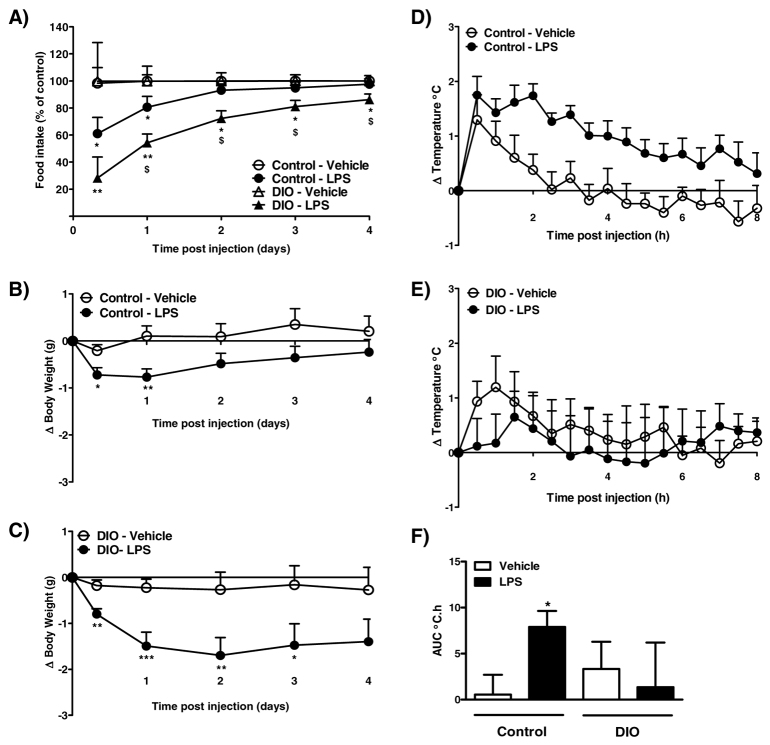
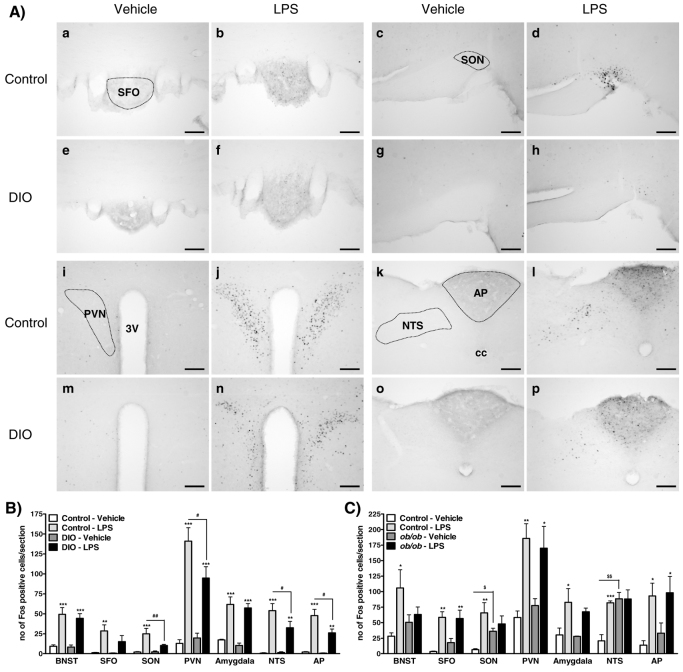
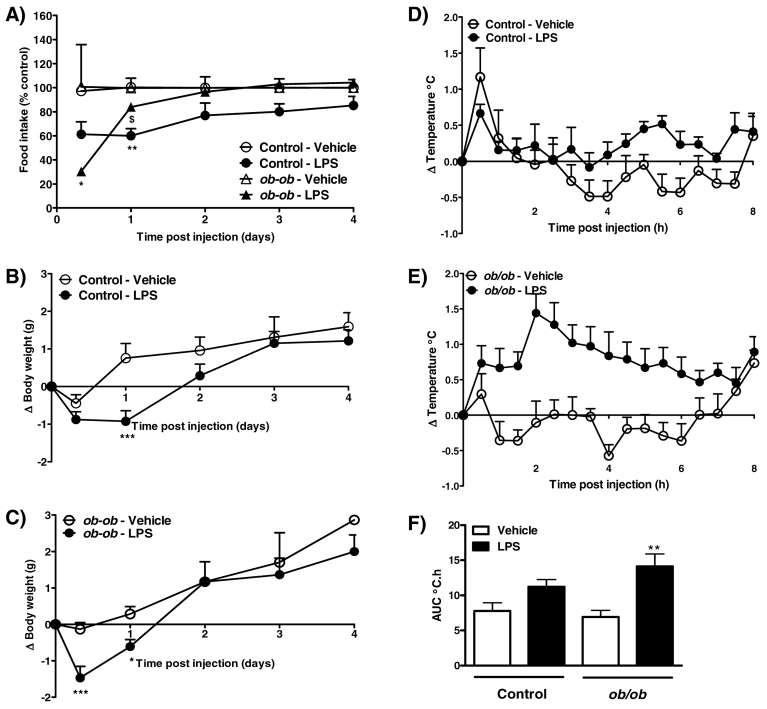
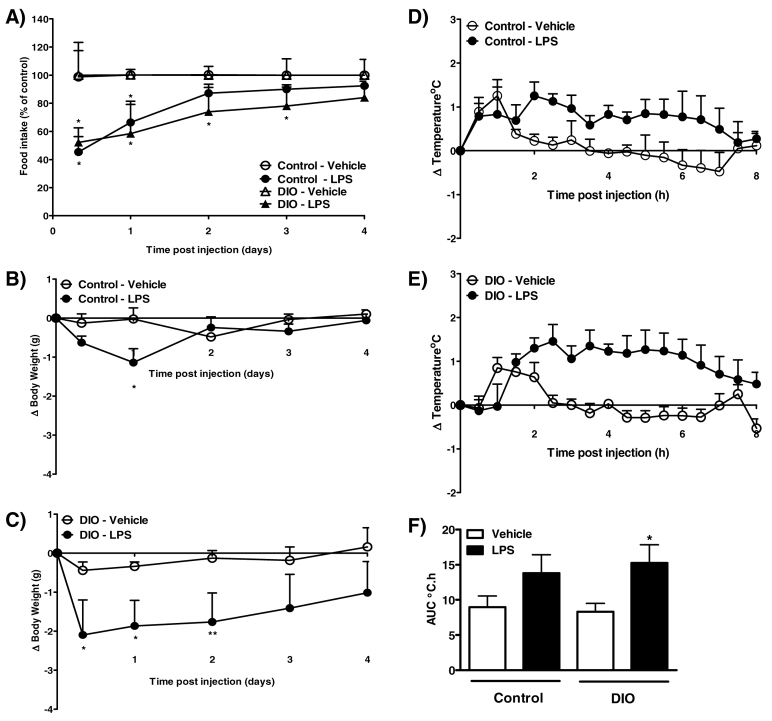
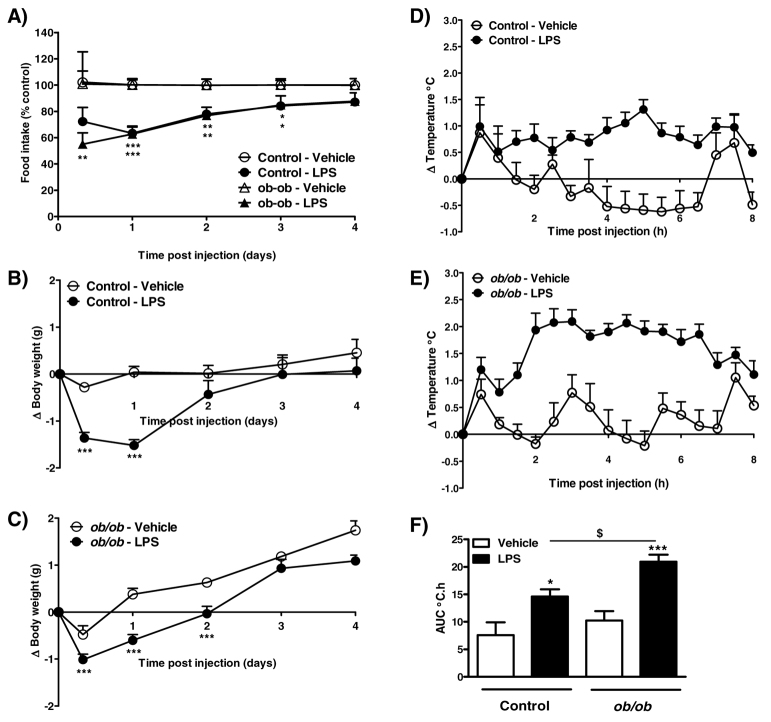
Obesity is associated with an increase in the prevalence and severity of infections. Genetic animal models of obesity (ob/ob and db/db mice) display altered centrally-mediated sickness behaviour in response to acute inflammatory stimuli such as lipopolysaccharide (LPS). However, the effect of diet-induced obesity (DIO) on the anorectic and febrile response to LPS in mice is unknown. This study therefore determined how DIO and ob/ob mice respond to a systemic inflammatory challenge. C57BL/6 DIO and ob/ob mice, and their respective controls, were given an intraperitoneal (i.p.) injection of LPS. Compared with controls, DIO and ob/ob mice exhibited an altered febrile response to LPS (100 μg/kg) over 8 hours. LPS caused a greater and more prolonged anorexic effect in DIO compared with control mice and, in ob/ob mice, LPS induced a reduction in food intake and body weight earlier than it did in controls. These effects of LPS in obese mice were also seen after a fixed dose of LPS (5 μg). LPS (100 μg/kg) induced Fos protein expression in several brain nuclei of control mice, with fewer Fos-positive cells observed in the brains of obese mice. An altered inflammatory response to LPS was also observed in obese mice compared with controls: changes in cytokine expression and release were detected in the plasma, spleen, liver and peritoneal macrophages in obese mice. In summary, DIO and ob/ob mice displayed an altered behavioural response and cytokine release to systemic inflammatory challenge. These findings could help explain why obese humans show increased sensitivity to infections.
肥胖与感染的发生率和严重程度增加有关。肥胖的遗传动物模型(ob/ob 和 db/db 小鼠)在急性炎症刺激(如脂多糖,LPS)下显示出中枢介导的疾病行为改变。然而,饮食诱导的肥胖(DIO)对 LPS 引起的厌食和发热反应在小鼠中的影响尚不清楚。因此,本研究旨在确定 DIO 和 ob/ob 小鼠对全身炎症挑战的反应。给予 C57BL/6 DIO 和 ob/ob 小鼠及其各自的对照小鼠腹腔内(i.p.)注射 LPS。与对照组相比,DIO 和 ob/ob 小鼠对 LPS(100 μg/kg)的发热反应发生改变(8 小时)。与对照组相比,LPS 在 DIO 中引起更大和更持久的厌食作用,并且在 ob/ob 小鼠中,LPS 引起的摄食量和体重下降早于对照组。肥胖小鼠中 LPS 的这些作用也见于固定剂量的 LPS(5 μg)之后。LPS(100 μg/kg)诱导对照小鼠的几个脑核中的 Fos 蛋白表达,而肥胖小鼠的脑内观察到的 Fos 阳性细胞较少。与对照组相比,肥胖小鼠也表现出对 LPS 的炎症反应改变:在肥胖小鼠的血浆、脾脏、肝脏和腹腔巨噬细胞中检测到细胞因子表达和释放的变化。总之,DIO 和 ob/ob 小鼠对全身炎症挑战表现出改变的行为反应和细胞因子释放。这些发现可以帮助解释为什么肥胖的人类对感染表现出更高的敏感性。