Centre for Genetics and Genomics, School of Biology, University of Nottingham, Medical School, Nottingham, United Kingdom.
PLoS Pathog. 2012 Feb;8(2):e1002524. doi: 10.1371/journal.ppat.1002524. Epub 2012 Feb 9.
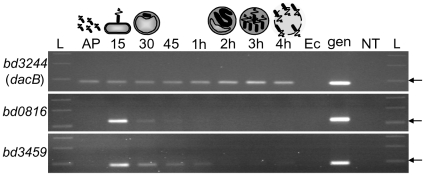
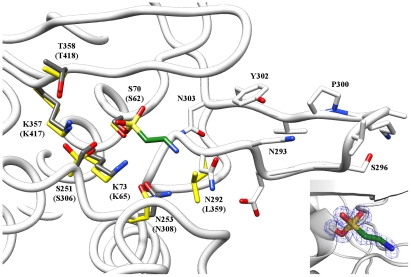
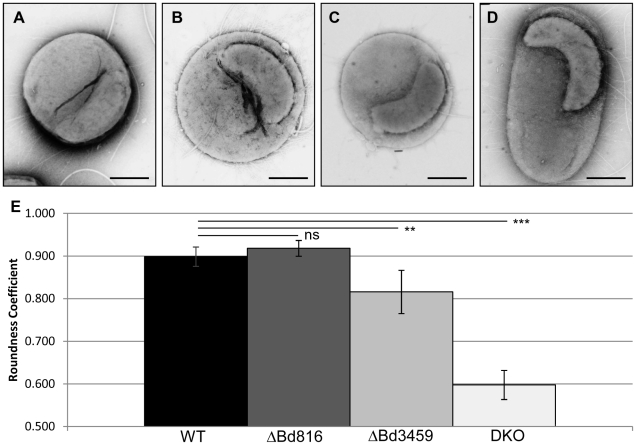
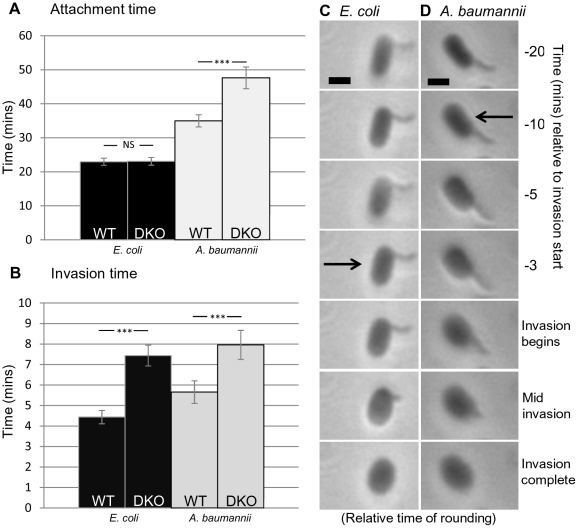
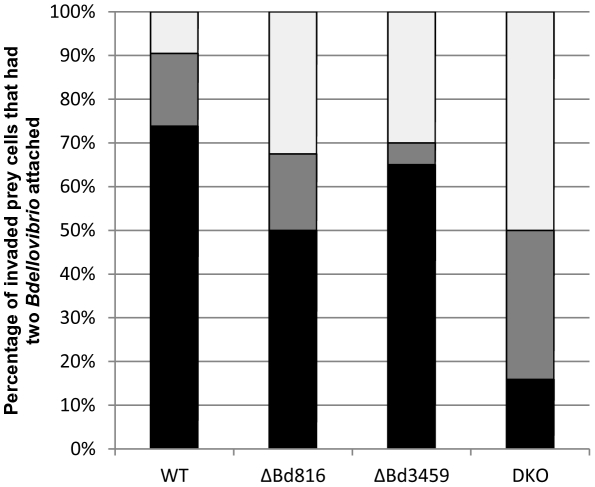
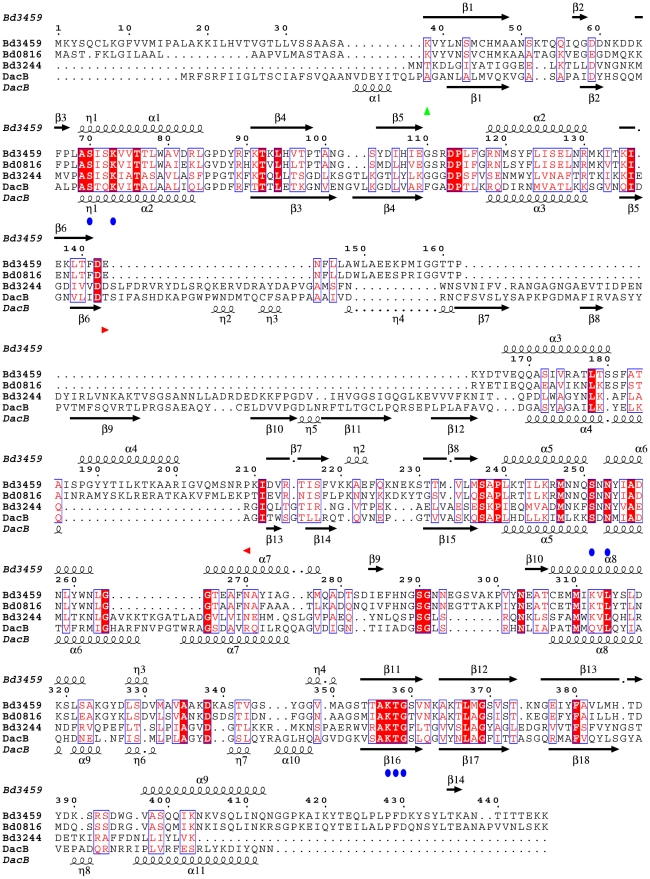
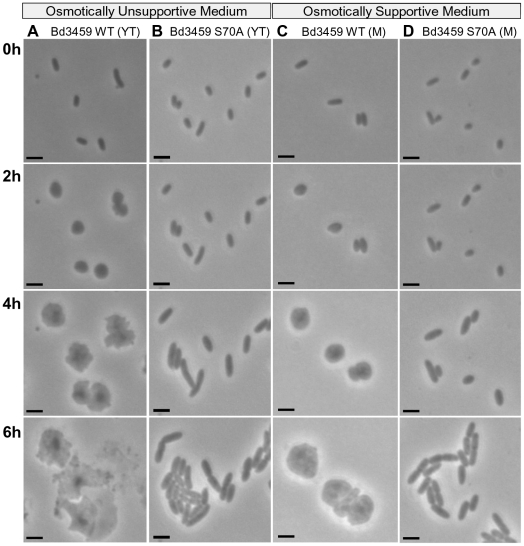
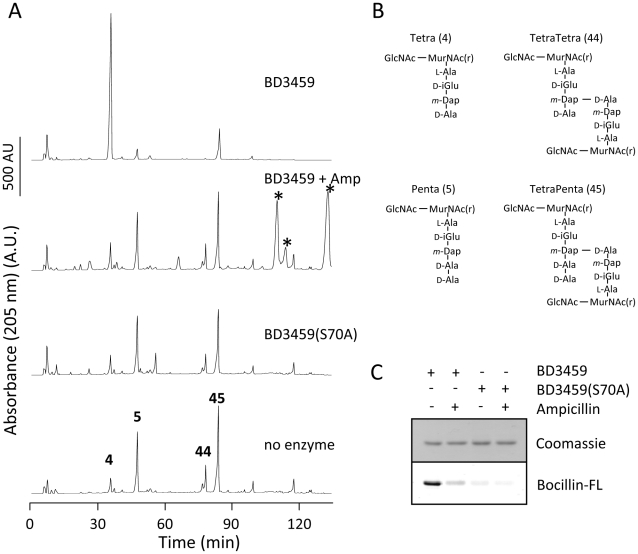
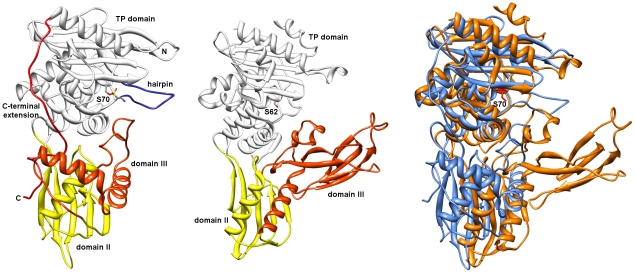
Bdellovibrio are predatory bacteria that have evolved to invade virtually all gram-negative bacteria, including many prominent pathogens. Upon invasion, prey bacteria become rounded up into an osmotically stable niche for the Bdellovibrio, preventing further superinfection and allowing Bdellovibrio to replicate inside without competition, killing the prey bacterium and degrading its contents. Historically, prey rounding was hypothesized to be associated with peptidoglycan (PG) metabolism; we found two Bdellovibrio genes, bd0816 and bd3459, expressed at prey entry and encoding proteins with limited homologies to conventional dacB/PBP4 DD-endo/carboxypeptidases (responsible for peptidoglycan maintenance during growth and division). We tested possible links between Bd0816/3459 activity and predation. Bd3459, but not an active site serine mutant protein, bound β-lactam, exhibited DD-endo/carboxypeptidase activity against purified peptidoglycan and, importantly, rounded up E. coli cells upon periplasmic expression. A ΔBd0816 ΔBd3459 double mutant invaded prey more slowly than the wild type (with negligible prey cell rounding) and double invasions of single prey by more than one Bdellovibrio became more frequent. We solved the crystal structure of Bd3459 to 1.45 Å and this revealed predation-associated domain differences to conventional PBP4 housekeeping enzymes (loss of the regulatory domain III, alteration of domain II and a more exposed active site). The Bd3459 active site (and by similarity the Bd0816 active site) can thus accommodate and remodel the various bacterial PGs that Bdellovibrio may encounter across its diverse prey range, compared to the more closed active site that "regular" PBP4s have for self cell wall maintenance. Therefore, during evolution, Bdellovibrio peptidoglycan endopeptidases have adapted into secreted predation-specific proteins, preventing wasteful double invasion, and allowing activity upon the diverse prey peptidoglycan structures to sculpt the prey cell into a stable intracellular niche for replication.
蛭弧菌是一种掠食性细菌,已经进化到可以入侵几乎所有革兰氏阴性菌,包括许多重要的病原体。在入侵过程中,猎物细菌被聚集到一个对蛭弧菌具有渗透稳定性的小生境中,防止进一步的超感染,并允许蛭弧菌在没有竞争的情况下在内部复制,杀死猎物细菌并降解其内容物。历史上,猎物的圆形化被假设与肽聚糖(PG)代谢有关;我们发现了两个在猎物进入时表达的蛭弧菌基因,bd0816 和 bd3459,它们编码的蛋白质与传统的 dacB/PBP4 DD-endo/羧肽酶(负责生长和分裂过程中的肽聚糖维持)具有有限的同源性。我们测试了 Bd0816/3459 活性与捕食之间的可能联系。Bd3459,但不是活性位点丝氨酸突变蛋白,结合了β-内酰胺,对纯化的肽聚糖表现出 DD-endo/羧肽酶活性,重要的是,在周质表达时使大肠杆菌细胞圆形化。与野生型相比,ΔBd0816 ΔBd3459 双突变体入侵猎物的速度更慢(猎物细胞几乎没有圆形化),并且一个以上的蛭弧菌对单个猎物进行双重入侵变得更加频繁。我们解决了 Bd3459 的晶体结构,分辨率为 1.45Å,这揭示了与传统的 PBP4 管家酶相关的捕食相关结构域差异(失去调节结构域 III、改变结构域 II 和更暴露的活性位点)。与更封闭的活性位点相比,Bd3459 的活性位点(以及类似的 Bd0816 活性位点)可以容纳和重塑蛭弧菌在其广泛的猎物范围内可能遇到的各种细菌 PG,而“常规”PBP4 则具有用于自我细胞壁维持的更封闭的活性位点。因此,在进化过程中,蛭弧菌的肽聚糖内肽酶已经适应为分泌的捕食特异性蛋白质,防止了不必要的双重入侵,并允许在各种猎物肽聚糖结构上发挥活性,将猎物细胞塑造成一个稳定的细胞内小生境用于复制。