Department of Psychology, Neuroscience and Behaviour, McMaster University, Hamilton, Ontario, Canada.
PLoS One. 2012;7(2):e30693. doi: 10.1371/journal.pone.0030693. Epub 2012 Feb 13.
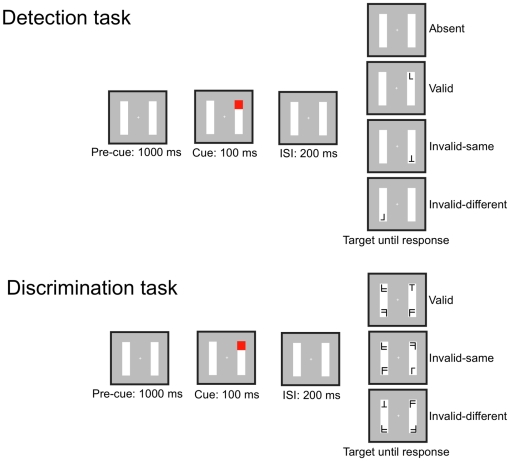
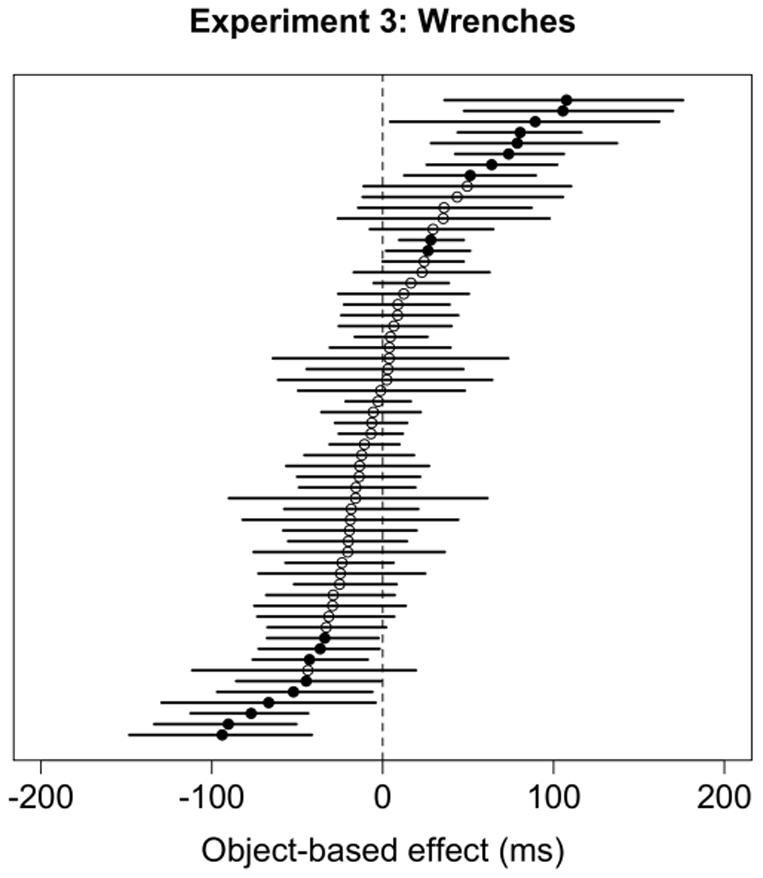
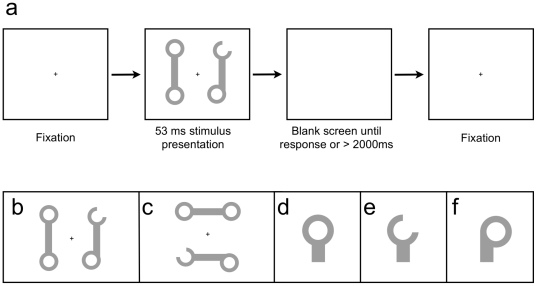
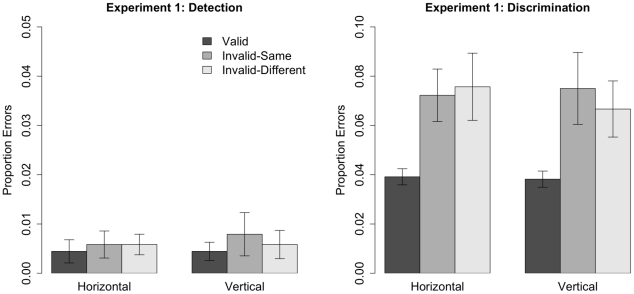
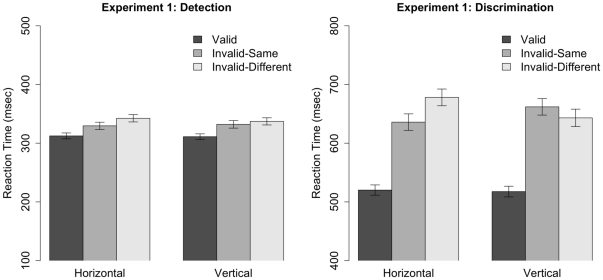
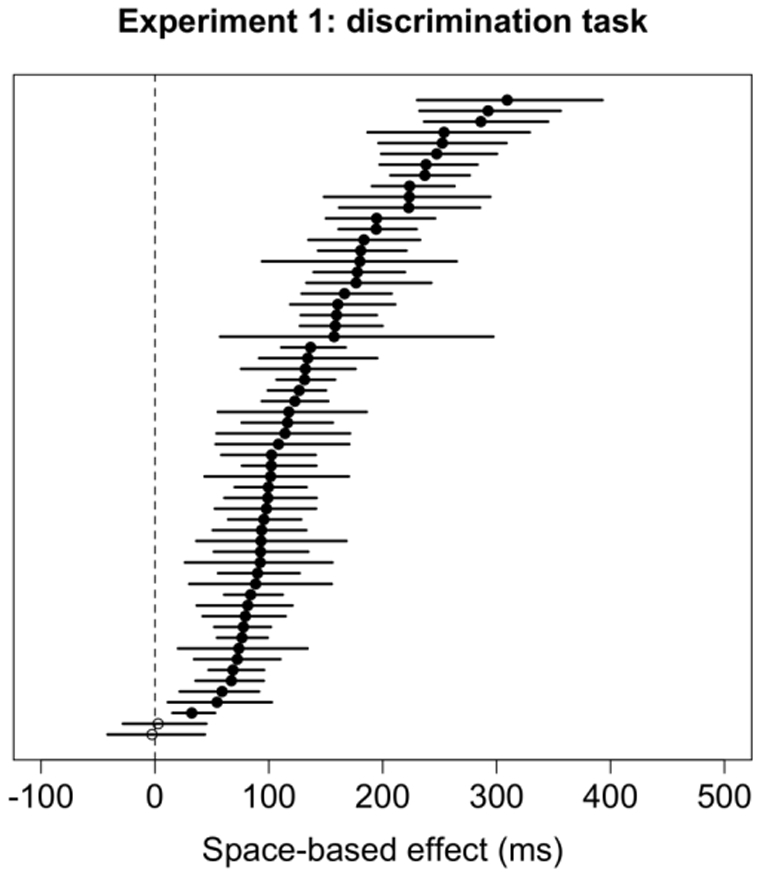
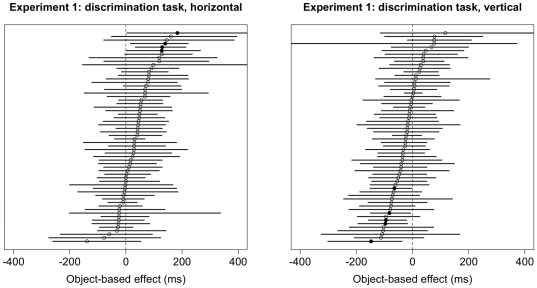
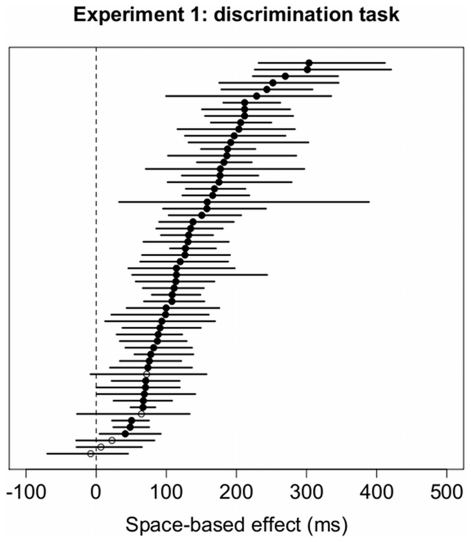
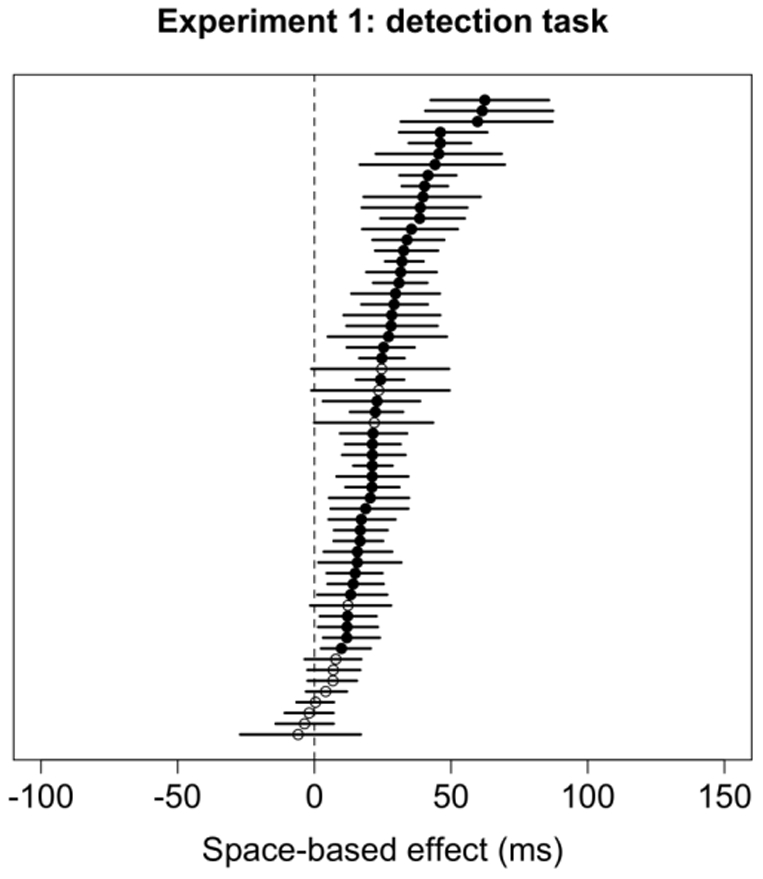
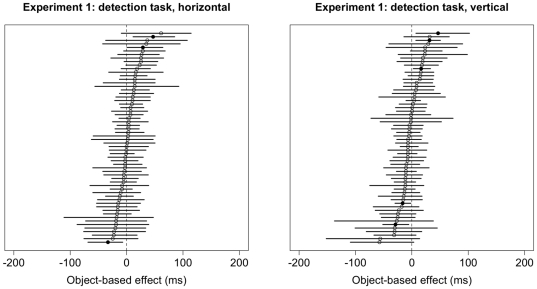
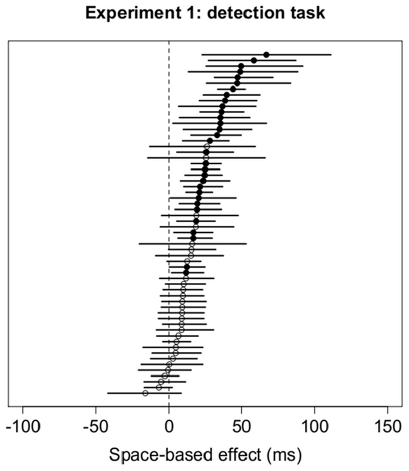
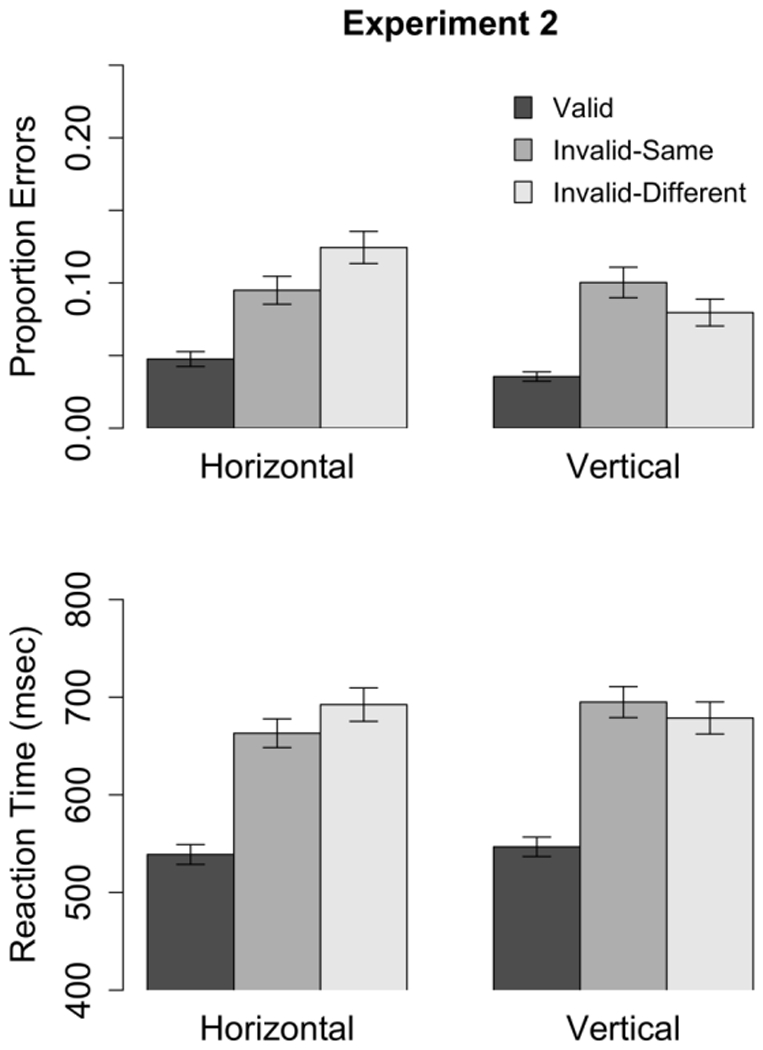
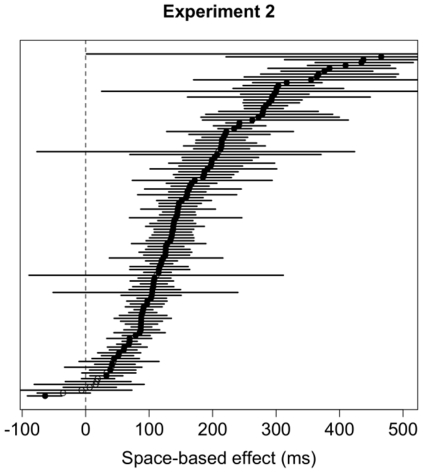
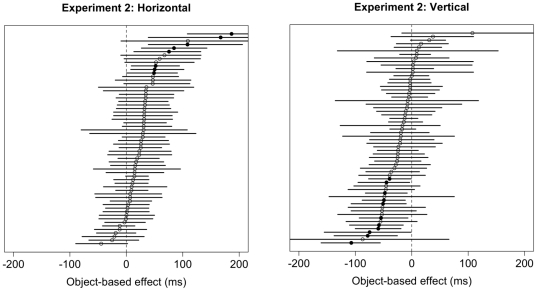
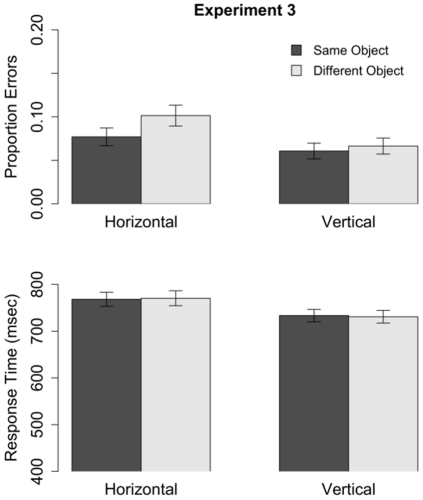
Previous research suggests that visual attention can be allocated to locations in space (space-based attention) and to objects (object-based attention). The cueing effects associated with space-based attention tend to be large and are found consistently across experiments. Object-based attention effects, however, are small and found less consistently across experiments. In three experiments we address the possibility that variability in object-based attention effects across studies reflects low incidence of such effects at the level of individual subjects. Experiment 1 measured space-based and object-based cueing effects for horizontal and vertical rectangles in 60 subjects comparing commonly used target detection and discrimination tasks. In Experiment 2 we ran another 120 subjects in a target discrimination task in which rectangle orientation varied between subjects. Using parametric statistical methods, we found object-based effects only for horizontal rectangles. Bootstrapping methods were used to measure effects in individual subjects. Significant space-based cueing effects were found in nearly all subjects in both experiments, across tasks and rectangle orientations. However, only a small number of subjects exhibited significant object-based cueing effects. Experiment 3 measured only object-based attention effects using another common paradigm and again, using bootstrapping, we found only a small number of subjects that exhibited significant object-based cueing effects. Our results show that object-based effects are more prevalent for horizontal rectangles, which is in accordance with the theory that attention may be allocated more easily along the horizontal meridian. The fact that so few individuals exhibit a significant object-based cueing effect presumably is why previous studies of this effect might have yielded inconsistent results. The results from the current study highlight the importance of considering individual subject data in addition to commonly used statistical methods.
先前的研究表明,视觉注意力可以分配到空间中的位置(基于空间的注意力)和对象(基于对象的注意力)。与基于空间的注意力相关的提示效应往往很大,并且在实验中始终得到一致发现。然而,基于对象的注意力效应较小,并且在实验中不太一致。在三项实验中,我们探讨了研究中基于对象的注意力效应的可变性是否反映了个体受试者中这种效应发生率低的可能性。实验 1 在 60 名受试者中测量了水平和垂直矩形的基于空间和基于对象的提示效应,比较了常用的目标检测和辨别任务。在实验 2 中,我们在另一个 120 名受试者的目标辨别任务中,在受试者之间变化了矩形的方向。使用参数统计方法,我们仅发现了水平矩形的基于对象的效应。使用引导抽样方法测量了个体受试者的效应。在两个实验中,几乎所有的受试者在各种任务和矩形方向上都表现出显著的基于空间的提示效应。然而,只有少数受试者表现出显著的基于对象的提示效应。实验 3 仅使用另一个常见的范式测量基于对象的注意力效应,并且再次使用引导抽样,我们发现只有少数受试者表现出显著的基于对象的提示效应。我们的结果表明,对于水平矩形,基于对象的效应更为普遍,这与注意力可能更容易沿着水平子午线分配的理论一致。如此少的个体表现出显著的基于对象的提示效应,这大概是为什么先前对这种效应的研究可能产生不一致结果的原因。当前研究的结果强调了除了常用的统计方法外,还需要考虑个体受试者数据的重要性。