Institut de Recherche Biomédicale des Armées-antenne La Tronche, La Tronche, France.
PLoS One. 2012;7(2):e31694. doi: 10.1371/journal.pone.0031694. Epub 2012 Feb 14.
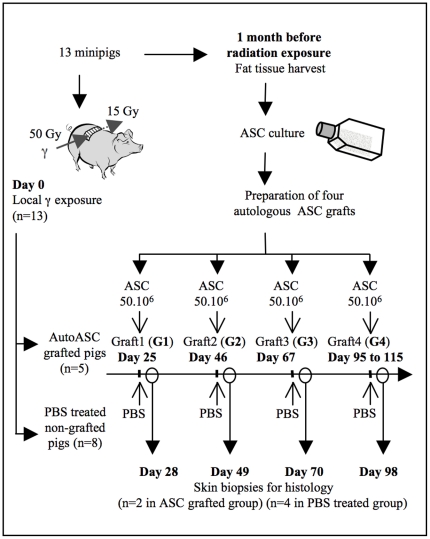
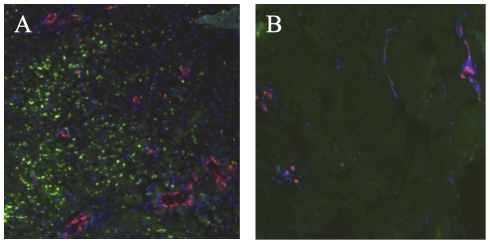
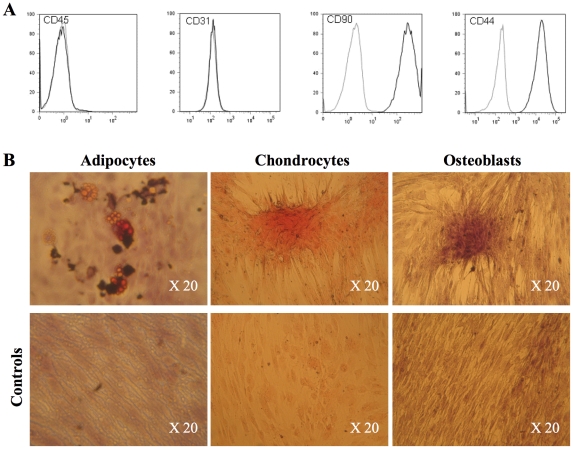
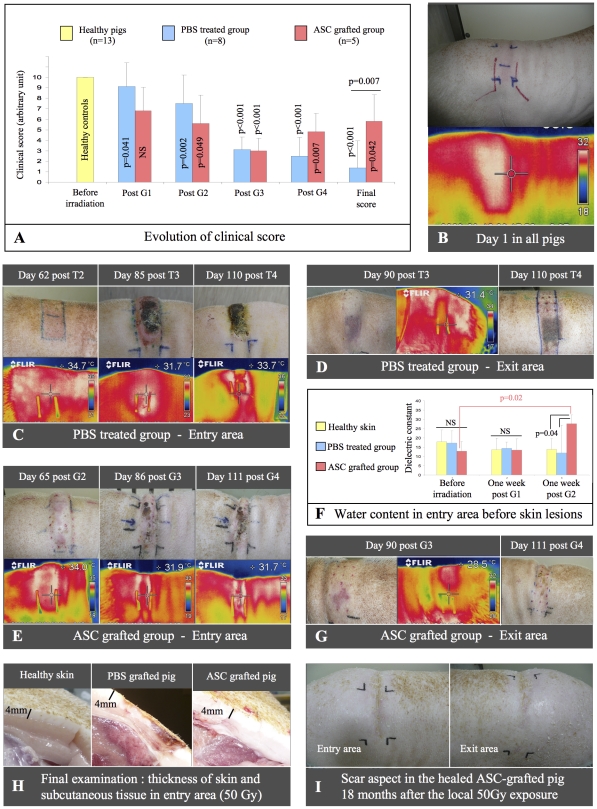
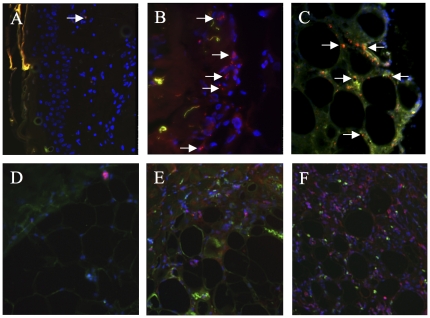
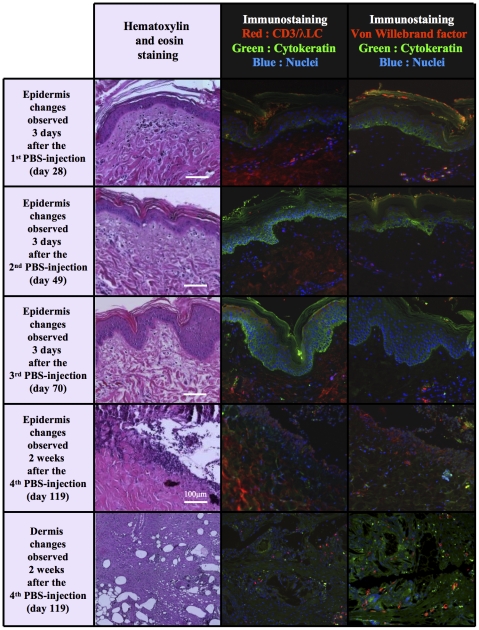
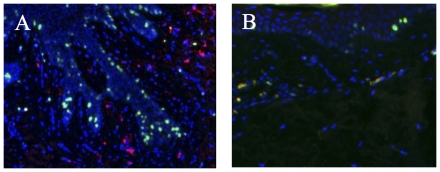
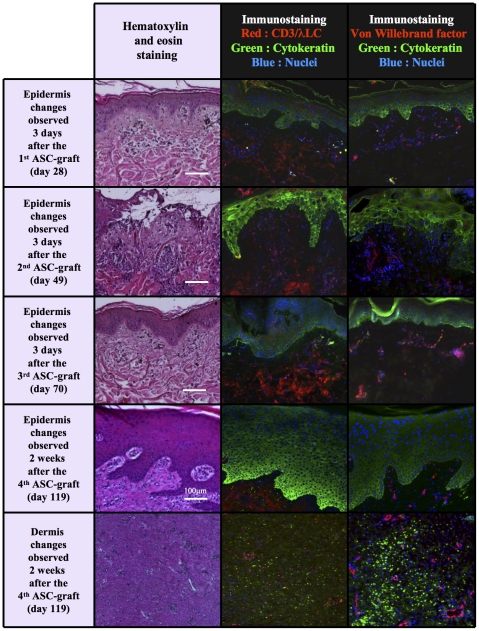
Cutaneous radiation syndrome (CRS) is the delayed consequence of localized skin exposure to high doses of ionizing radiation. Here we examined for the first time in a large animal model the therapeutic potential of autologous adipose tissue-derived stroma cells (ASCs). For experiments, Göttingen minipigs were locally gamma irradiated using a (60)Co source at the dose of 50 Gy and grafted (n = 5) or not (n = 8). ASCs were cultured in MEM-alpha with 10% fetal calf serum and basic fibroblast growth factor (2 ng.mL(-1)) and post irradiation were intradermally injected on days 25, 46, 67 and finally between days 95 and 115 (50 × 10(6) ASCs each time) into the exposed area. All controls exhibited a clinical evolution with final necrosis (day 91). In grafted pigs an ultimate wound healing was observed in four out of five grafted animals (day 130 +/- 28). Immunohistological analysis of cytokeratin expression showed a complete epidermis recovery. Grafted ASCs accumulated at the dermis/subcutis barrier in which they attracted numerous immune cells, and even an increased vasculature in one pig. Globally this study suggests that local injection of ASCs may represent a useful strategy to mitigate CRS.
皮肤辐射综合征(CRS)是局部皮肤暴露于高剂量电离辐射的延迟后果。在这里,我们首次在大型动物模型中检查了自体脂肪组织衍生基质细胞(ASCs)的治疗潜力。对于实验,使用(60)Co 源以 50 Gy 的剂量对哥廷根小型猪进行局部 γ 照射,并进行移植(n = 5)或不移植(n = 8)。将 ASCs 在 MEM-alpha 中培养,其中含有 10%胎牛血清和碱性成纤维细胞生长因子(2ng.mL(-1)),并在照射后第 25、46、67 天以及最后在第 95 至 115 天之间(每次 50×10(6)个 ASCs)将其注入暴露区域。所有对照均表现出最终坏死的临床演变(第 91 天)。在移植的猪中,有四头移植动物(第 130 天 +/- 28 天)最终观察到伤口愈合。细胞角蛋白表达的免疫组织化学分析显示出完整的表皮恢复。移植的 ASCs 在真皮/皮下组织屏障处聚集,在该处它们吸引了大量的免疫细胞,甚至在一头猪中还增加了血管生成。总体而言,这项研究表明,局部注射 ASCs 可能是减轻 CRS 的一种有用策略。