• 文献检索
  • 文档翻译
  • 深度研究
  • 学术资讯
  • Suppr Zotero 插件Zotero 插件
  • 邀请有礼
  • 套餐&价格
  • 历史记录
应用&插件
Suppr Zotero 插件Zotero 插件浏览器插件Mac 客户端Windows 客户端微信小程序
定价
高级版会员购买积分包购买API积分包
服务
文献检索文档翻译深度研究API 文档MCP 服务
关于我们
关于 Suppr公司介绍联系我们用户协议隐私条款
关注我们

Suppr 超能文献

核心技术专利:CN118964589B侵权必究
粤ICP备2023148730 号-1Suppr @ 2026

文献检索

告别复杂PubMed语法,用中文像聊天一样搜索,搜遍4000万医学文献。AI智能推荐,让科研检索更轻松。

立即免费搜索

文件翻译

保留排版,准确专业,支持PDF/Word/PPT等文件格式,支持 12+语言互译。

免费翻译文档

深度研究

AI帮你快速写综述,25分钟生成高质量综述,智能提取关键信息,辅助科研写作。

立即免费体验

关于化能合成细菌与双壳类动物共生关系的进化生态学。

On the evolutionary ecology of symbioses between chemosynthetic bacteria and bivalves.

机构信息

Microbiology and Systems Biology Group, TNO, Utrechtseweg 48, 3700 AJ Zeist, The Netherlands.

出版信息

Appl Microbiol Biotechnol. 2012 Apr;94(1):1-10. doi: 10.1007/s00253-011-3819-9. Epub 2012 Feb 22.

DOI:10.1007/s00253-011-3819-9
PMID:22354364
原文链接:https://pmc.ncbi.nlm.nih.gov/articles/PMC3304057/
Abstract

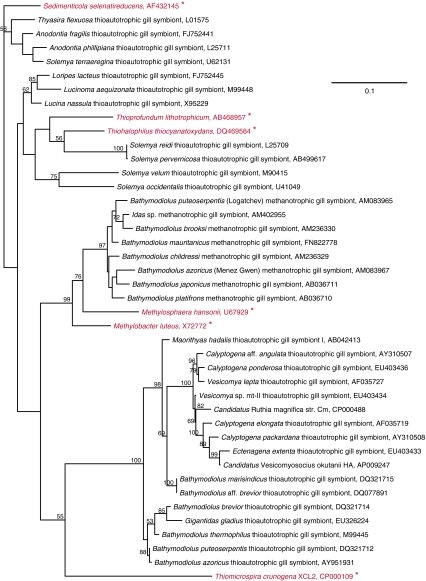
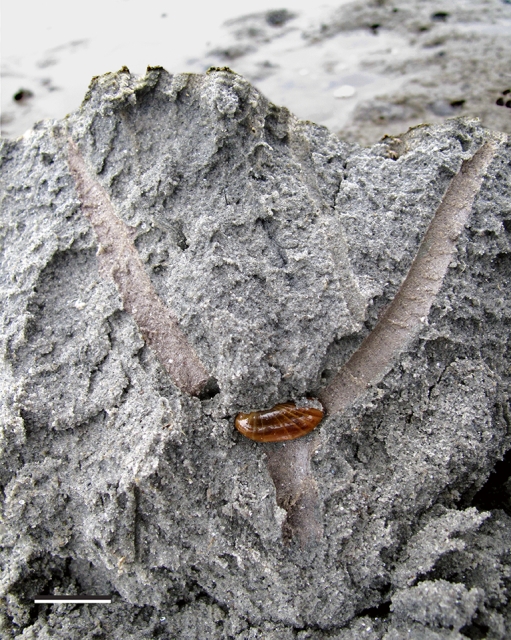
Mutualistic associations between bacteria and eukaryotes occur ubiquitously in nature, forming the basis for key ecological and evolutionary innovations. Some of the most prominent examples of these symbioses are chemosynthetic bacteria and marine invertebrates living in the absence of sunlight at deep-sea hydrothermal vents and in sediments rich in reduced sulfur compounds. Here, chemosynthetic bacteria living in close association with their hosts convert CO(2) or CH(4) into organic compounds and provide the host with necessary nutrients. The dominant macrofauna of hydrothermal vent and cold seep ecosystems all depend on the metabolic activity of chemosynthetic bacteria, which accounts for almost all primary production in these complex ecosystems. Many of these enigmatic mutualistic associations are found within the molluscan class Bivalvia. Currently, chemosynthetic symbioses have been reported from five distinct bivalve families (Lucinidae, Mytilidae, Solemyidae, Thyasiridae, and Vesicomyidae). This brief review aims to provide an overview of the diverse physiological and genetic adaptations of symbiotic chemosynthetic bacteria and their bivalve hosts.

摘要

细菌和真核生物之间的互利共生关系在自然界中普遍存在,构成了关键生态和进化创新的基础。这些共生关系中最著名的例子是在深海热液喷口和富含还原硫化合物的沉积物中生活的、无需阳光的化能合成细菌和海洋无脊椎动物。在这里,与宿主密切相关的化能合成细菌将 CO(2)或 CH(4)转化为有机化合物,并为宿主提供必要的营养物质。热液喷口和冷渗生态系统的主要大型动物都依赖于化能合成细菌的代谢活动,这些细菌几乎占这些复杂生态系统中所有初级生产力的来源。这些神秘的互利共生关系中的许多都存在于软体动物门双壳纲中。目前,已经从五个不同的双壳类家族(珠蚌科、贻贝科、海扇科、贻贝科和囊蛤科)中报告了化能合成共生关系。本简要综述旨在概述共生化能合成细菌及其双壳类宿主的多样化生理和遗传适应性。
https://cdn.ncbi.nlm.nih.gov/pmc/blobs/981e/3304057/c0c0d890a92e/253_2011_3819_Fig2_HTML.jpg
https://cdn.ncbi.nlm.nih.gov/pmc/blobs/981e/3304057/1635bf0be42d/253_2011_3819_Fig1_HTML.jpg
https://cdn.ncbi.nlm.nih.gov/pmc/blobs/981e/3304057/c0c0d890a92e/253_2011_3819_Fig2_HTML.jpg
https://cdn.ncbi.nlm.nih.gov/pmc/blobs/981e/3304057/1635bf0be42d/253_2011_3819_Fig1_HTML.jpg
https://cdn.ncbi.nlm.nih.gov/pmc/blobs/981e/3304057/c0c0d890a92e/253_2011_3819_Fig2_HTML.jpg

相似文献

1
On the evolutionary ecology of symbioses between chemosynthetic bacteria and bivalves.关于化能合成细菌与双壳类动物共生关系的进化生态学。
Appl Microbiol Biotechnol. 2012 Apr;94(1):1-10. doi: 10.1007/s00253-011-3819-9. Epub 2012 Feb 22.
2
Symbioses between deep-sea mussels (Mytilidae: Bathymodiolinae) and chemosynthetic bacteria: diversity, function and evolution.深海贻贝(贻贝科:深海贻贝亚科)与化学合成细菌之间的共生关系:多样性、功能与进化
C R Biol. 2009 Feb-Mar;332(2-3):298-310. doi: 10.1016/j.crvi.2008.08.003. Epub 2008 Nov 25.
3
Chemosynthetic symbioses.化能合成共生关系。
Curr Biol. 2020 Oct 5;30(19):R1137-R1142. doi: 10.1016/j.cub.2020.07.050.
4
The genome of the intracellular bacterium of the coastal bivalve, Solemya velum: a blueprint for thriving in and out of symbiosis.沿海双壳贝类——船蛆(Solemya velum)细胞内细菌的基因组:共生与非共生状态下蓬勃生长的蓝图。
BMC Genomics. 2014 Oct 23;15:924. doi: 10.1186/1471-2164-15-924.
5
Origins and evolutionary flexibility of chemosynthetic symbionts from deep-sea animals.深海动物化学合成共生体的起源与进化灵活性
Biol Bull. 2012 Aug;223(1):123-37. doi: 10.1086/BBLv223n1p123.
6
Chemosynthetic bacteria found in bivalve species from mud volcanoes of the Gulf of Cadiz.在加的斯湾泥火山双壳类物种中发现的化学合成细菌。
FEMS Microbiol Ecol. 2010 Sep;73(3):486-99. doi: 10.1111/j.1574-6941.2010.00913.x. Epub 2010 May 25.
7
Bacterial endosymbioses in Solemya (Mollusca: Bivalvia)--model systems for studies of symbiont-host adaptation.索氏蛤(软体动物:双壳纲)中的细菌内共生——共生体-宿主适应性研究的模型系统
Antonie Van Leeuwenhoek. 2006 Nov;90(4):343-60. doi: 10.1007/s10482-006-9086-6. Epub 2006 Oct 7.
8
Mixotrophic chemosynthesis in a deep-sea anemone from hydrothermal vents in the Pescadero Basin, Gulf of California.加利福尼亚湾皮斯卡德罗盆地热液喷口深海海葵的混合营养化学合成。
BMC Biol. 2021 Jan 18;19(1):8. doi: 10.1186/s12915-020-00921-1.
9
Host-Endosymbiont Genome Integration in a Deep-Sea Chemosymbiotic Clam.深海化能共生蛤中宿主-内共生体基因组的整合。
Mol Biol Evol. 2021 Jan 23;38(2):502-518. doi: 10.1093/molbev/msaa241.
10
Life in the Dark: Phylogenetic and Physiological Diversity of Chemosynthetic Symbioses.黑暗中的生命:化学合成共生关系的系统发育与生理多样性
Annu Rev Microbiol. 2021 Oct 8;75:695-718. doi: 10.1146/annurev-micro-051021-123130. Epub 2021 Aug 5.

引用本文的文献

1
Variation in accessory and horizontal gene transfer-associated genes drives lucinid endosymbiont diversity.辅助基因和水平基因转移相关基因的变异驱动了Lucinidae科共生菌的多样性。
FEMS Microbiol Ecol. 2025 Jul 14;101(8). doi: 10.1093/femsec/fiaf074.
2
The Aquatic Symbiosis Genomics Project: probing the evolution of symbiosis across the Tree of Life.水生共生基因组计划:探索生命之树中共生关系的进化
Wellcome Open Res. 2024 Jun 10;6:254. doi: 10.12688/wellcomeopenres.17222.2. eCollection 2021.
3
A novel open-source cultivation system helps establish the first full cycle chemosynthetic symbiosis model system involving the giant ciliate .

本文引用的文献

1
Oxygen- and Nitrogen-Dependent Sulfur Metabolism in the Thiotrophic Clam Solemya reidi.硫营养型蛤类里氏 Solemya 中依赖氧和氮的硫代谢
Biol Bull. 1992 Jun;182(3):444-453. doi: 10.2307/1542264.
2
Metatranscriptomic analysis of sulfur oxidation genes in the endosymbiont of solemya velum.对瓣鳃纲软体动物内共生体中硫氧化基因的宏转录组分析。
Front Microbiol. 2011 Jun 20;2:134. doi: 10.3389/fmicb.2011.00134. eCollection 2011.
3
Complete genome sequence of Candidatus Ruthia magnifica.巨大鲁氏菌(暂定种)的全基因组序列
一种新型开源培养系统助力建立首个涉及大型纤毛虫的全周期化学合成共生模型系统。
Front Microbiol. 2024 Dec 12;15:1491485. doi: 10.3389/fmicb.2024.1491485. eCollection 2024.
4
A bacterial symbiont in the gill of the marine scallop metabolizes dimethylsulfoniopropionate.海洋扇贝鳃中的一种细菌共生体可代谢二甲基巯基丙酸内盐。
mLife. 2023 Jun 26;2(2):178-189. doi: 10.1002/mlf2.12072. eCollection 2023 Jun.
5
Decline of a distinct coral reef holobiont community under ocean acidification.海洋酸化下独特珊瑚礁生物整体群落的衰退。
Microbiome. 2024 Apr 17;12(1):75. doi: 10.1186/s40168-023-01683-y.
6
Scallop-bacteria symbiosis from the deep sea reveals strong genomic coupling in the absence of cellular integration.深海扇贝-细菌共生关系揭示了在没有细胞融合的情况下强烈的基因组偶联。
ISME J. 2024 Jan 8;18(1). doi: 10.1093/ismejo/wrae048.
7
Ecological differences among hydrothermal vent symbioses may drive contrasting patterns of symbiont population differentiation.热液喷口共生体之间的生态差异可能导致共生体种群分化的对比模式。
mSystems. 2023 Aug 31;8(4):e0028423. doi: 10.1128/msystems.00284-23. Epub 2023 Jul 26.
8
The microbial landscape in bioturbated mangrove sediment: A resource for promoting nature-based solutions for mangroves.生物扰动红树林沉积物中的微生物景观:促进基于自然的红树林解决方案的资源。
Microb Biotechnol. 2023 Aug;16(8):1584-1602. doi: 10.1111/1751-7915.14273. Epub 2023 May 20.
9
Hologenome analysis reveals independent evolution to chemosymbiosis by deep-sea bivalves.全息基因组分析揭示深海双壳类动物通过化学共生进行独立进化。
BMC Biol. 2023 Mar 8;21(1):51. doi: 10.1186/s12915-023-01551-z.
10
Gene loss and symbiont switching during adaptation to the deep sea in a globally distributed symbiosis.在全球分布的共生关系中,适应深海过程中的基因丢失和共生体转换。
ISME J. 2023 Mar;17(3):453-466. doi: 10.1038/s41396-022-01355-z. Epub 2023 Jan 13.
Stand Genomic Sci. 2010 Oct 27;3(2):163-73. doi: 10.4056/sigs.1103048.
4
Extracellular and mixotrophic symbiosis in the whale-fall mussel Adipicola pacifica: a trend in evolution from extra- to intracellular symbiosis.外共生和混合营养共生在鲸落贻贝 Adipicola pacifica 中:从外共生到细胞内共生进化的趋势。
PLoS One. 2010 Jul 27;5(7):e11808. doi: 10.1371/journal.pone.0011808.
5
Genetic subdivision of chemosynthetic endosymbionts of Solemya velum along the Southern New England coast.沿新英格兰南部海岸的索氏潜泥蛤化学合成内共生体的遗传细分
Appl Environ Microbiol. 2009 Sep;75(18):6005-7. doi: 10.1128/AEM.00689-09. Epub 2009 Jul 24.
6
Pyrosequencing analysis of endosymbiont population structure: co-occurrence of divergent symbiont lineages in a single vesicomyid host clam.内共生菌种群结构的焦磷酸测序分析:单个双壳类宿主蛤中不同共生菌谱系的共存
Environ Microbiol. 2009 Aug;11(8):2136-47. doi: 10.1111/j.1462-2920.2009.01933.x. Epub 2009 Apr 21.
7
Effects of long-term starvation on a host bivalve (Codakia orbicularis, Lucinidae) and its symbiont population.长期饥饿对宿主双壳贝类(圆拟椋鸟蛤,光鳃蛤科)及其共生菌群的影响。
Appl Environ Microbiol. 2009 May;75(10):3304-13. doi: 10.1128/AEM.02659-08. Epub 2009 Apr 3.
8
Mutational meltdown in primary endosymbionts: selection limits Muller's ratchet.初级内共生体中的突变崩溃:选择限制了穆勒棘轮效应。
PLoS One. 2009;4(3):e4969. doi: 10.1371/journal.pone.0004969. Epub 2009 Mar 23.
9
Evidence for homologous recombination in intracellular chemosynthetic clam symbionts.细胞内化学合成蛤共生体中同源重组的证据。
Mol Biol Evol. 2009 Jun;26(6):1391-404. doi: 10.1093/molbev/msp049. Epub 2009 Mar 16.
10
Symbioses between deep-sea mussels (Mytilidae: Bathymodiolinae) and chemosynthetic bacteria: diversity, function and evolution.深海贻贝(贻贝科:深海贻贝亚科)与化学合成细菌之间的共生关系:多样性、功能与进化
C R Biol. 2009 Feb-Mar;332(2-3):298-310. doi: 10.1016/j.crvi.2008.08.003. Epub 2008 Nov 25.