Occidental College, Los Angeles, LA, USA.
Washington University, St Louis, MO, USA.
BMC Biol. 2021 Jan 18;19(1):8. doi: 10.1186/s12915-020-00921-1.
Numerous deep-sea invertebrates, at both hydrothermal vents and methane seeps, have formed symbiotic associations with internal chemosynthetic bacteria in order to harness inorganic energy sources typically unavailable to animals. Despite success in nearly all marine habitats and their well-known associations with photosynthetic symbionts, Cnidaria remain one of the only phyla present in the deep-sea without a clearly documented example of dependence on chemosynthetic symbionts.
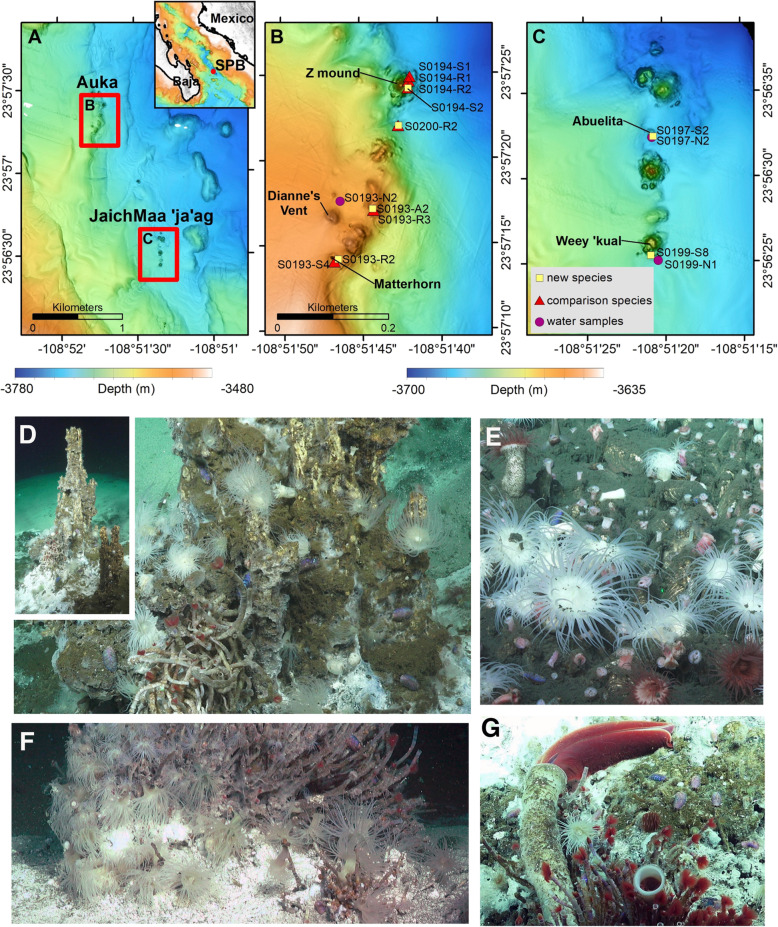
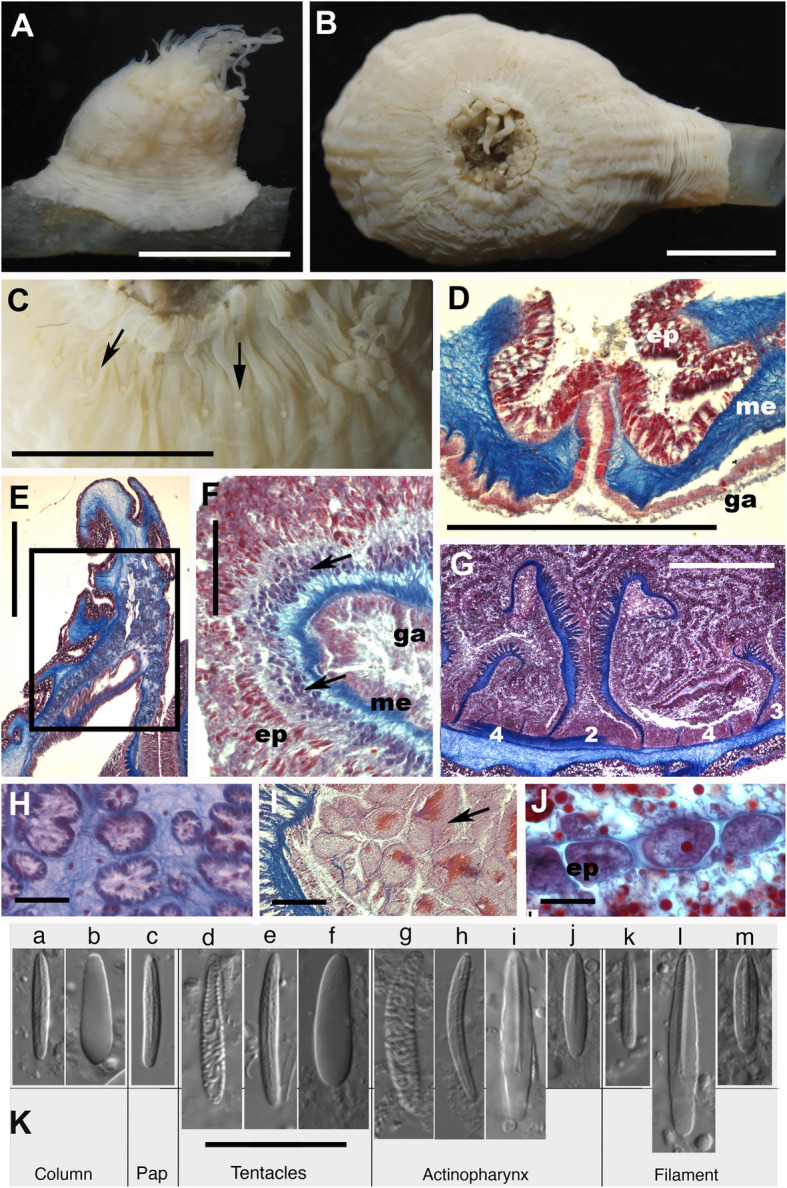
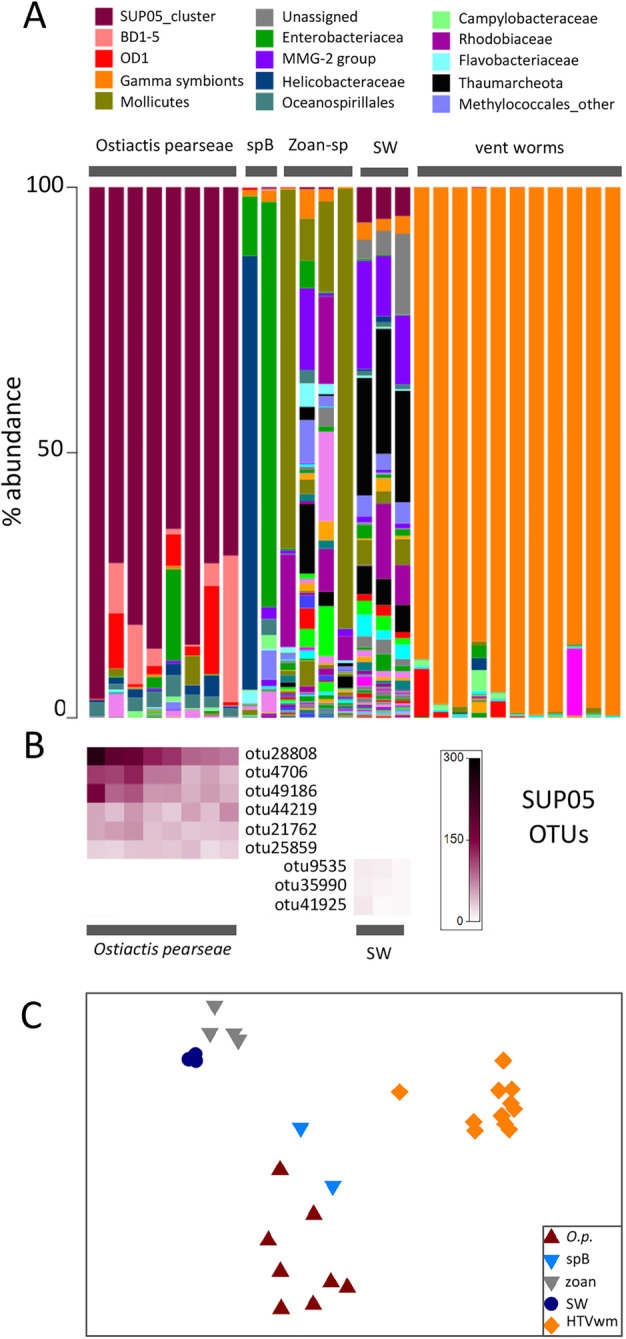
A new chemosynthetic symbiosis between the sea anemone Ostiactis pearseae and intracellular bacteria was discovered at ~ 3700 m deep hydrothermal vents in the southern Pescadero Basin, Gulf of California. Unlike most sea anemones observed from chemically reduced habitats, this species was observed in and amongst vigorously venting fluids, side-by-side with the chemosynthetic tubeworm Oasisia aff. alvinae. Individuals of O. pearseae displayed carbon, nitrogen, and sulfur tissue isotope values suggestive of a nutritional strategy distinct from the suspension feeding or prey capture conventionally employed by sea anemones. Molecular and microscopic evidence confirmed the presence of intracellular SUP05-related bacteria housed in the tentacle epidermis of O. pearseae specimens collected from 5 hydrothermally active structures within two vent fields ~ 2 km apart. SUP05 bacteria (Thioglobaceae) dominated the O. pearseae bacterial community, but were not recovered from other nearby anemones, and were generally rare in the surrounding water. Further, the specific Ostiactis-associated SUP05 phylotypes were not detected in the environment, indicating a specific association. Two unusual candidate bacterial phyla (the OD1 and BD1-5 groups) appear to associate exclusively with O. pearseae and may play a role in symbiont sulfur cycling.
The Cnidarian Ostiactis pearseae maintains a physical and nutritional alliance with chemosynthetic bacteria. The mixotrophic nature of this symbiosis is consistent with what is known about other cnidarians and the SUP05 bacterial group, in that they both form dynamic relationships to succeed in nature. The advantages gained by appropriating metabolic and structural resources from each other presumably contribute to their striking abundance in the Pescadero Basin, at the deepest known hydrothermal vents in the Pacific Ocean.
在热液喷口和甲烷渗漏处的大量深海无脊椎动物与内部化能合成细菌形成共生关系,以利用通常动物无法获得的无机能源。尽管在几乎所有海洋生境中都取得了成功,并且与光合共生体有着众所周知的联系,但刺胞动物仍然是深海中唯一没有明确记录依赖化能共生体的门。
在加利福尼亚湾皮斯卡德罗盆地南部约 3700 米深的热液喷口处发现了一种新的海葵 Ostiactis pearseae 与细胞内细菌之间的化能共生关系。与从化学还原生境中观察到的大多数海葵不同,这种物种出现在强烈喷发源之间,与化能管状蠕虫 Oasisia aff. alvinae 并排存在。O. pearseae 的个体表现出碳、氮和硫组织同位素值,表明其营养策略不同于海葵通常采用的悬浮摄食或捕食策略。分子和显微镜证据证实,在从两个相距约 2 公里的两个喷口场的 5 个热液活动结构中收集的 O. pearseae 标本的触须表皮中存在细胞内 SUP05 相关细菌。SUP05 细菌(硫杆菌科)在 O. pearseae 细菌群落中占主导地位,但未从其他附近的海葵中回收,并且在周围水中通常很少见。此外,特定的 Ostiactis 相关 SUP05 类群未在环境中检测到,表明存在特定的关联。两个不常见的候选细菌门(OD1 和 BD1-5 组)似乎仅与 O. pearseae 相关联,并且可能在共生体硫循环中发挥作用。
刺胞动物 Ostiactis pearseae 与化能合成细菌保持着物理和营养联盟。这种共生关系的混合营养性质与其他刺胞动物和 SUP05 细菌群的情况一致,因为它们都形成了动态关系以在自然界中取得成功。从彼此那里获得代谢和结构资源的优势,想必有助于它们在皮斯卡德罗盆地中大量存在,这是太平洋中已知最深的热液喷口。