Laboratory of Dermatology and Immunodeficiencies, LIM-56, Department of Dermatology, Medical School, University of São Paulo, São Paulo, Brazil.
PLoS One. 2012;7(2):e31608. doi: 10.1371/journal.pone.0031608. Epub 2012 Feb 15.
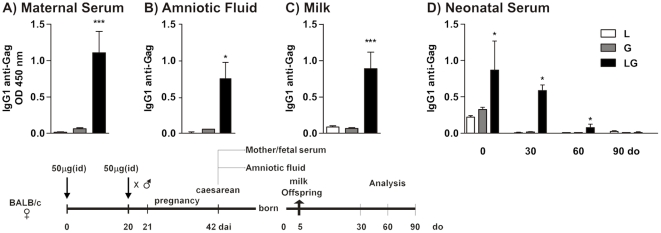
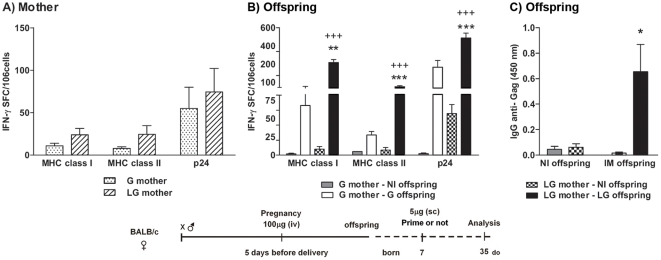
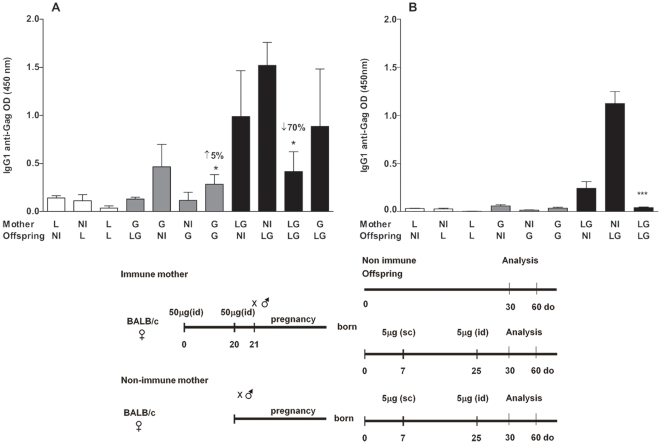
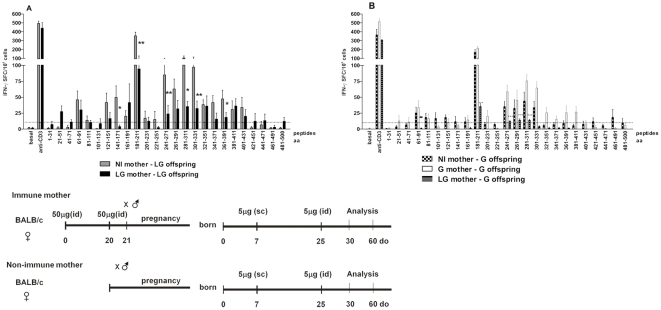
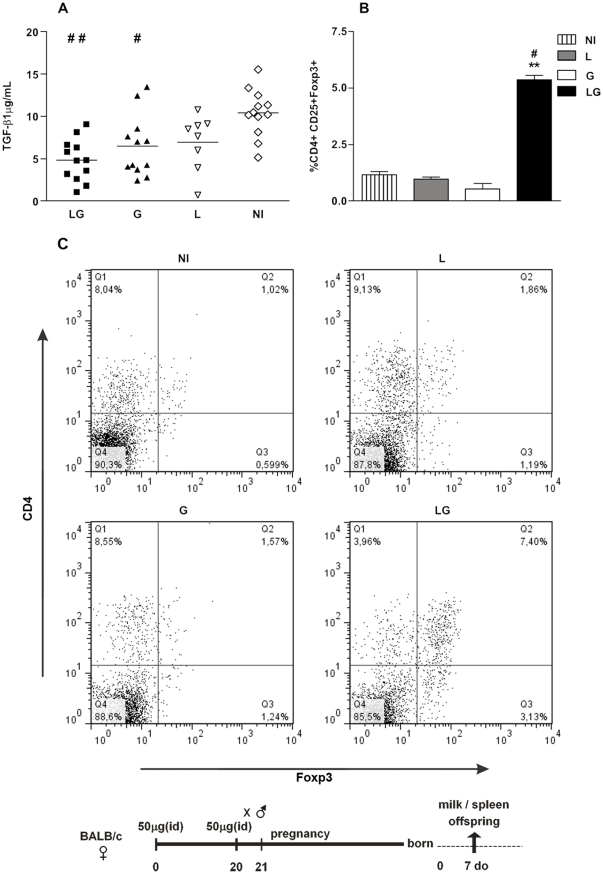
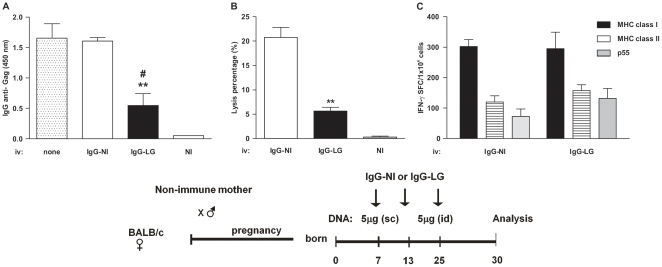
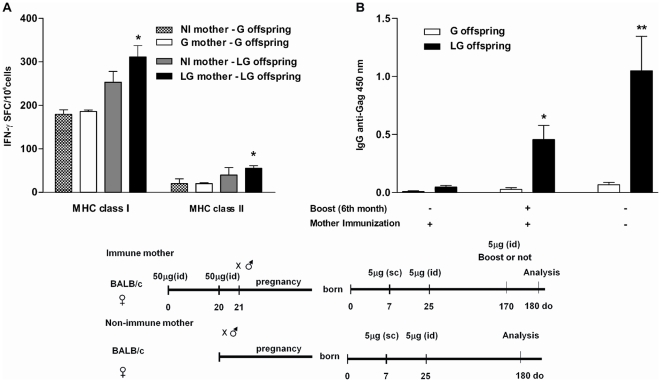
Infants born to HIV-infected mothers are at high risk of becoming infected during gestation or the breastfeeding period. A search is thus warranted for vaccine formulations that will prevent mother-to-child HIV transmission. The LAMP/gag DNA chimeric vaccine encodes the HIV-1 p55gag fused to the lysosome-associated membrane protein-1 (LAMP-1) and has been shown to enhance anti-Gag antibody (Ab) and cellular immune responses in adult and neonatal mice; such a vaccine represents a new concept in antigen presentation. In this study, we evaluated the effect of LAMP/gag DNA immunization on neonates either before conception or during pregnancy. LAMP/gag immunization of BALB/c mice before conception by the intradermal route led to the transfer of anti-Gag IgG1 Ab through the placenta and via breastfeeding. Furthermore, there were an increased percentage of CD4+CD25+Foxp3+T cells in the spleens of neonates. When offspring were immunized with LAMP/gag DNA, the anti-Gag Ab response and the Gag-specific IFN-γ-secreting cells were decreased. Inhibition of anti-Gag Ab production and cellular responses were not observed six months after immunization, indicating that maternal immunization did not interfere with the long-lasting memory response in offspring. Injection of purified IgG in conjunction with LAMP/gag DNA immunization decreased humoral and cytotoxic T-cell responses. LAMP/gag DNA immunization by intradermal injection prior to conception promoted the transfer of Ab, leading to a diminished response to Gag without interfering with the development of anti-Gag T- and B-cell memory. Finally, we assessed responses after one intravenous injection of LAMP/gag DNA during the last five days of pregnancy. The intravenous injection led to in utero immunization. In conclusion, DNA vaccine enconding LAMP-1 with Gag and other HIV-1 antigens should be considered in the development of a protective vaccine for the maternal/fetal and newborn periods.
受 HIV 感染的母亲所生婴儿在妊娠或哺乳期感染 HIV 的风险很高。因此,有必要寻找可预防母婴 HIV 传播的疫苗制剂。LAMP/gag DNA 嵌合疫苗编码 HIV-1 p55gag 融合到溶酶体相关膜蛋白-1(LAMP-1),已显示可增强成年和新生小鼠的抗 Gag 抗体(Ab)和细胞免疫应答;这种疫苗代表了抗原呈递的新概念。在这项研究中,我们评估了在受孕前或怀孕期间对新生儿进行 LAMP/gag DNA 免疫的效果。通过皮内途径在受孕前对 BALB/c 小鼠进行 LAMP/gag 免疫,导致抗 Gag IgG1 Ab 通过胎盘和母乳喂养进行转移。此外,新生儿脾脏中 CD4+CD25+Foxp3+T 细胞的比例增加。当后代用 LAMP/gag DNA 免疫时,抗 Gag Ab 反应和 Gag 特异性 IFN-γ 分泌细胞减少。免疫后六个月未观察到抗 Gag Ab 产生和细胞反应的抑制,表明母体免疫不会干扰后代的长期记忆反应。与 LAMP/gag DNA 免疫一起注射纯化 IgG 可降低体液和细胞毒性 T 细胞反应。在受孕前通过皮内注射进行 LAMP/gag DNA 免疫可促进 Ab 的转移,导致对 Gag 的反应减弱,而不干扰抗 Gag T 和 B 细胞记忆的发育。最后,我们在妊娠的最后五天内评估了一次静脉注射 LAMP/gag DNA 后的反应。静脉注射导致宫内免疫。总之,编码 LAMP-1 和其他 HIV-1 抗原的 DNA 疫苗应在开发针对母婴和新生儿期的保护性疫苗时加以考虑。