Centre for Plasma Physics, School of Mathematics and Physics, Queen’s University Belfast, Belfast, BT7 1NN, Northern Ireland, UK.
Sci Rep. 2011;1:18. doi: 10.1038/srep00018. Epub 2011 Jun 20.
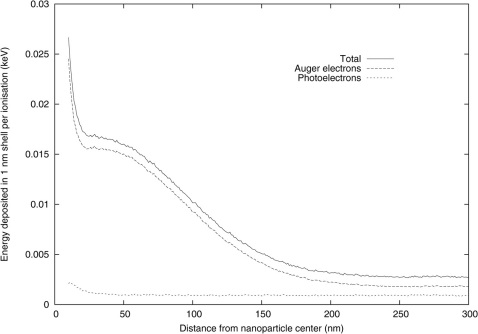
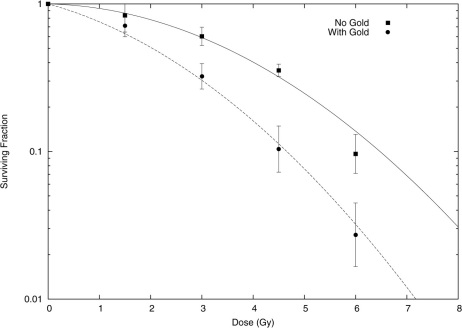
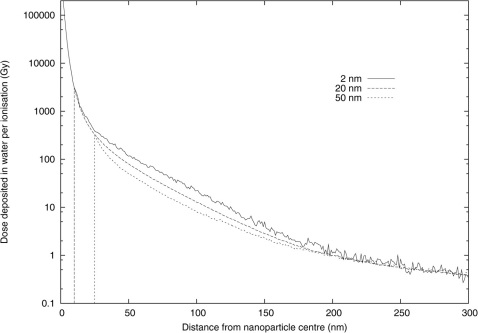
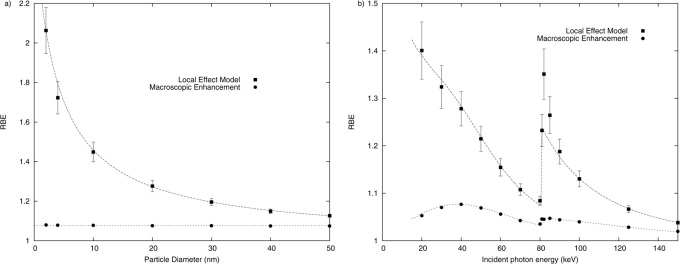
Gold nanoparticles (GNPs) are being proposed as contrast agents to enhance X-ray imaging and radiotherapy, seeking to take advantage of the increased X-ray absorption of gold compared to soft tissue. However, there is a great discrepancy between physically predicted increases in X-ray energy deposition and experimentally observed increases in cell killing. In this work, we present the first calculations which take into account the structure of energy deposition in the nanoscale vicinity of GNPs and relate this to biological outcomes, and show for the first time good agreement with experimentally observed cell killing by the combination of X-rays and GNPs. These results are not only relevant to radiotherapy, but also have implications for applications of heavy atom nanoparticles in biological settings or where human exposure is possible because the localised energy deposition high-lighted by these results may cause complex DNA damage, leading to mutation and carcinogenesis.
金纳米颗粒(GNPs)被提议作为对比剂来增强 X 射线成像和放射治疗,旨在利用金相对于软组织的增加的 X 射线吸收率。然而,物理预测的 X 射线能量沉积增加与实验观察到的细胞杀伤增加之间存在很大差异。在这项工作中,我们首次进行了计算,这些计算考虑了 GNPs 纳米级附近能量沉积的结构,并将其与生物学结果相关联,并首次显示了 X 射线和 GNPs 联合作用下细胞杀伤的实验观察结果的良好一致性。这些结果不仅与放射治疗有关,而且对于在生物环境中或可能发生人体暴露的情况下应用重原子纳米颗粒也具有意义,因为这些结果突出显示的局部能量沉积可能导致复杂的 DNA 损伤,从而导致突变和癌变。