Obermayer K, Ritter H, Schulten K
Beckman Institute, University of Illinois, Urbana-Champaign.
Proc Natl Acad Sci U S A. 1990 Nov;87(21):8345-9. doi: 10.1073/pnas.87.21.8345.
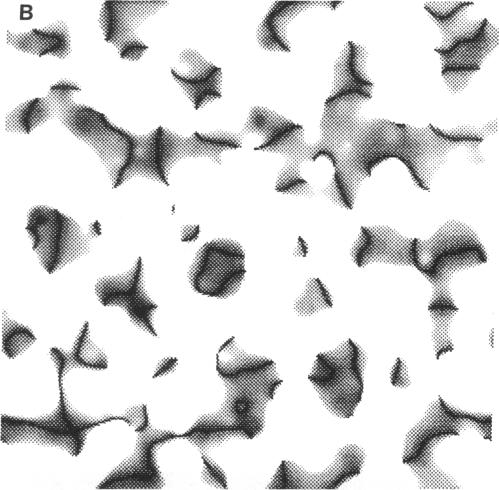
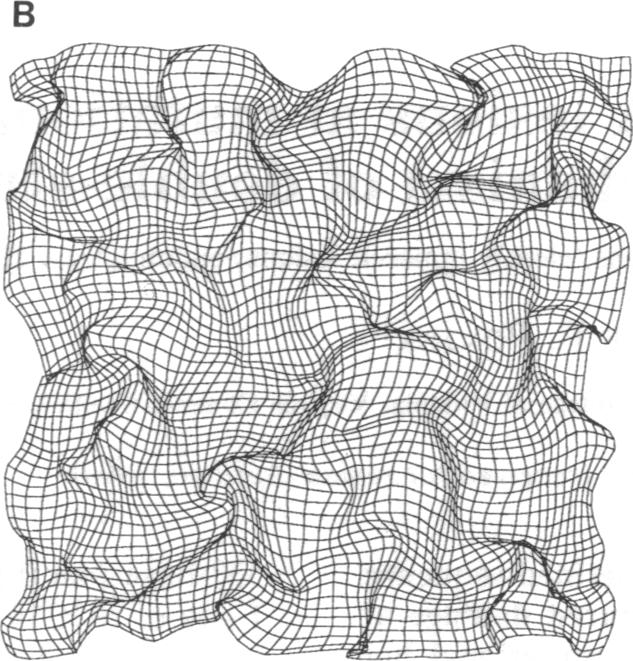
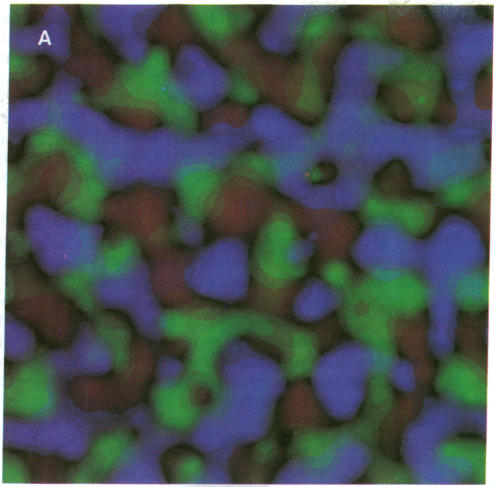
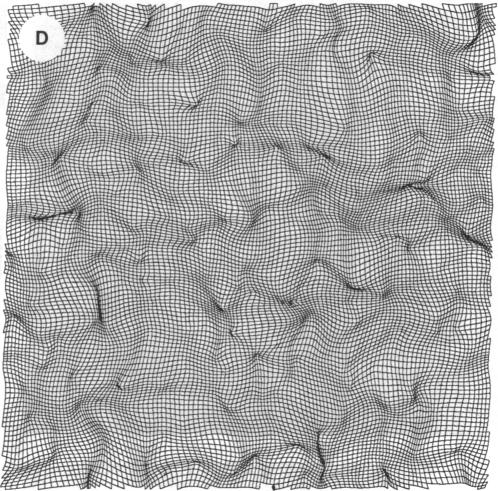
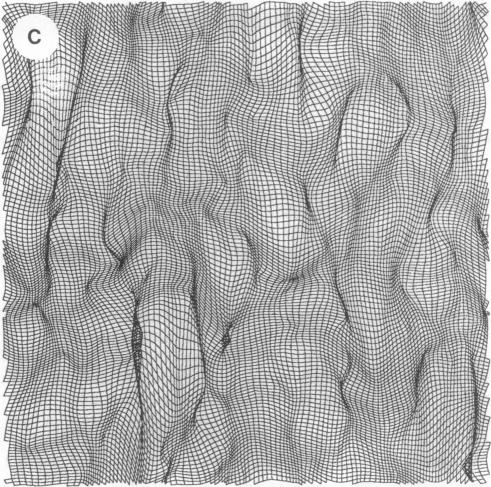
Orientation-selective cells in the striate cortex of higher animals are organized as a hierarchical topographic map of two stimulus features: (i) position in visual space and (ii) orientation. We show that the observed structure of the topographic map can arise from a principle of continuous mapping. For the realization of this principle we use a mathematical model that can be interpreted as an adaptive process changing a set of synaptic weights, or synaptic connection strengths, between two layers of cells. The patterns of orientation preference and selectivity generated by the model are similar to the patterns seen in the visual cortex of macaque monkey and cat and correspond to a neural projection that maps a more than two-dimensional feature space onto a two-dimensional cortical surface under the constraint that shape and position of the receptive fields of the neurons very smoothly over the cortical surface.
(i)视觉空间中的位置和(ii)方向。我们表明,观察到的地形图结构可以源于连续映射原理。为了实现这一原理,我们使用了一个数学模型,该模型可以被解释为一个自适应过程,该过程改变两层细胞之间的一组突触权重或突触连接强度。该模型生成的方向偏好和选择性模式类似于猕猴和猫视觉皮层中看到的模式,并且对应于一种神经投射,即在神经元感受野的形状和位置在皮层表面非常平滑变化的约束下,将一个超过二维的特征空间映射到二维皮层表面。