Department of Healthcare Management, Korea University, Seoul, Korea.
Med Sci Monit. 2012 Mar;18(3):CR174-81. doi: 10.12659/msm.882522.
A number of studies have evaluated exercise interventions compared with other treatment strategies for subjects with recurrent low back pain (LBP); however, subject pain level and balance were not carefully considered. The purpose of this study was to investigate the effectiveness of spinal stabilization exercises (SSE) for managing pain and increasing balance strategy changes following unexpected perturbations in patients diagnosed with recurrent LBP.
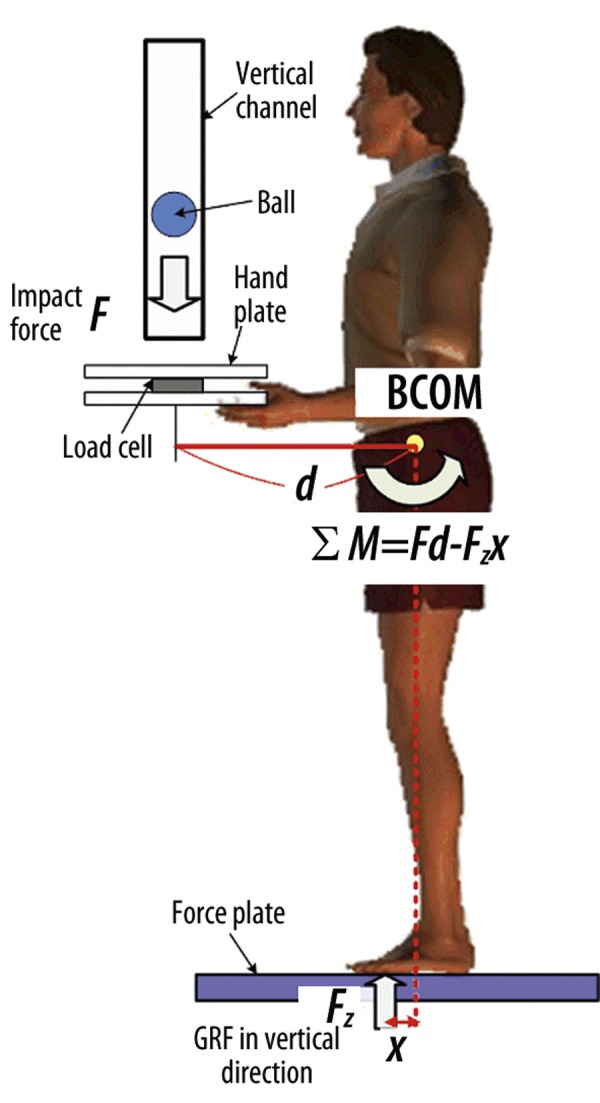
MATERIAL/METHODS: Twenty-one age- and gender-matched patients participated in a supervised SSE or control exercise program 5 times a week over a 4-week period. The Million Visual Analogue Scale (MVAS) and Oswestry Disability Index (ODI) were used to measure each patient's level of pain and disability. Balance measurements were derived from recordings of the anterior-posterior (A/P) and medio-lateral (M/L) center of pressure (COP) displacements during 3 consecutive, unexpected random perturbations.
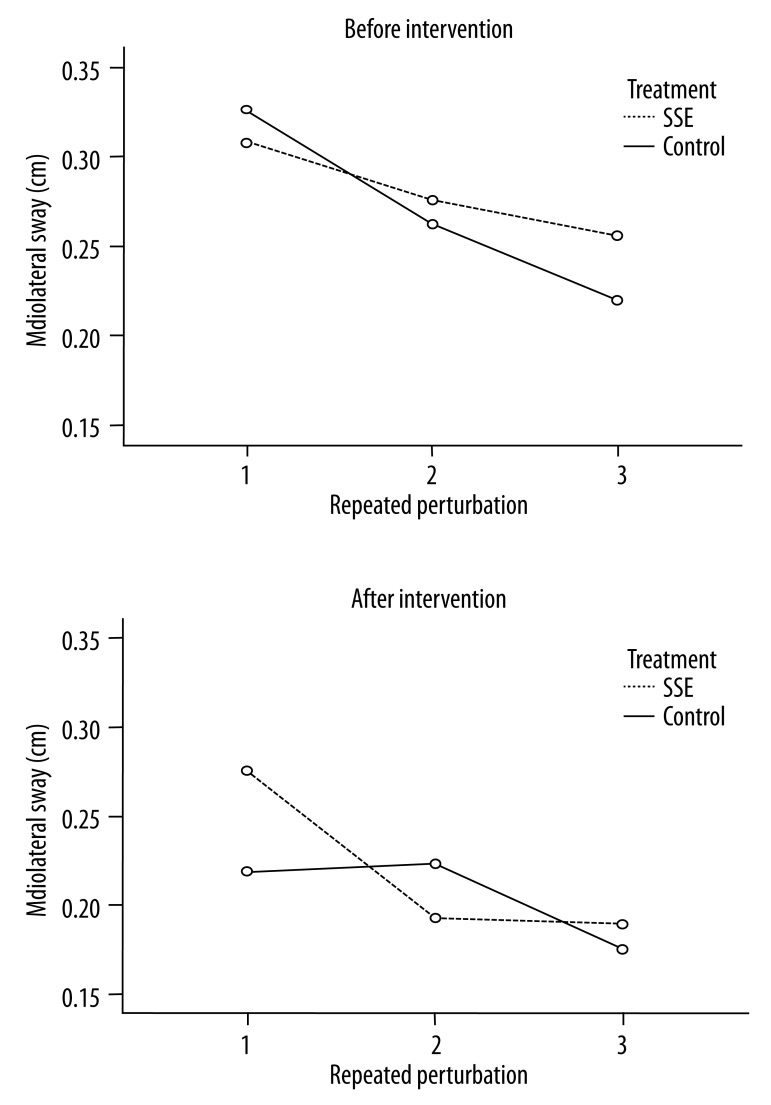
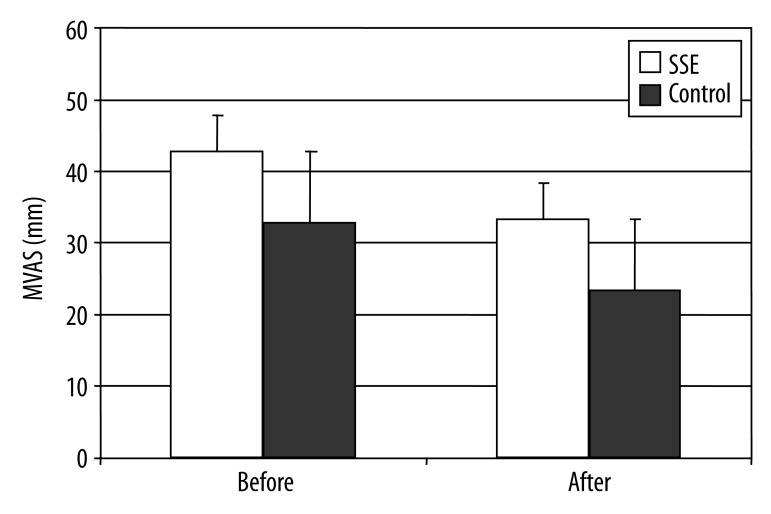
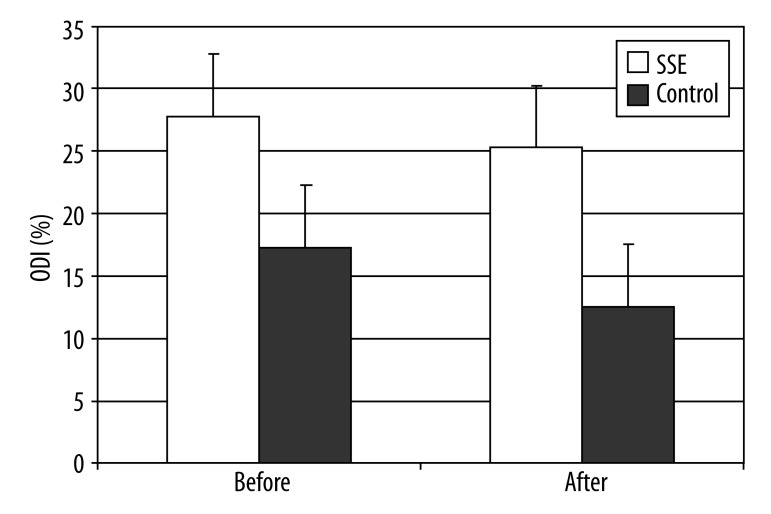
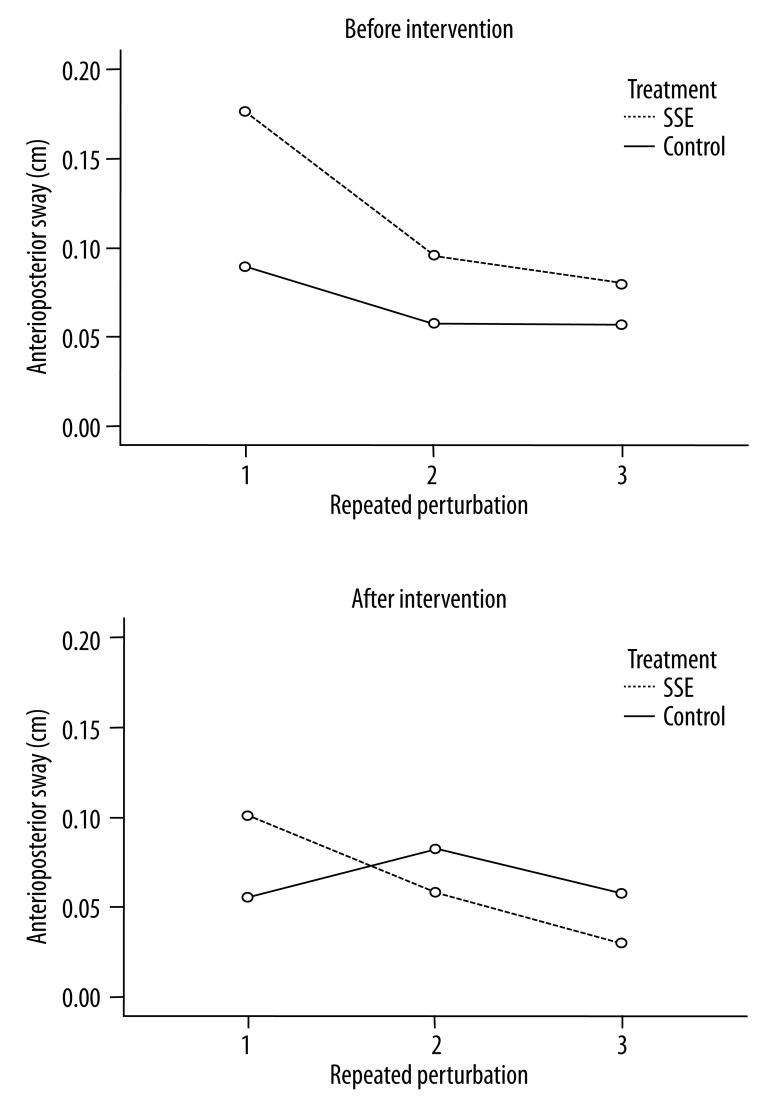
The level of reported pain and disability significantly decreased following treatment for both groups. Although the M/L sway was not significantly different in either group (p=0.86), there was a significant difference between group and measurement time during A/P sway (p=0.04). The A/P displacement of the SSE group significantly decreased compared with the control group. The decreased A/P displacement can be linked to the SSE intervention, which helps prevent further injury by limiting an individual's response rate to external perturbations.
Clinicians might consider SSE for LBP patients as a possible rehabilitation strategy to reduce A/P displacement.
一些研究已经评估了运动干预措施与其他治疗策略相比,对复发性腰痛(LBP)患者的效果;然而,患者的疼痛水平和平衡并没有被仔细考虑。本研究的目的是研究脊柱稳定性运动(SSE)在管理疼痛和增加平衡策略变化方面的有效性,在诊断为复发性 LBP 的患者中,对意外的干扰做出反应。
材料/方法:21 名年龄和性别匹配的患者参加了每周 5 次的监督 SSE 或对照运动计划,为期 4 周。百万视觉模拟量表(MVAS)和 Oswestry 残疾指数(ODI)用于测量每位患者的疼痛和残疾程度。平衡测量是从连续 3 次意外随机干扰期间的前后(A/P)和中间-外侧(M/L)中心压力(COP)位移记录中得出的。
两组患者的疼痛和残疾程度在治疗后均显著降低。虽然 M/L 摆动在两组之间没有显著差异(p=0.86),但在 A/P 摆动时,组间和测量时间之间存在显著差异(p=0.04)。SSE 组的 A/P 位移明显小于对照组。SSE 干预可显著降低 A/P 位移,有助于通过限制个体对外界干扰的反应速度,防止进一步受伤。
临床医生可能会考虑将 SSE 作为 LBP 患者的一种可能的康复策略,以减少 A/P 位移。