Hybridoma Lab, Department of Immunology, Pasteur Institute of Iran, Tehran, Iran.
Arch Med Sci. 2010 Jun 30;6(3):366-9. doi: 10.5114/aoms.2010.14256.
Borage (Echium amoenum) is a large annual plant of the Boraginaceae family that grows in most parts of Europe and in northern parts of Iran. The flower of borage is used as a medicinal herb in various countries as an antifebrile and antidepressant, for treatment of stress, circulatory heart diseases and pulmonary complaints, as a poultice for inflammatory swellings, as a diuretic, laxative, emollient and demulcent, and recently as a possible cancer protective factor. The Iranian borage is used in traditional medicine for infectious diseases and influenza and as an antifebrile. In this report, an aqueous extract of dried borage (Echium amoenum) flowers was tested in vitro for its antiviral activity.
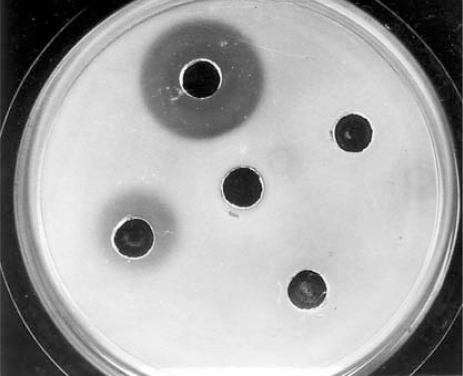
Bacteriophage 3C and its specific host, Staphylococcus aureus 8327 were used Aqueous extract of E. amoenum dried flower was prepared and anti-viral activity was determined by agar overlay method and the burst size was determined by one-step growth experiment. Antibacterial activity was determined by disc diffusion, agar-well diffusion and minimum inhibitory concentration methods.
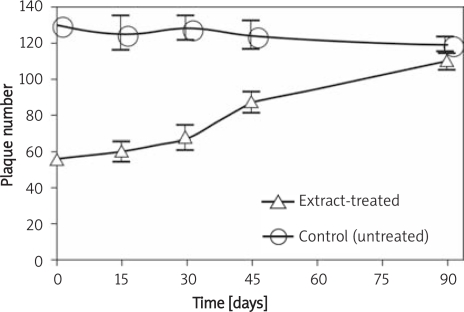
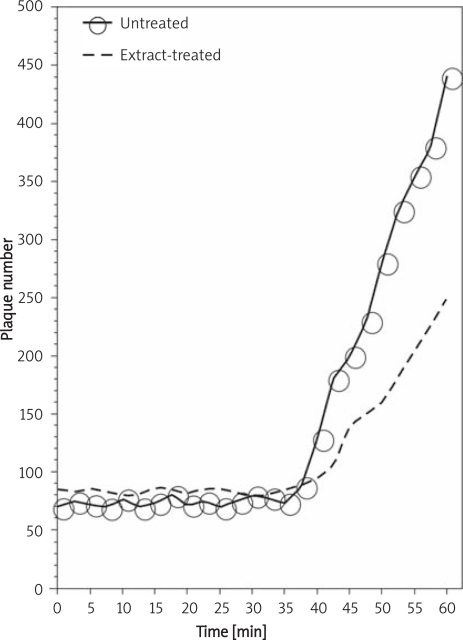
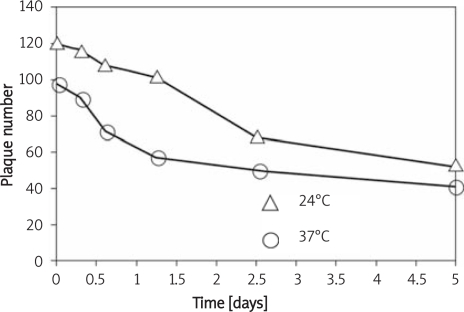
The extract showed concentration-dependent antiviral activity against free bacteriophage 3C and reduced the yield of phage from the host Staphylococcus aureus 8327. Antiviral activity of the extract is heat resistant. Autoclaving the extract at 110°C for 1 h did not eliminate its antiviral activity and the effect was similar to the extract that was filter sterilized. However, the activity of the freeze-dried extract was diminished during 90 days of storage at 4°C and the activity of the working solution was diminished in a one-week period at 4°C.
These results may provide a justification for the traditional use of the Iranian borage flower for infectious diseases and antifebrile activity.
琉璃苣(Echium amoenum)是紫草科的一种大型一年生植物,生长在欧洲大部分地区和伊朗北部。琉璃苣的花在许多国家被用作草药,具有退热和抗抑郁作用,可用于治疗压力、循环系统心脏病和肺部疾病,作为治疗炎症肿胀的敷布,具有利尿、通便、滋润和舒缓作用,最近还被认为是一种潜在的抗癌保护因素。伊朗琉璃苣在传统医学中用于治疗传染病和流感以及退热。在本报告中,我们测试了干燥琉璃苣(Echium amoenum)花的水提取物的体外抗病毒活性。
噬菌体 3C 及其特定宿主金黄色葡萄球菌 8327 被用于实验。制备琉璃苣干燥花的水提取物,并通过琼脂覆盖法测定抗病毒活性,通过一步生长实验测定爆发大小。通过纸片扩散法、琼脂孔扩散法和最小抑菌浓度法测定抗菌活性。
该提取物对游离噬菌体 3C 表现出浓度依赖性抗病毒活性,并降低了来自金黄色葡萄球菌 8327 宿主的噬菌体产量。提取物的抗病毒活性耐热。在 110°C 下对提取物进行 1 小时的高压灭菌不会消除其抗病毒活性,其效果与过滤除菌的提取物相似。然而,在 4°C 下储存 90 天时冻干提取物的活性会减弱,在 4°C 下工作溶液的活性在一周内会减弱。
这些结果可能为伊朗琉璃苣花用于传染病和退热的传统用途提供了依据。