School of Chinese Medicine, LKS Faculty of Medicine, The University of Hong Kong, Hong Kong SAR, China.
Chin Med. 2012 Feb 29;7(1):5. doi: 10.1186/1749-8546-7-5.
The studies on the effectiveness of Chinese herbal medicines (CHM) in treating liver fibrosis (LF) were not consistent. This study aims to systematically review the effectiveness of CHM on treating LF patients.
Databases including MEDLINE, AMED, EMBASE, The Cochrane Central Register of Controlled Trials, China National Knowledge Infrastructure, TCMOnline, Chinese Biomedical Literature Database, and Chinese Medical Current Contents were searched up to March 2011. Randomized controlled trials (RCTs) involving LF patients receiving CHM, Western medicine, combined CHM and Western medicine compared with placebo, Western medicine or no intervention were included. LF markers including serum hyaluronic acid (HA), laminin (LN), procollagen type III (PC-III), type IV collagen (IV-C), matrix metalloproteinase (MMP), and tissue inhibitors of metalloproteinase (TIMP) were measured as primary outcomes. Liver biochemistry, including alanine aminotransferase (ALT) and aspartarte aminotransferase (AST), and improvement of related clinical symptoms were measured as secondary outcomes. Risk of bias of allocation sequence, allocation concealment, blinding, incomplete outcome data, selective outcome reporting, and other biases were assessed.
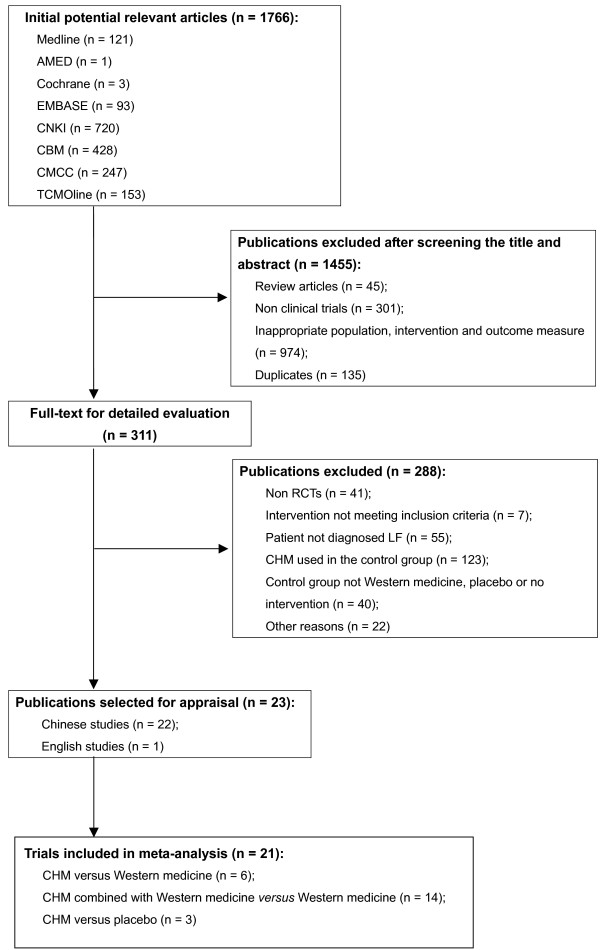
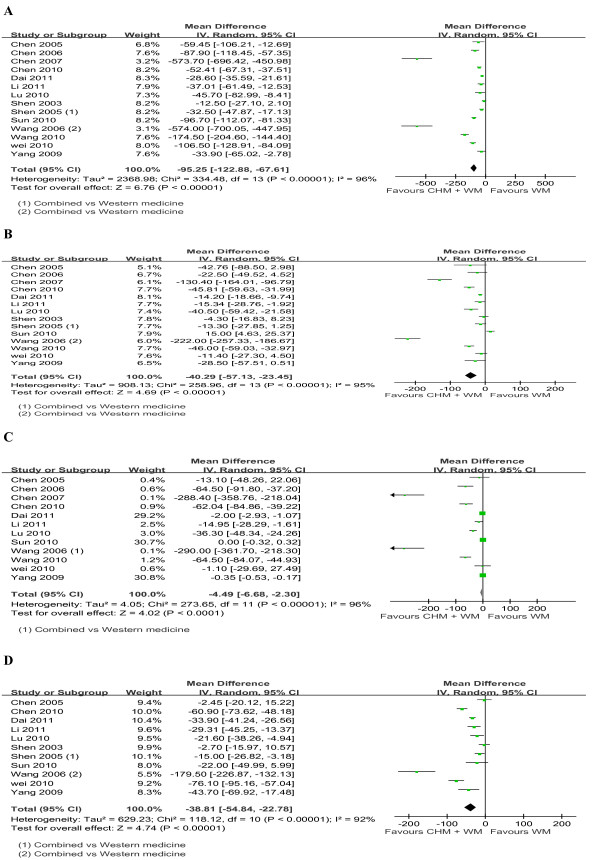
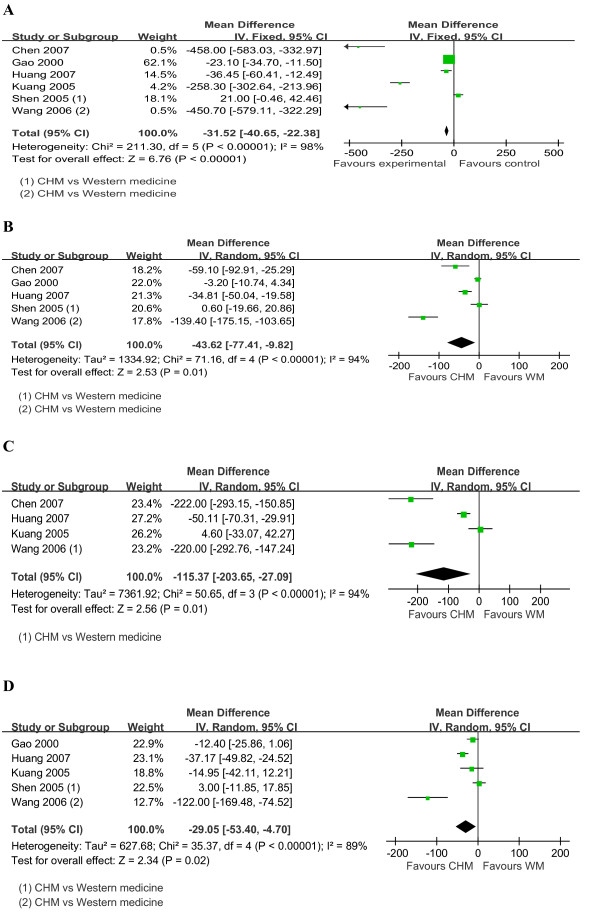
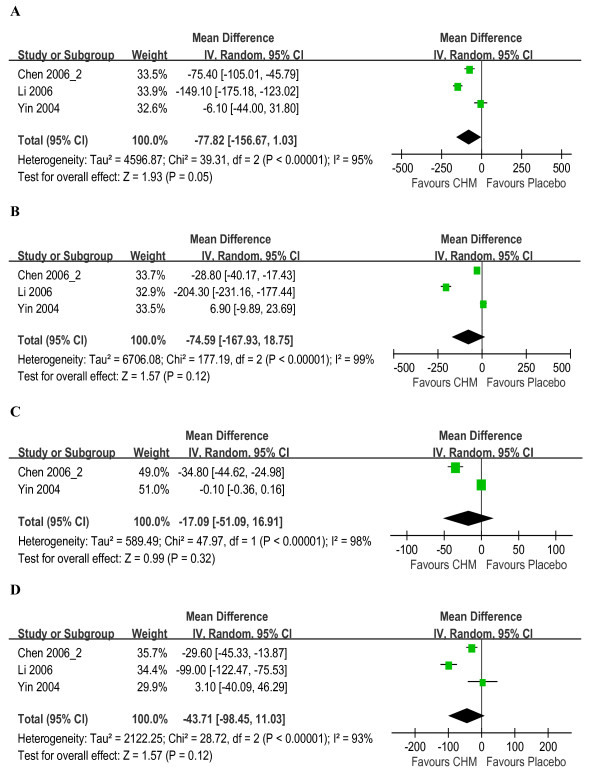
Twenty-three RCTs with 2123 participants were analyzed in subgroups of types of comparison and study quality. Fifteen studies were graded as good quality. CHM alone and combined with Western medicine showed significant improvements in HA, LN, PC-III and IV-C compared with Western medicine alone. However, there were no significant differences observed between CHM and placebo treatments.
The current inconclusive results in determining the effectiveness of CHM treatment on LF, due to the poor methodological quality and high heterogeneity of the studies, suggests that large RCTs using standardized Chinese medicine syndrome diagnosis and CHM formulae with longer follow-up are required for further evaluation.
中药治疗肝纤维化的疗效研究结果并不一致。本研究旨在系统评价中药治疗肝纤维化的疗效。
检索 MEDLINE、AMED、EMBASE、The Cochrane Central Register of Controlled Trials、中国生物医学文献数据库、中国期刊全文数据库、中医药在线数据库和中文科技资料目录等数据库,检索时限均为 2011 年 3 月前。收集中药治疗肝纤维化的随机对照试验(randomized controlled trials,RCT),包括中药与安慰剂、西药或空白对照比较,中药联合西药与西药或空白对照比较。以血清透明质酸(hyaluronic acid,HA)、层粘连蛋白(laminin,LN)、Ⅲ型前胶原(procollagen type III,PC-Ⅲ)、Ⅳ型胶原(type IV collagen,IV-C)、基质金属蛋白酶(matrix metalloproteinase,MMP)、金属蛋白酶组织抑制物(tissue inhibitors of metalloproteinase,TIMP)等肝纤维化标志物为主要结局指标,以肝功能指标(丙氨酸氨基转移酶 alanine aminotransferase,ALT 和天门冬氨酸氨基转移酶 aspartarte aminotransferase,AST)和相关临床症状改善为次要结局指标。采用偏倚风险评估工具评价纳入研究的分配序列、分配隐藏、盲法、结局数据不完整、选择性报告结局和其他偏倚风险。
共纳入 23 项 RCT,包括 2123 例患者,按对照药物种类和研究质量进行亚组分析。15 项研究被评为高质量研究。与西药组比较,中药组和中药联合西药组患者的 HA、LN、PC-Ⅲ和 IV-C 水平均显著改善,但中药组与安慰剂组之间差异无统计学意义。
由于纳入研究的方法学质量较差,异质性较大,目前中药治疗肝纤维化的疗效尚不确定。需要开展更多采用标准化中医证候诊断和中药方剂、随访时间更长的大样本 RCT 进一步评价。