Department of Microbiology, Jawaharlal Institute of Postgraduate Medical Education & Research, Puducherry, India.
Indian J Med Res. 2012;135(1):114-9. doi: 10.4103/0971-5916.93433.
BACKGROUND & OBJECTIVES: Plasmid mediated AmpC β-lactamase (PMABL) resistance in Escherichia coli and Klebsiella spp. is an emerging problem worldwide. Phenotypic methods are commonly used for detection of PMABL production in Gram-negative isolates, but molecular data about the prevalence of plasmid-mediated AmpC-type resistance at the national level are needed. Hence, a prospective study was undertaken to determine the occurrence of PMABL gene and its types among clinical isolates of E. coli and K. pneumoniae obtained from six different hospitals in India.
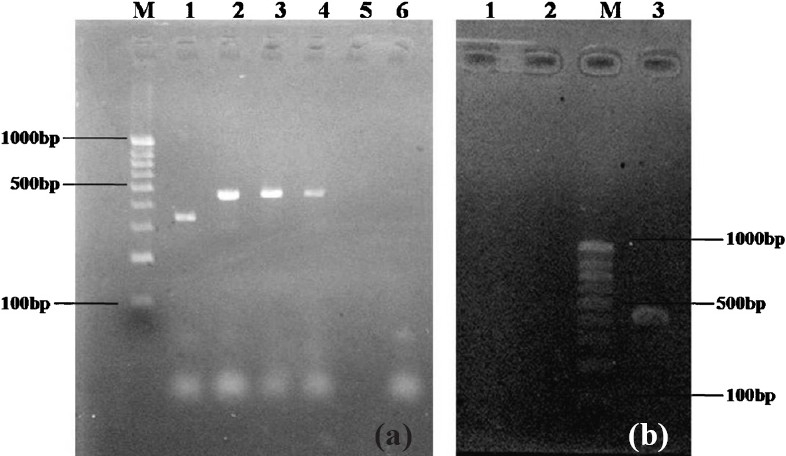
A total of 241 nosocomial isolates of K. pneumoniae (n=109) and E.coli (n=132) from six geographically distant hospitals in India were included. These were screened for cefoxitin resistance. AmpC disk test and modified three dimensional extraction test were used for phenotypic detection of PMABL production. Molecular types were determined by a multiplex PCR.
Among the 241 isolates, 187 (77.5%) were found to be cefoxitin resistant (K. pneumoniae n=83, E. coli n=104). AmpC activity was detectable in 153 (63.4%) isolates, (K. pneumoniae n=69, E. coli n=84). By PCR, the plasmid encoded AmpC genes were found in 92 (38.1%) isolates and the molecular types of the genes detected predominantly were DHA, CIT followed by MOX and ACC types.
INTERPRETATION & CONCLUSIONS: A high percentage of plasmid-encoded AmpC enzymes was noted in E. coli and K. pneumonia isolates obtained from different parts of the country. Phenotypic methods alone may not reflect the true number of PMABL producers. Genotypic methods need to be employed in national surveillance studies.
质粒介导的 AmpC β-内酰胺酶(PMABL)对大肠埃希菌和克雷伯菌属的耐药性是全球范围内的一个新兴问题。表型方法常用于检测革兰氏阴性分离物中 PMABL 的产生,但需要有关国家一级质粒介导的 AmpC 型耐药性流行的分子数据。因此,进行了一项前瞻性研究,以确定从印度六个不同医院获得的大肠埃希菌和肺炎克雷伯菌临床分离株中 PMABL 基因及其类型的发生情况。
本研究共纳入来自印度六个地理位置不同的医院的 241 株医院获得性肺炎克雷伯菌(n=109)和大肠埃希菌(n=132)分离株。这些分离株均进行头孢西丁耐药性筛选。采用 AmpC 酶纸片扩散试验和改良三维提取试验进行 PMABL 产生的表型检测。采用多重 PCR 确定分子类型。
在 241 株分离株中,发现 187 株(77.5%)对头孢西丁耐药(肺炎克雷伯菌 n=83,大肠埃希菌 n=104)。在 153 株(63.4%)分离株中可检测到 AmpC 活性(肺炎克雷伯菌 n=69,大肠埃希菌 n=84)。通过 PCR 发现 92 株(38.1%)分离株携带质粒编码的 AmpC 基因,检测到的基因主要分子类型为 DHA、CIT,其次是 MOX 和 ACC 型。
从该国不同地区获得的大肠埃希菌和肺炎克雷伯菌分离株中发现了高比例的质粒编码 AmpC 酶。单独的表型方法可能无法反映真正的 PMABL 产生者数量。需要在国家监测研究中采用基因方法。