Institute of Microbiology, University Hospital and University of Lausanne, Lausanne, Switzerland.
PLoS One. 2012;7(2):e32168. doi: 10.1371/journal.pone.0032168. Epub 2012 Feb 22.
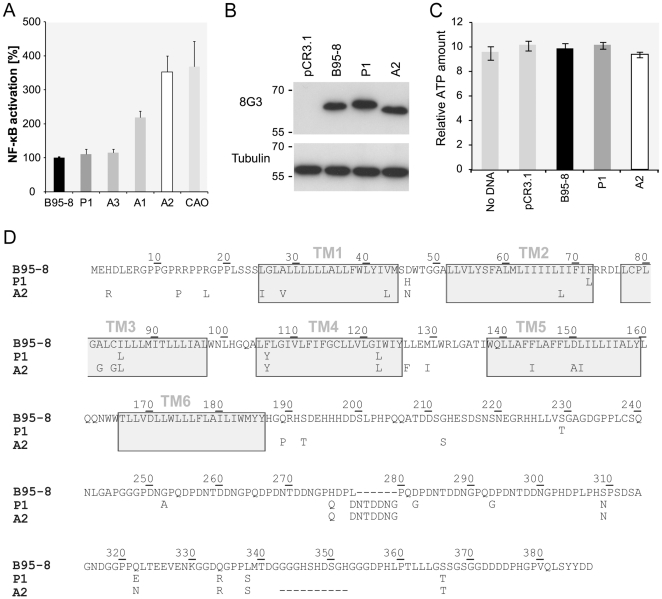
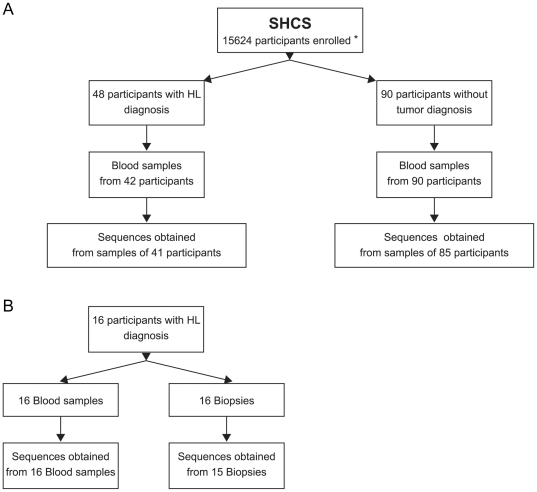
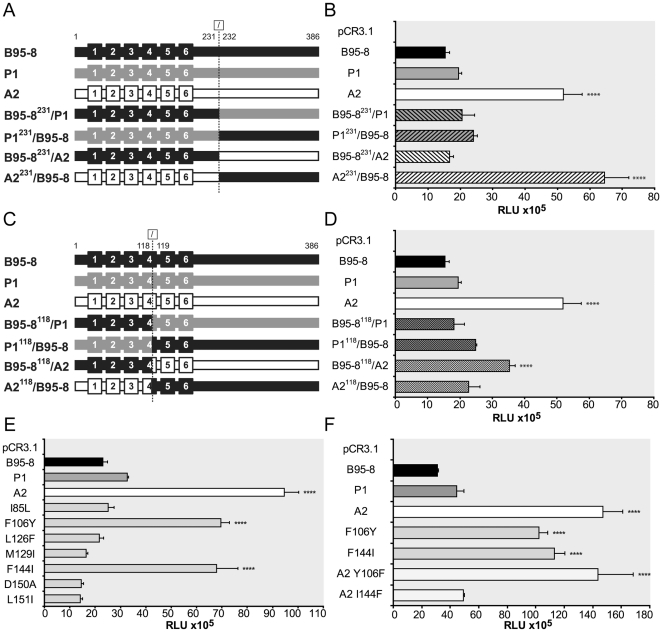
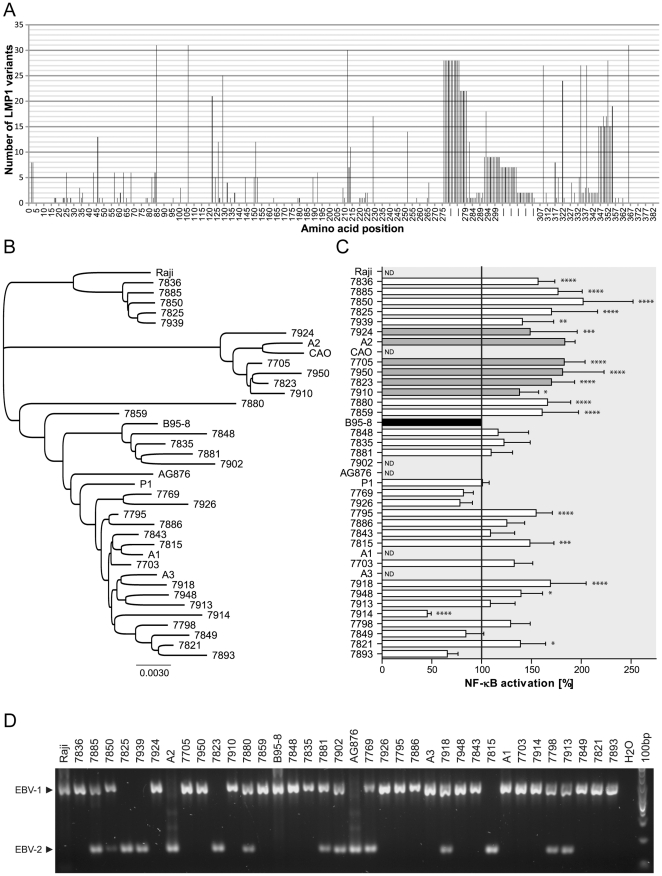
Epstein-Barr virus (EBV) is associated with several types of cancers including Hodgkin's lymphoma (HL) and nasopharyngeal carcinoma (NPC). EBV-encoded latent membrane protein 1 (LMP1), a multifunctional oncoprotein, is a powerful activator of the transcription factor NF-κB, a property that is essential for EBV-transformed lymphoblastoid cell survival. Previous studies reported LMP1 sequence variations and induction of higher NF-κB activation levels compared to the prototype B95-8 LMP1 by some variants. Here we used biopsies of EBV-associated cancers and blood of individuals included in the Swiss HIV Cohort Study (SHCS) to analyze LMP1 genetic diversity and impact of sequence variations on LMP1-mediated NF-κB activation potential. We found that a number of variants mediate higher NF-κB activation levels when compared to B95-8 LMP1 and mapped three single polymorphisms responsible for this phenotype: F106Y, I124V and F144I. F106Y was present in all LMP1 isolated in this study and its effect was variant dependent, suggesting that it was modulated by other polymorphisms. The two polymorphisms I124V and F144I were present in distinct phylogenetic groups and were linked with other specific polymorphisms nearby, I152L and D150A/L151I, respectively. The two sets of polymorphisms, I124V/I152L and F144I/D150A/L151I, which were markers of increased NF-κB activation in vitro, were not associated with EBV-associated HL in the SHCS. Taken together these results highlighted the importance of single polymorphisms for the modulation of LMP1 signaling activity and demonstrated that several groups of LMP1 variants, through distinct mutational paths, mediated enhanced NF-κB activation levels compared to B95-8 LMP1.
EB 病毒(EBV)与几种类型的癌症有关,包括霍奇金淋巴瘤(HL)和鼻咽癌(NPC)。EBV 编码的潜伏膜蛋白 1(LMP1)是一种多功能癌蛋白,是转录因子 NF-κB 的强有力激活剂,这一特性对于 EBV 转化的淋巴母细胞存活是必不可少的。先前的研究报道,与原型 B95-8 LMP1 相比,一些变体的 LMP1 序列变异和诱导更高的 NF-κB 激活水平。在这里,我们使用瑞士艾滋病毒队列研究(SHCS)中包含的 EBV 相关癌症的活检和个体血液来分析 LMP1 遗传多样性以及序列变异对 LMP1 介导的 NF-κB 激活潜力的影响。我们发现,与 B95-8 LMP1 相比,许多变体介导更高的 NF-κB 激活水平,并绘制了负责这种表型的三个单核苷酸多态性:F106Y、I124V 和 F144I。F106Y 存在于本研究中分离的所有 LMP1 中,其作用取决于变体,表明它受到其他多态性的调节。I124V 和 F144I 这两个多态性存在于不同的系统发育群中,并与附近的其他特定多态性 I152L 和 D150A/L151I 相关联。体外增强 NF-κB 激活的两个多态性组 I124V/I152L 和 F144I/D150A/L151I 与 SHCS 中的 EBV 相关 HL 无关。总之,这些结果强调了单核苷酸多态性对 LMP1 信号转导活性的调节作用,并证明了几组 LMP1 变体通过不同的突变途径,与 B95-8 LMP1 相比,介导增强的 NF-κB 激活水平。