Section of Gastroenterology, Department of Medicine, University of Chicago Medical Center, Chicago, Illinois, United States of America.
PLoS One. 2012;7(2):e32545. doi: 10.1371/journal.pone.0032545. Epub 2012 Feb 28.
BACKGROUND & AIMS: Past studies of the human intestinal microbiota are potentially confounded by the common practice of using bowel-cleansing preparations. We examined if colonic lavage changes the natural state of enteric mucosal-adherent microbes in healthy human subjects.
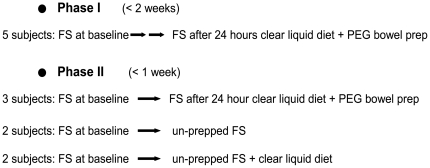
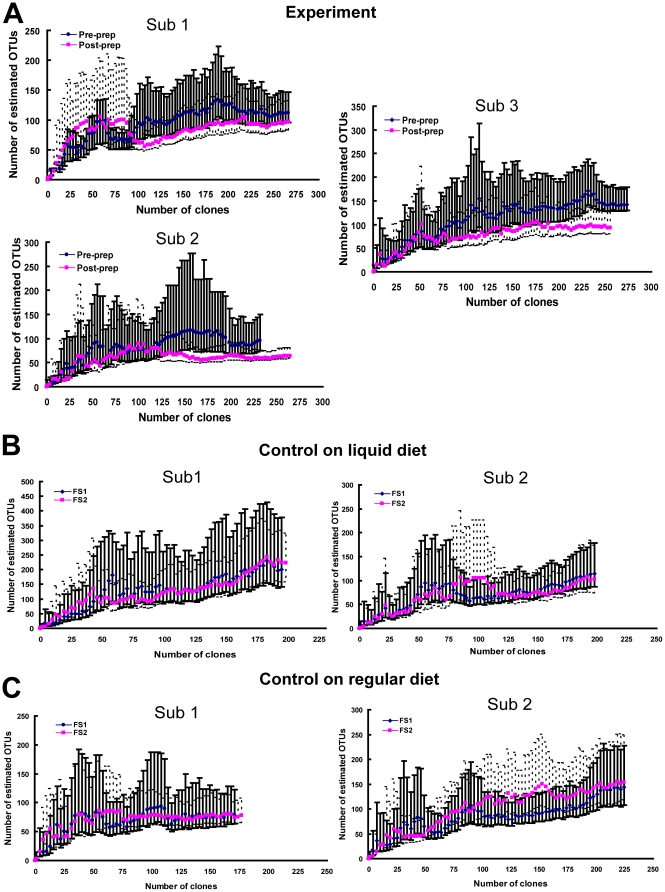
Twelve healthy individuals were divided into three groups; experimental group, control group one, and control group two. Subjects in the experimental group underwent an un-prepped flexible sigmoidoscopy with biopsies. Within two weeks, subjects were given a standard polyethylene glycol-based bowel cleansing preparation followed by a second flexible sigmoidoscopy. Subjects in control group one underwent two un-prepped flexible sigmoidoscopies within one week. Subjects in the second control group underwent an un-prepped flexible sigmoidoscopy followed by a second flexible sigmoidoscopy after a 24-hour clear liquid diet within one week. The mucosa-associated microbial communities from the two procedures in each subject were compared using 16S rRNA gene based terminal restriction fragment length polymorphism (T-RFLP), and library cloning and sequencing.
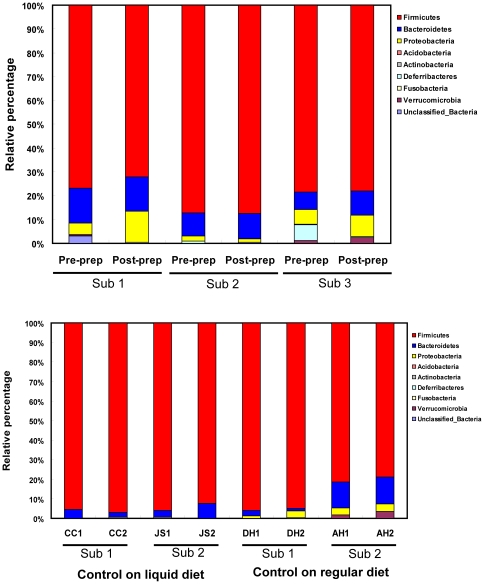
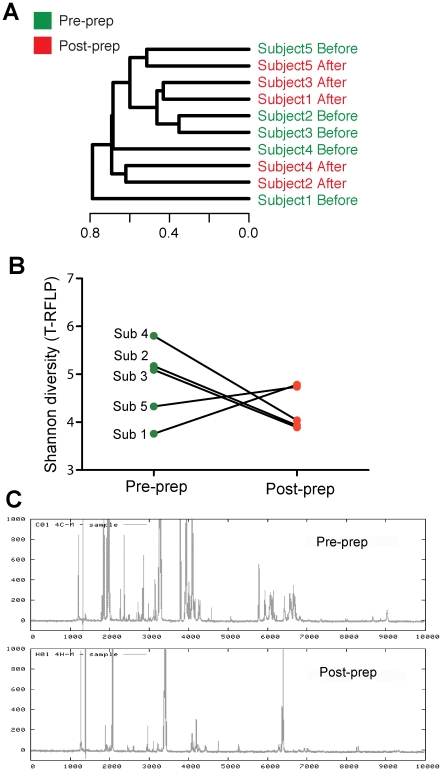
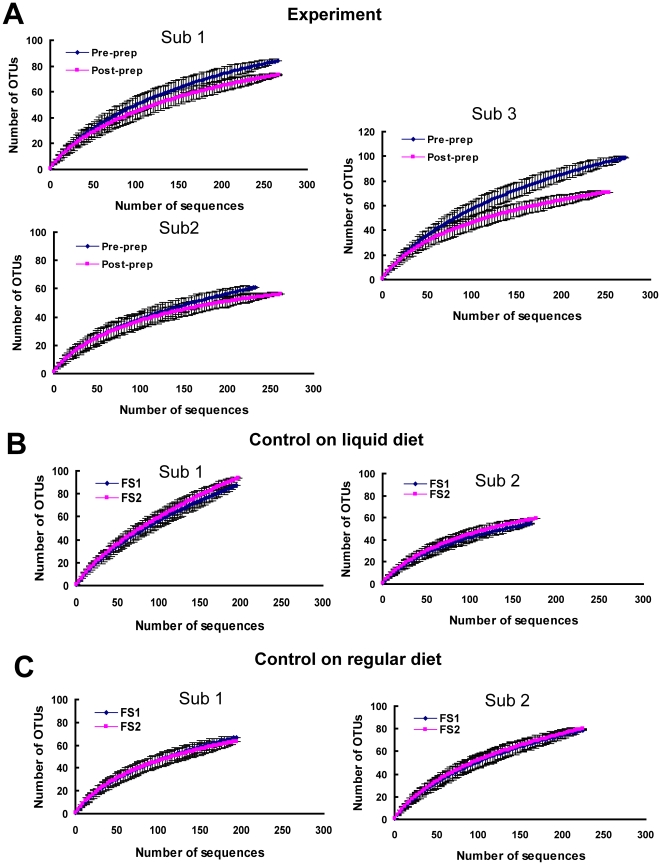
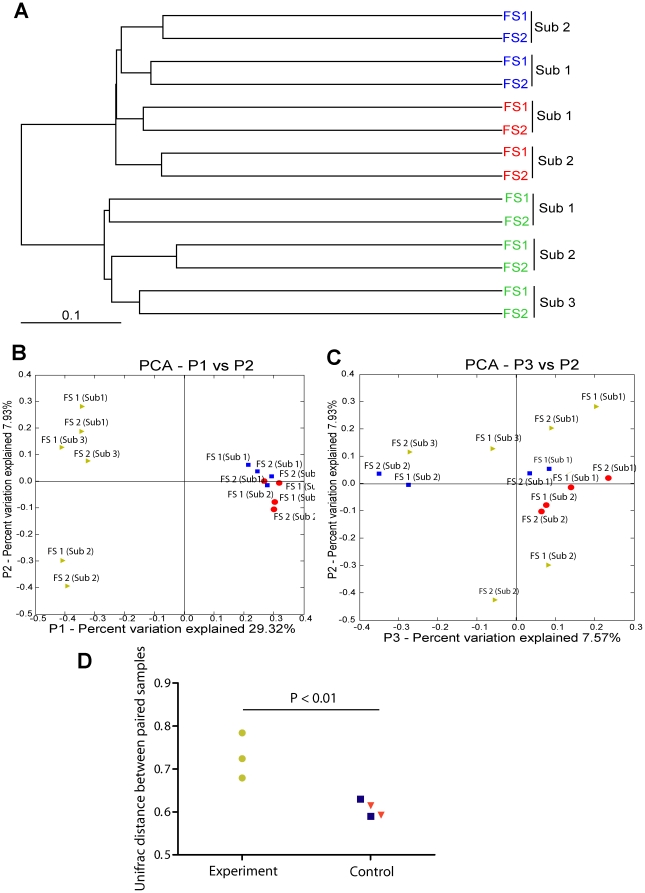
Clone library sequencing analysis showed that there were changes in the composition of the mucosa-associated microbiota in subjects after colonic lavage. These changes were not observed in our control groups. Standard bowel preparation altered the diversity of mucosa-associated microbiota. Taxonomic classification did not reveal significant changes at the phylum level, but there were differences observed at the genus level.
Standard bowel cleansing preparation altered the mucosal-adherent microbiota in all of our subjects, although the degree of change was variable. These findings underscore the importance of considering the confounding effects of bowel preparation when designing experiments exploring the gut microbiota.
过去对人类肠道微生物群的研究可能受到常用的肠道清洁准备的影响。我们研究了结肠灌洗是否会改变健康人体受试者肠道黏膜黏附微生物的自然状态。
将 12 名健康个体分为三组;实验组、对照组 1 和对照组 2。实验组受试者接受无准备的乙状结肠镜检查和活检。在两周内,受试者接受标准的聚乙二醇基肠道清洁准备,然后进行第二次乙状结肠镜检查。对照组 1 的受试者在一周内接受两次无准备的乙状结肠镜检查。对照组 2 的受试者在一周内接受无准备的乙状结肠镜检查,然后在 24 小时的清液饮食后再次进行乙状结肠镜检查。使用基于 16S rRNA 基因的末端限制性片段长度多态性(T-RFLP)和文库克隆和测序比较每个受试者两次操作的黏膜相关微生物群落。
克隆文库测序分析显示,结肠灌洗后受试者黏膜相关微生物群落的组成发生了变化。这些变化在我们的对照组中没有观察到。标准肠道准备改变了黏膜相关微生物群落的多样性。分类学分类在门水平上没有显示出显著变化,但在属水平上观察到了差异。
标准肠道清洁准备改变了我们所有受试者的黏膜黏附微生物群,尽管改变的程度不同。这些发现强调了在设计探索肠道微生物群的实验时,考虑肠道准备的混杂影响的重要性。