Lennikov Anton, Kitaichi Nobuyoshi, Fukase Risa, Murata Miyuki, Noda Kousuke, Ando Ryo, Ohguchi Takeshi, Kawakita Tetsuya, Ohno Shigeaki, Ishida Susumu
Laboratory of Ocular Cell Biology and Visual Science, Department of Ophthalmology, Hokkaido University Graduate School of Medicine, Sapporo, Japan.
Mol Vis. 2012;18:455-64. Epub 2012 Feb 14.
Ultraviolet (UV) acts as low-dose ionizing radiation. Acute UVB exposure causes photokeratitis and induces apoptosis in corneal cells. Astaxanthin (AST) is a carotenoid, present in seafood, that has potential clinical applications due to its high antioxidant activity. In the present study, we examined whether topical administration of AST has preventive and therapeutic effects on UV-photokeratitis in mice.
C57BL/6 mice were administered with AST diluted in polyethylene glycol (PEG) in instillation form (15 μl) to the right eye. Left eyes were given vehicle alone as controls. Immediately after the instillation, the mice, under anesthesia, were irradiated with UVB at a dose of 400 mJ/cm². Eyeballs were collected 24 h after irradiation and stained with H&E and TUNEL. In an in vitro study, mouse corneal epithelial (TKE2) cells were cultured with AST before UV exposure to quantify the UV-derived cytotoxicity.
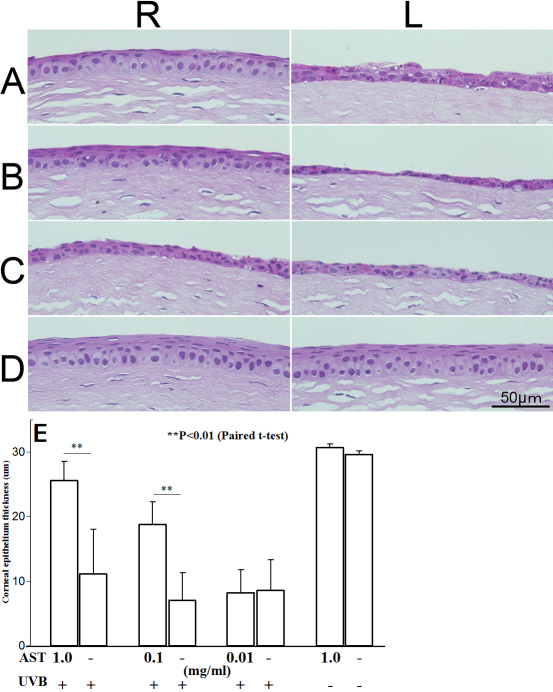
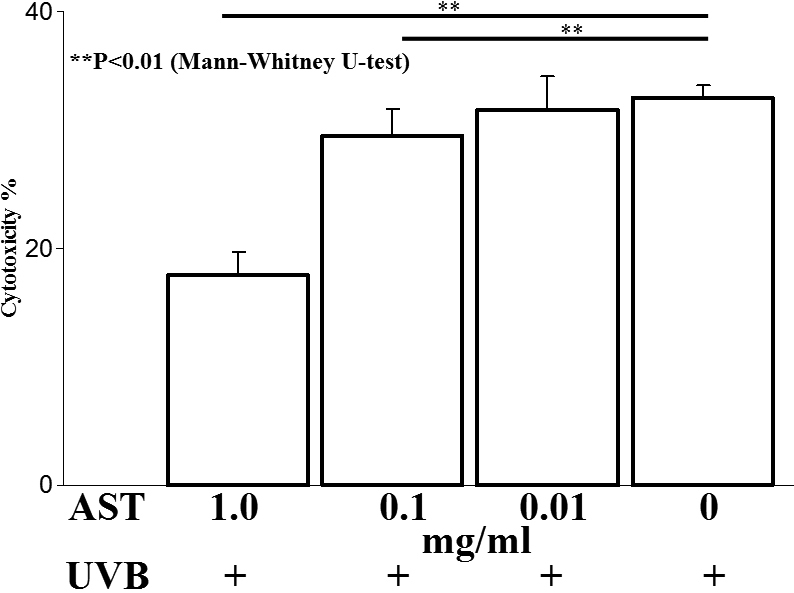
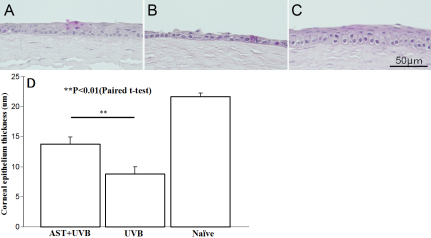
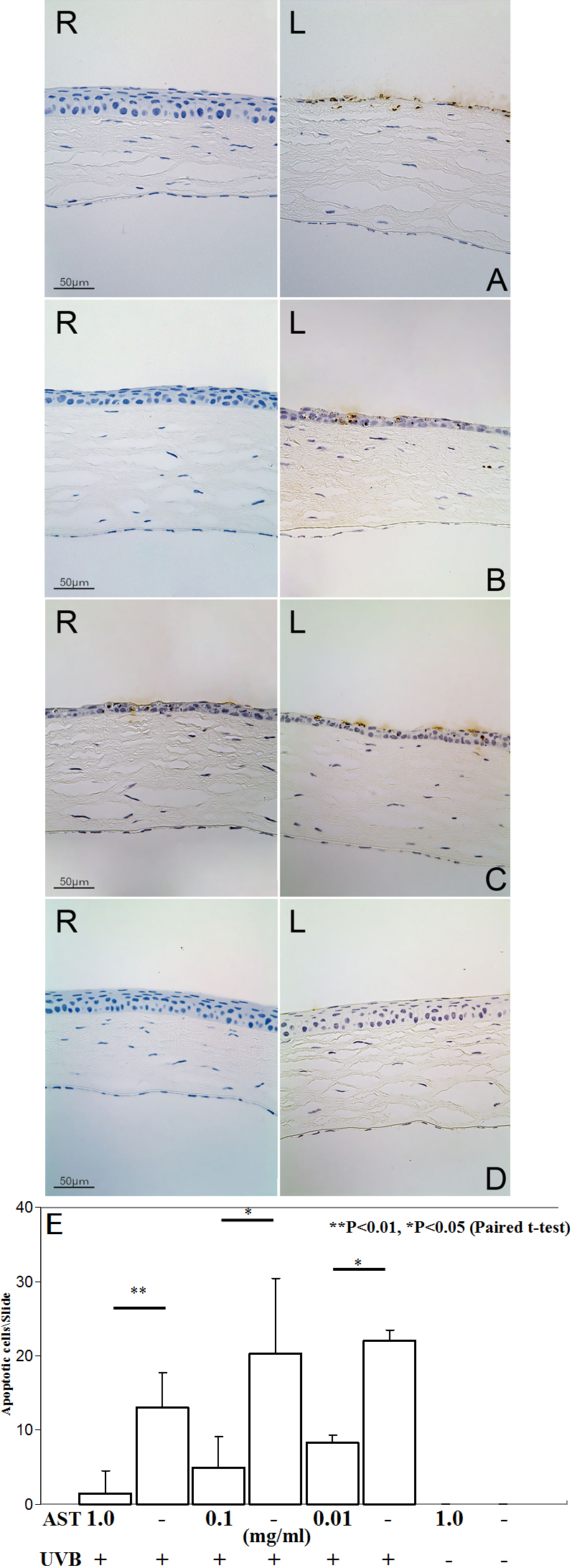
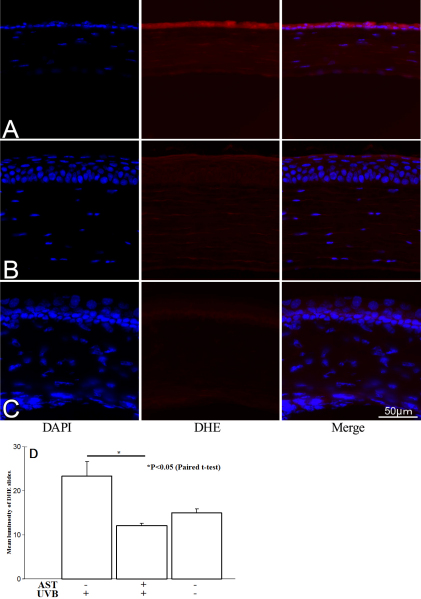
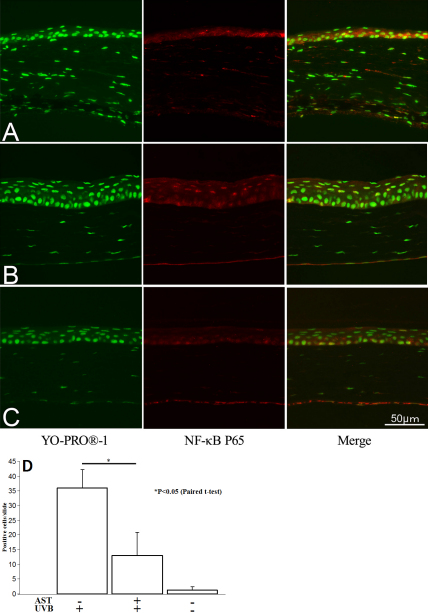
UVB exposure induced cell death and thinning of the corneal epithelium. However, the epithelium was morphologically well preserved after irradiation in AST-treated corneas. Irradiated corneal epithelium was significantly thicker in eyes treated with AST eye drops, compared to those treated with vehicles (p<0.01), in a doses dependent manner. Significantly fewer apoptotic cells were observed in AST-treated eyes than controls after irradiation (p<0.01). AST also reduced oxidative stress in irradiated corneas. The in vitro study showed less cytotoxicity of TKE2 cells in AST-treated cultures after UVB-irradiation (p<0.01). The cytoprotective effect increased with the dose of AST.
Topical AST administration may be a candidate treatment to limit the damages by UV irradiation with wide clinical applications.
紫外线(UV)可作为低剂量电离辐射。急性UVB照射会导致光性角膜炎并诱导角膜细胞凋亡。虾青素(AST)是一种存在于海鲜中的类胡萝卜素,因其具有高抗氧化活性而具有潜在的临床应用价值。在本研究中,我们检测了局部应用AST对小鼠UV光性角膜炎是否具有预防和治疗作用。
将C57BL/6小鼠右眼以滴注形式(15μl)给予用聚乙二醇(PEG)稀释的AST。左眼仅给予赋形剂作为对照。滴注后立即将小鼠麻醉,然后以400 mJ/cm²的剂量进行UVB照射。照射后24小时收集眼球,并用苏木精-伊红(H&E)和末端脱氧核苷酸转移酶介导的缺口末端标记(TUNEL)染色。在体外研究中,在UV暴露前用AST培养小鼠角膜上皮(TKE2)细胞,以量化UV诱导的细胞毒性。
UVB照射诱导角膜上皮细胞死亡和变薄。然而,在AST处理的角膜中,照射后上皮在形态上保存良好。与赋形剂处理的眼睛相比,用AST滴眼液处理的眼睛照射后的角膜上皮明显更厚(p<0.01),且呈剂量依赖性。照射后,AST处理的眼睛中观察到的凋亡细胞明显少于对照组(p<0.01)。AST还降低了照射角膜中的氧化应激。体外研究表明,UVB照射后,AST处理的培养物中TKE2细胞的细胞毒性较小(p<0.01)。细胞保护作用随AST剂量的增加而增强。
局部应用AST可能是一种限制UV照射损伤的候选治疗方法,具有广泛的临床应用前景。