Chen Mu-Hsin, Tsai Chia-Fang, Hsu Yu-Wen, Lu Fung-Jou
Institute of Medicine, College of Medicine, Chung Shan Medical University, Taichung City, Taiwan, ROC.
Department of Biotechnology, TransWorld University, Douliu City, Taiwan, ROC.
Mol Vis. 2014 Feb 7;20:153-62. eCollection 2014.
Ultraviolet B (UVB) radiation from sunlight is a known risk factor for human corneal injury. The aim of the present study was to investigate the protective effects of green tea polyphenol epigallocatechin gallate (EGCG) on UVB radiation-induced corneal oxidative damage in male imprinting control region (ICR) mice.
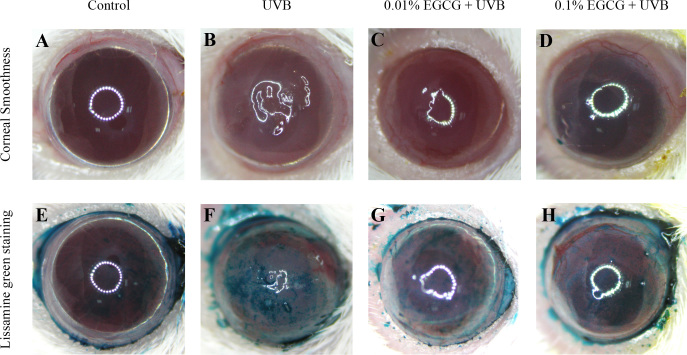
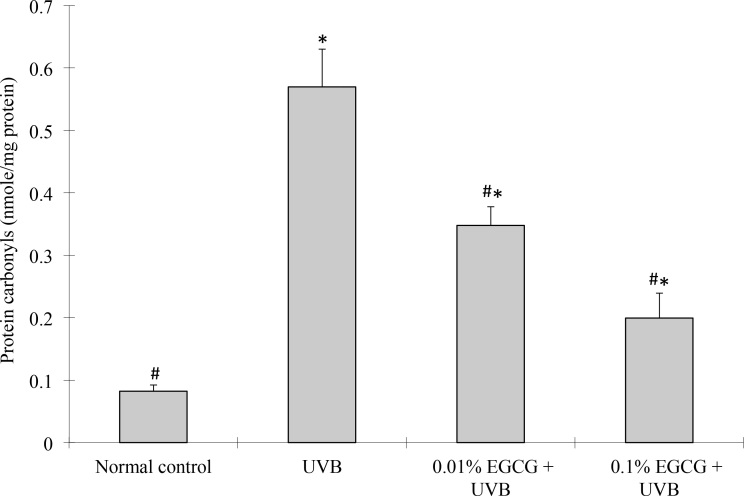
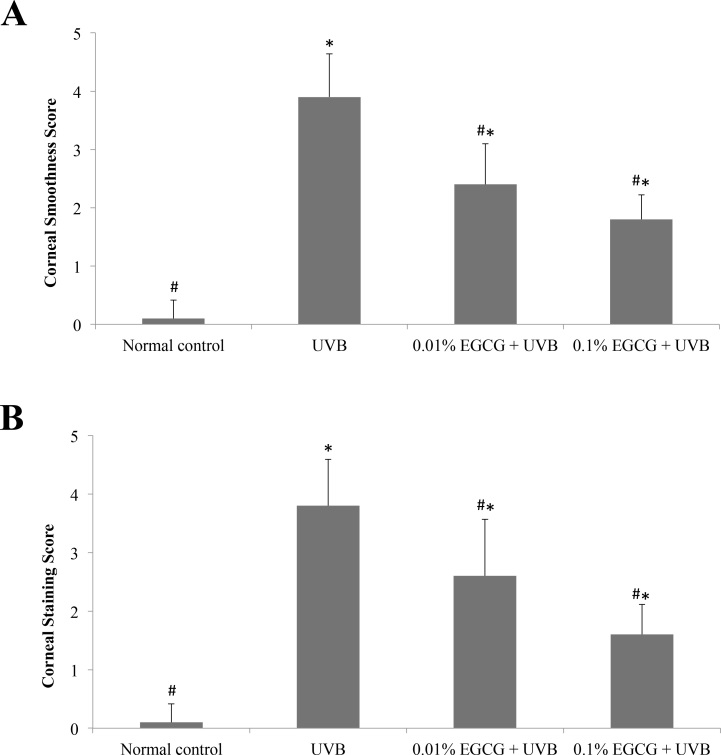
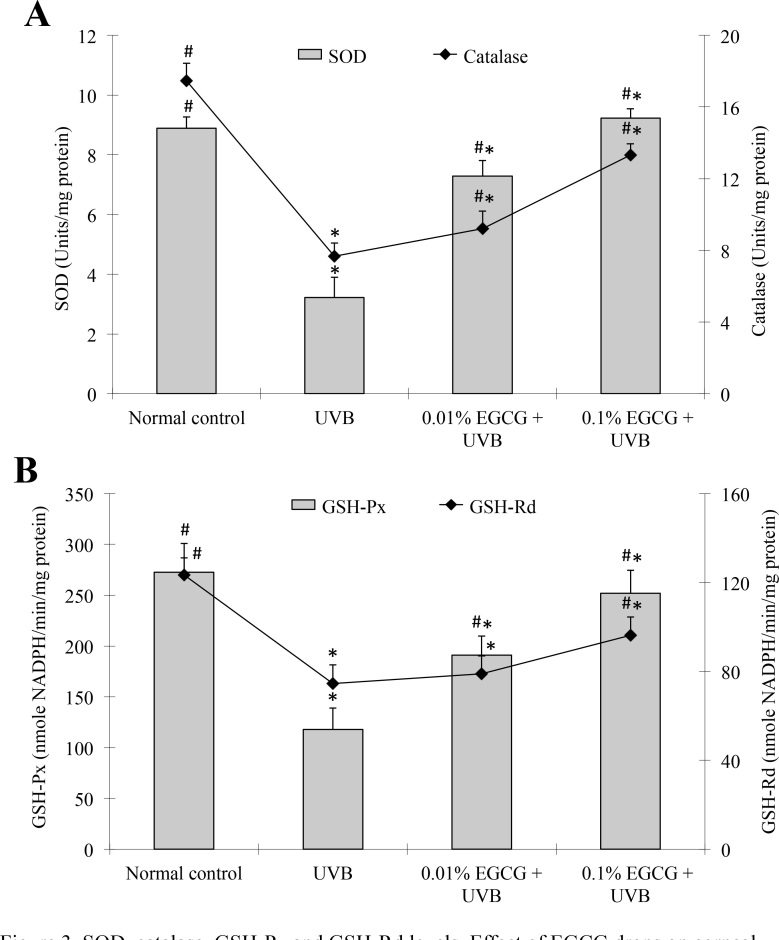
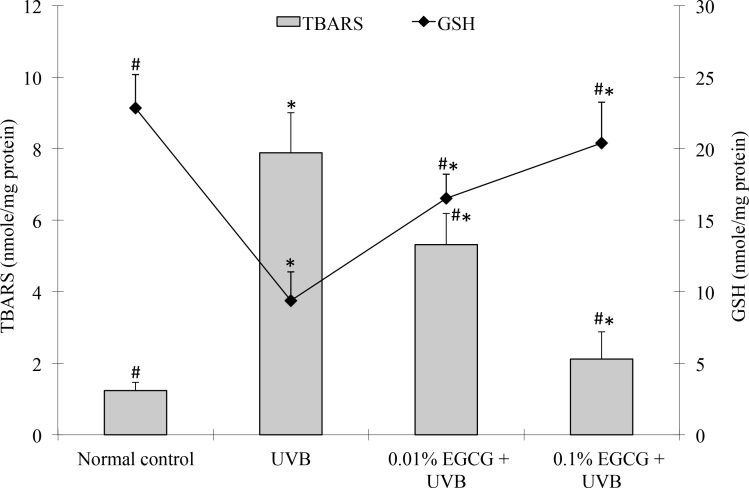
Corneal oxidative damage was induced by exposure to UVB radiation at 560 μW/cm(2). The animals received 0%, 0.1%, and 0.01% EGCG eye drops at a 5 mg/ml dose, twice daily for 8 days. Corneal surface damage was graded according to smoothness and the extent of lissamine green staining. Corneal glutathione (GSH), thiobarbituric acid-reactive substances (TBARS), and protein carbonyl levels, as well as superoxide dismutase (SOD), catalase, glutathione peroxidase (GSH-Px), and glutathione reductase (GSH-Rd) activity in the cornea, were measured to monitor corneal injury.
UVB radiation caused significant damage to the corneas, including apparent corneal ulceration and severe epithelial exfoliation, leading to a decrease in SOD, catalase, GSH-Px, GSH-Rd, and GSH activity in the cornea. However, the corneal TBARS and protein carbonyls increased compared with the control group. Treatment with EGCG eye drops significantly (p<0.05) ameliorated corneal damage, increased SOD, catalase, GSH-Px, GSH-Rd, and GSH activity, and decreased the TBARS and protein carbonyls in the corneas compared with the UVB-treated group.
EGCG eye drops exhibit potent protective effects on UVB radiation-induced corneal oxidative damage in mice, likely due to the increase in antioxidant defense system activity and the inhibition of lipid peroxidation and protein oxidation.
阳光中的紫外线B(UVB)辐射是已知的人类角膜损伤风险因素。本研究的目的是探讨绿茶多酚表没食子儿茶素没食子酸酯(EGCG)对雄性印记控制区(ICR)小鼠UVB辐射诱导的角膜氧化损伤的保护作用。
通过暴露于560 μW/cm²的UVB辐射诱导角膜氧化损伤。动物分别接受浓度为0%、0.1%和0.01%的EGCG滴眼液,剂量为5 mg/ml,每日两次,共8天。根据角膜表面光滑度和丽丝胺绿染色程度对角膜表面损伤进行分级。测量角膜谷胱甘肽(GSH)、硫代巴比妥酸反应性物质(TBARS)和蛋白质羰基水平,以及角膜中的超氧化物歧化酶(SOD)、过氧化氢酶、谷胱甘肽过氧化物酶(GSH-Px)和谷胱甘肽还原酶(GSH-Rd)活性,以监测角膜损伤情况。
UVB辐射对角膜造成了显著损伤,包括明显的角膜溃疡和严重的上皮剥脱,导致角膜中SOD、过氧化氢酶、GSH-Px、GSH-Rd和GSH活性降低。然而,与对照组相比,角膜TBARS和蛋白质羰基增加。与UVB处理组相比,EGCG滴眼液治疗显著(p<0.05)改善了角膜损伤,增加了SOD、过氧化氢酶、GSH-Px、GSH-Rd和GSH活性,并降低了角膜中的TBARS和蛋白质羰基。
EGCG滴眼液对小鼠UVB辐射诱导的角膜氧化损伤具有强大的保护作用,可能是由于抗氧化防御系统活性增加以及脂质过氧化和蛋白质氧化受到抑制。