Brain Behav. 2011 Sep;1(1):57-61. doi: 10.1002/brb3.12.
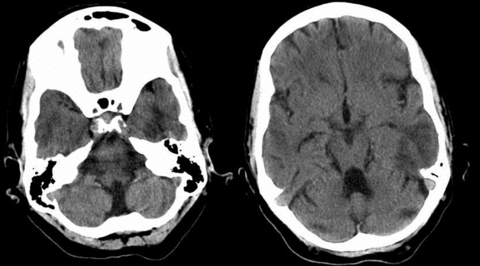
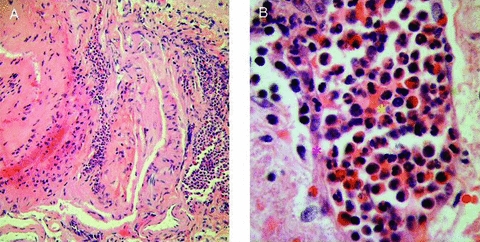
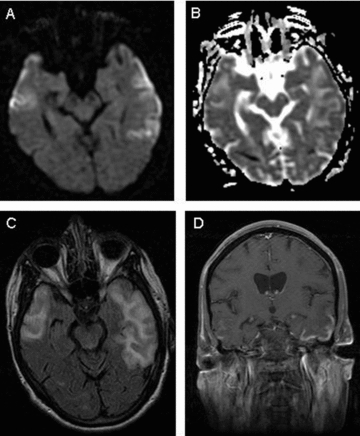
Isolated central nervous system (CNS) vasculitis is a rare and complicated disorder. Patients typically present with nonspecific neurologic symptoms such as headache and encephalopathy, and have variable progression and severity of the disease. Challenges to definitive diagnosis include the limitations of currently available diagnostic modalities with high likelihood of false-positive or false-negative findings. Imaging, serologic, and cerebrospinal fluid (CSF) evaluation, and even angiography can fail to establish the diagnosis. Often, brain biopsy is required. In order to illustrate these challenges, we report the case of a patient who presented with subacute cognitive decline and was ultimately diagnosed with isolated CNS eosinophilic vasculitis. Initial work-up included CSF and serologic analyses, magnetic resonance imaging (MRI), and cerebral angiography, but definitive diagnosis required brain biopsy. Immunosuppressive therapy resulted in clinical improvement and stabilization. To our knowledge, only one other case of isolated CNS eosinophilic vasculitis has been reported in the literature. We discuss the importance of a high index of clinical suspicion in cases of progressive nonspecific neurologic symptoms.
孤立性中枢神经系统(CNS)血管炎是一种罕见且复杂的疾病。患者通常表现为非特异性神经系统症状,如头痛和脑病,且疾病的进展和严重程度各不相同。明确诊断面临的挑战包括目前可用的诊断方式存在局限性,其假阳性或假阴性结果的可能性较高。影像学、血清学和脑脊液(CSF)评估,甚至血管造影都可能无法确诊。通常需要进行脑活检。为了说明这些挑战,我们报告了一例以亚急性认知减退为表现的患者,最终被诊断为孤立性中枢神经系统嗜酸性血管炎。初步检查包括 CSF 和血清学分析、磁共振成像(MRI)和脑血管造影,但明确诊断需要脑活检。免疫抑制治疗导致了临床改善和稳定。据我们所知,文献中仅报道过一例其他孤立性中枢神经系统嗜酸性血管炎病例。我们讨论了在进展性非特异性神经系统症状病例中保持高度临床怀疑的重要性。