Naomi Berrie Diabetes Center, Columbia University Medical Center, New York, New York, USA.
Nat Genet. 2012 Mar 11;44(4):406-12, S1. doi: 10.1038/ng.2215.
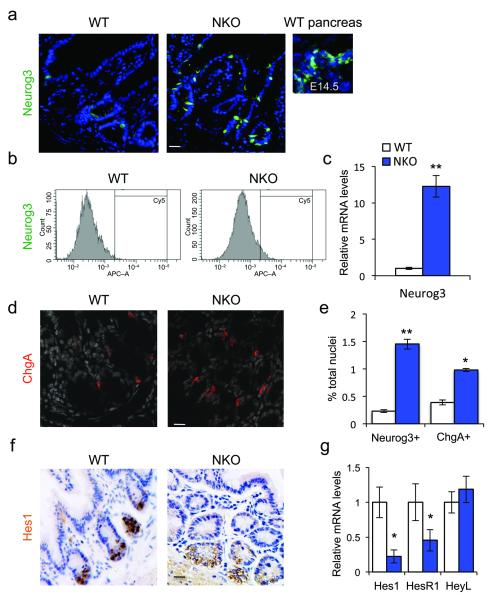
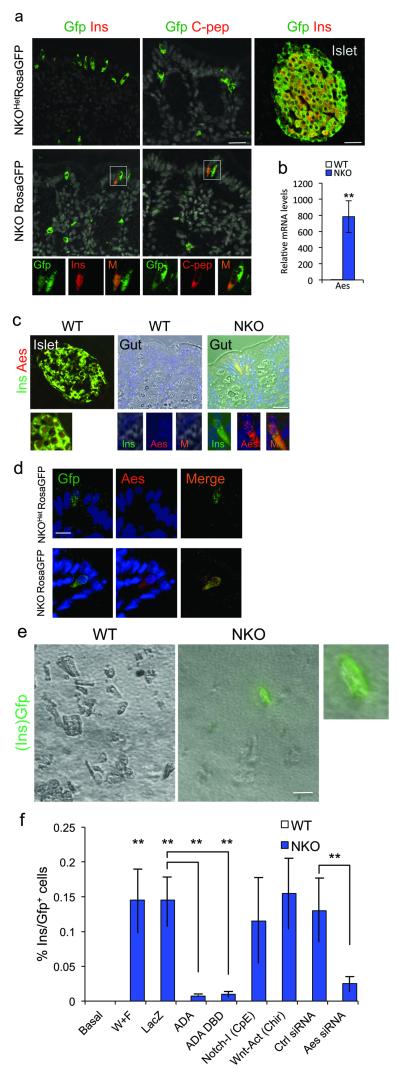
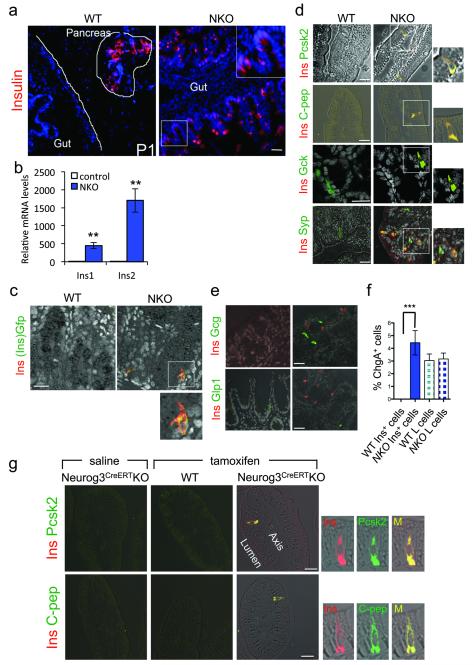
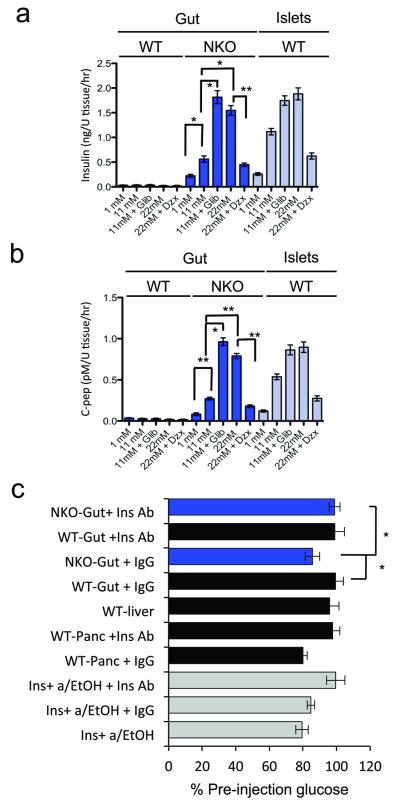
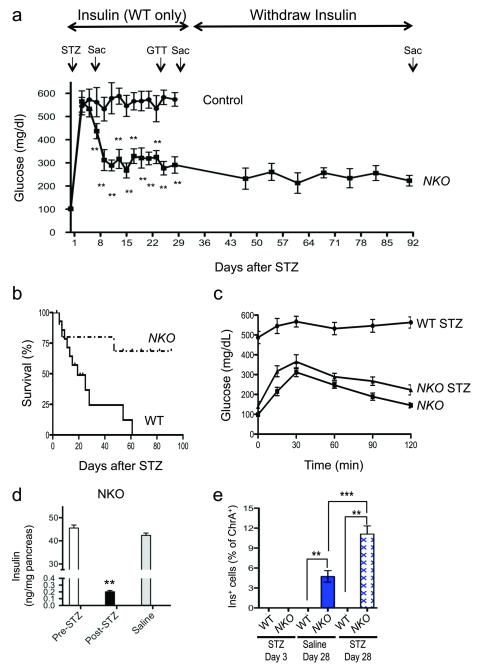
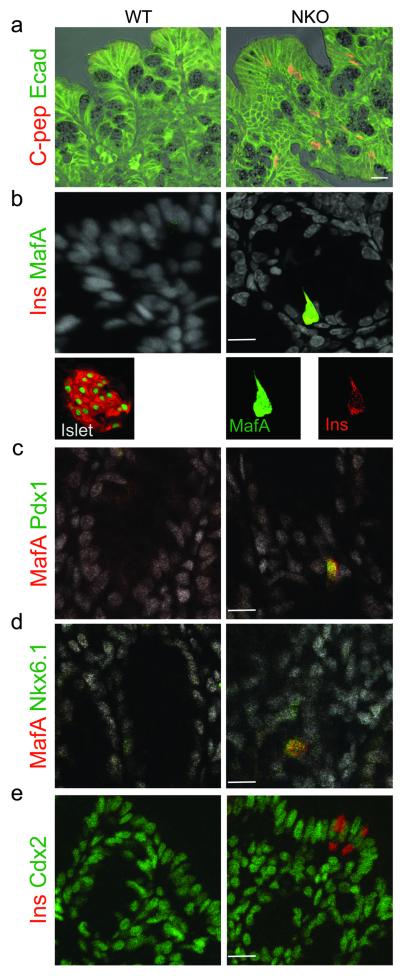
Restoration of regulated insulin secretion is the ultimate goal of therapy for type 1 diabetes. Here, we show that, unexpectedly, somatic ablation of Foxo1 in Neurog3(+) enteroendocrine progenitor cells gives rise to gut insulin-positive (Ins(+)) cells that express markers of mature β cells and secrete bioactive insulin as well as C-peptide in response to glucose and sulfonylureas. Lineage tracing experiments showed that gut Ins(+) cells arise cell autonomously from Foxo1-deficient cells. Inducible Foxo1 ablation in adult mice also resulted in the generation of gut Ins(+) cells. Following ablation by the β-cell toxin streptozotocin, gut Ins(+) cells regenerate and produce insulin, reversing hyperglycemia in mice. The data indicate that Neurog3(+) enteroendocrine progenitors require active Foxo1 to prevent differentiation into Ins(+) cells. Foxo1 ablation in gut epithelium may provide an approach to restore insulin production in type 1 diabetes.
恢复调节胰岛素分泌是 1 型糖尿病治疗的最终目标。在这里,我们出人意料地发现,神经调节蛋白 3(Neurog3)阳性肠内分泌前体细胞中 Foxo1 的体细胞缺失会导致肠道胰岛素阳性(Ins(+))细胞的产生,这些细胞表达成熟β细胞的标志物,并能响应葡萄糖和磺酰脲类药物分泌生物活性胰岛素和 C 肽。谱系追踪实验表明,肠道 Ins(+)细胞源自 Foxo1 缺陷细胞的自主分化。成年小鼠中诱导型 Foxo1 缺失也会导致肠道 Ins(+)细胞的产生。在胰岛β细胞毒素链脲佐菌素(streptozotocin)缺失后,肠道 Ins(+)细胞会再生并分泌胰岛素,逆转小鼠的高血糖症。这些数据表明,Neurog3 阳性肠内分泌前体细胞需要 Foxo1 的活性来防止分化为 Ins(+)细胞。肠道上皮细胞中 Foxo1 的缺失可能为 1 型糖尿病提供恢复胰岛素产生的方法。