Bouchi Ryotaro, Foo Kylie S, Hua Haiqing, Tsuchiya Kyoichiro, Ohmura Yoshiaki, Sandoval P Rodrigo, Ratner Lloyd E, Egli Dieter, Leibel Rudolph L, Accili Domenico
Department of Medicine, Columbia University College of Physicians and Surgeons, New York, New York 10032, USA.
1] New York Stem Cell Foundation Research Institute, New York, New York 10032, USA [2] Department of Pediatrics, Columbia University College of Physicians and Surgeons, New York, New York 10032, USA.
Nat Commun. 2014 Jun 30;5:4242. doi: 10.1038/ncomms5242.
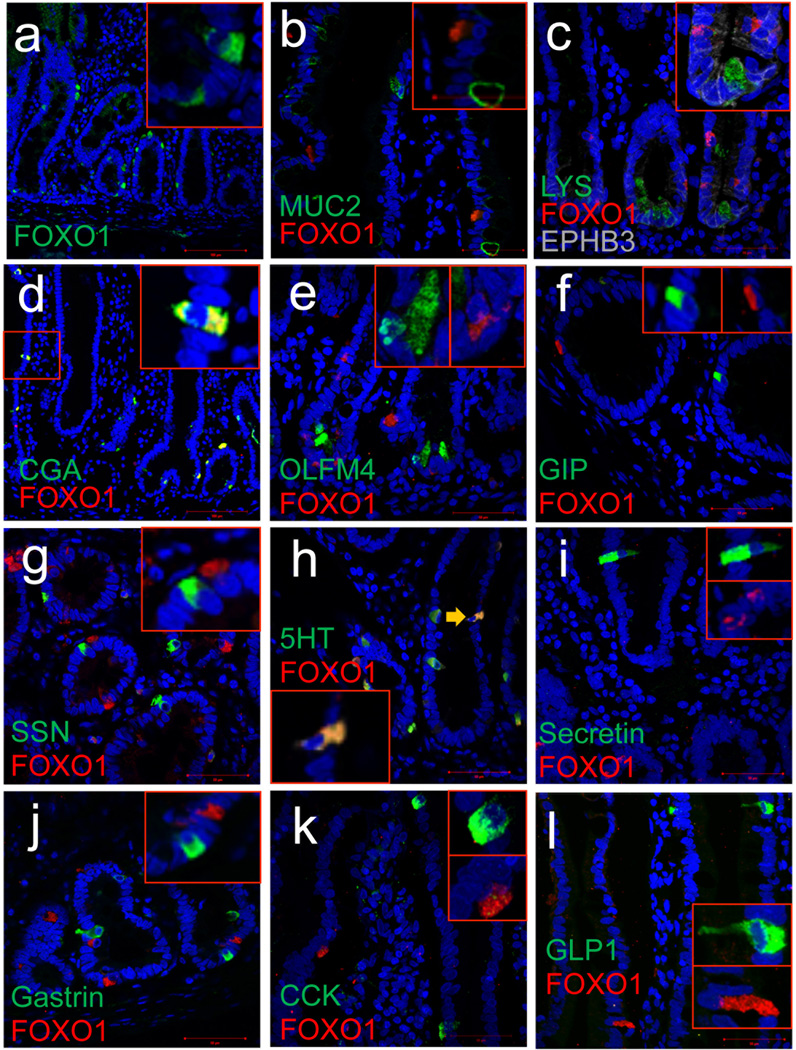
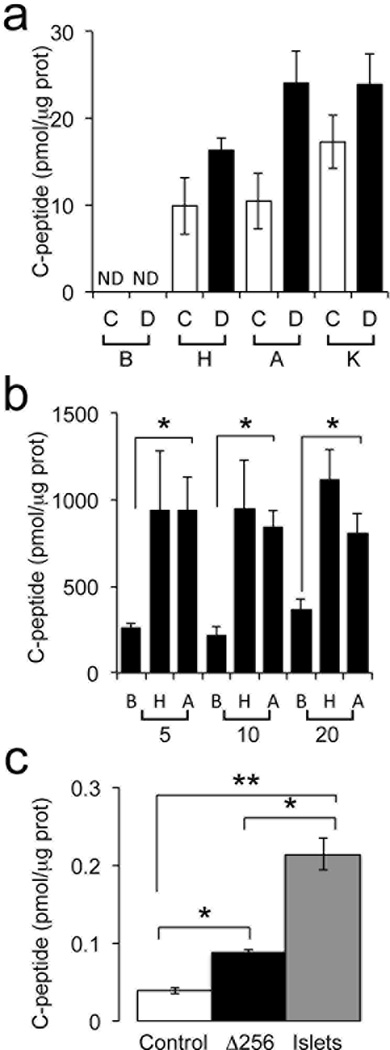
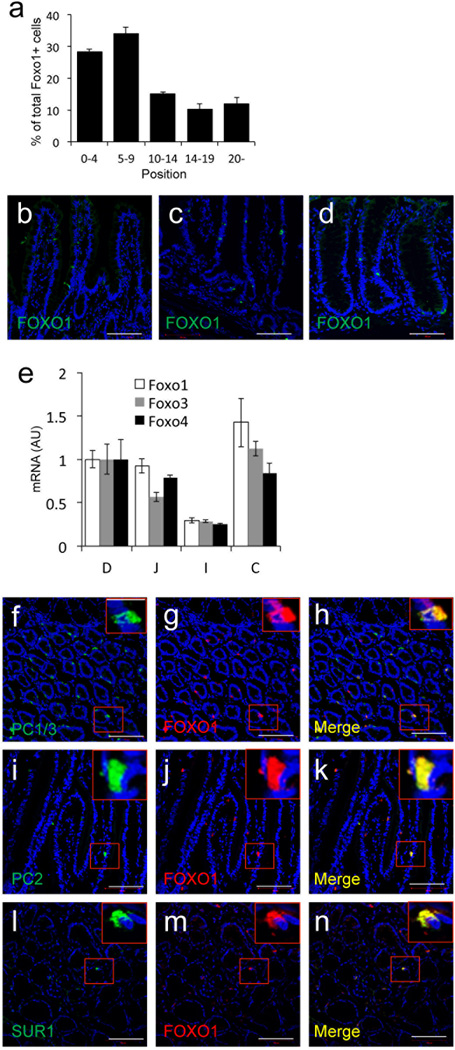
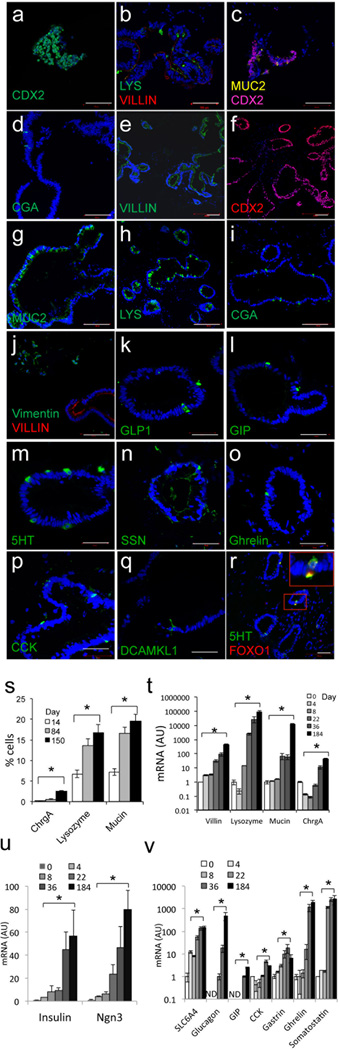
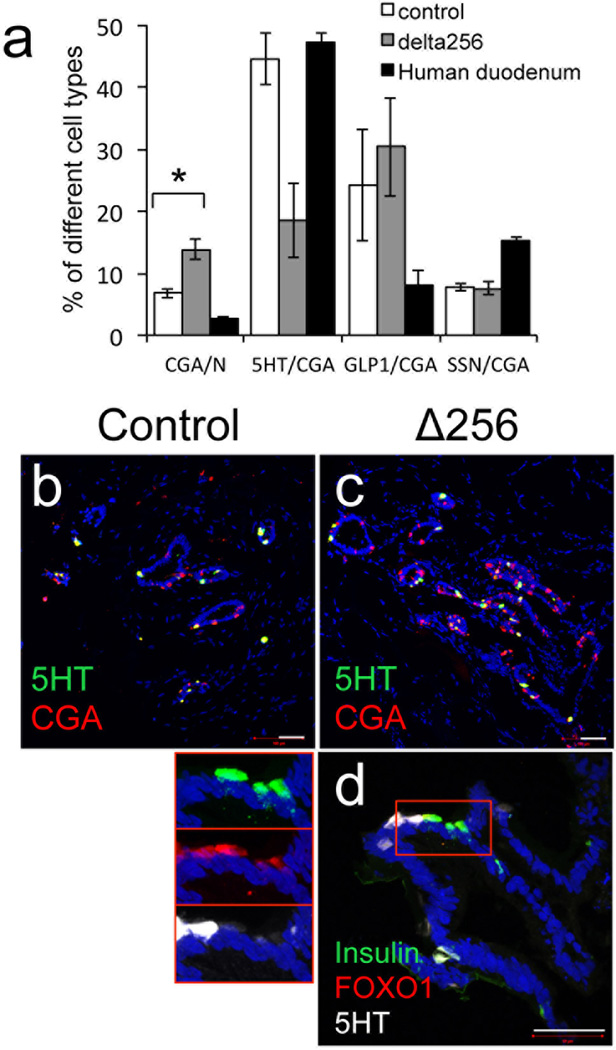
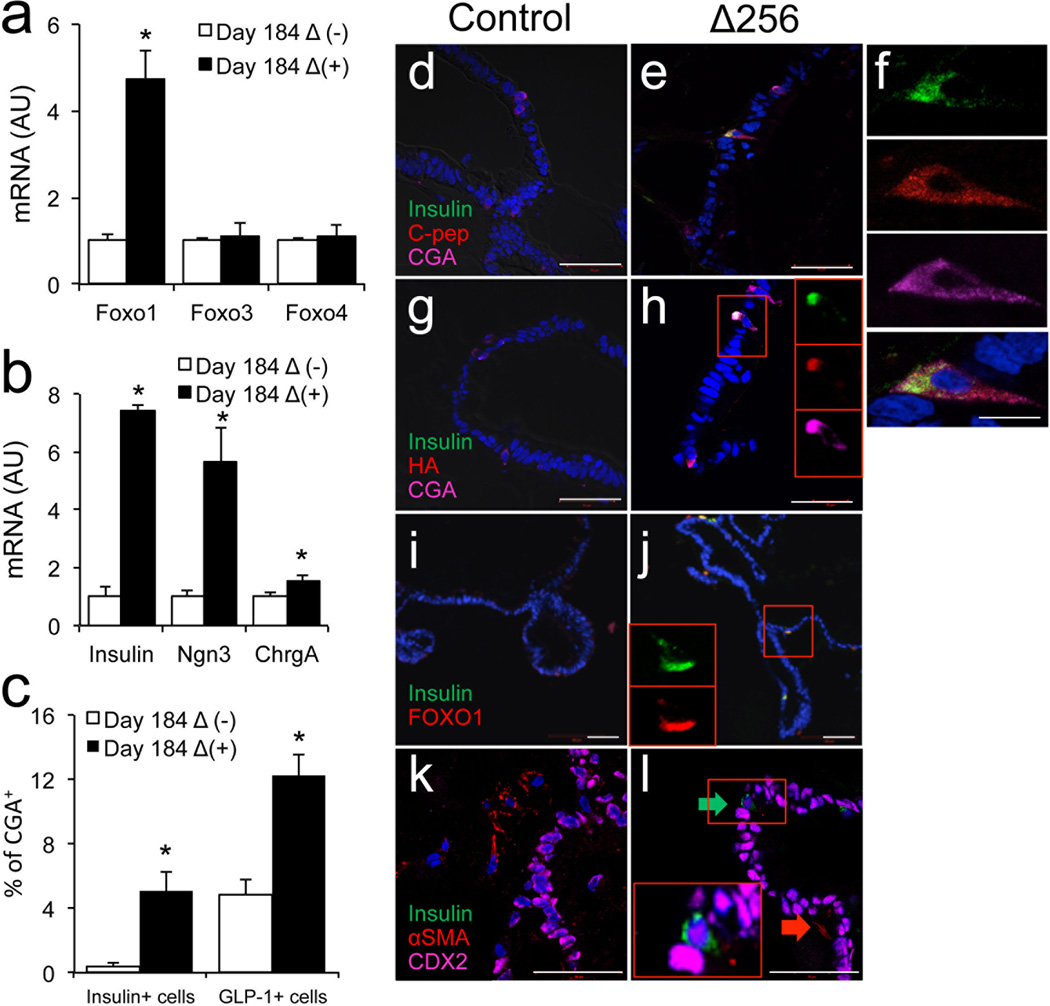
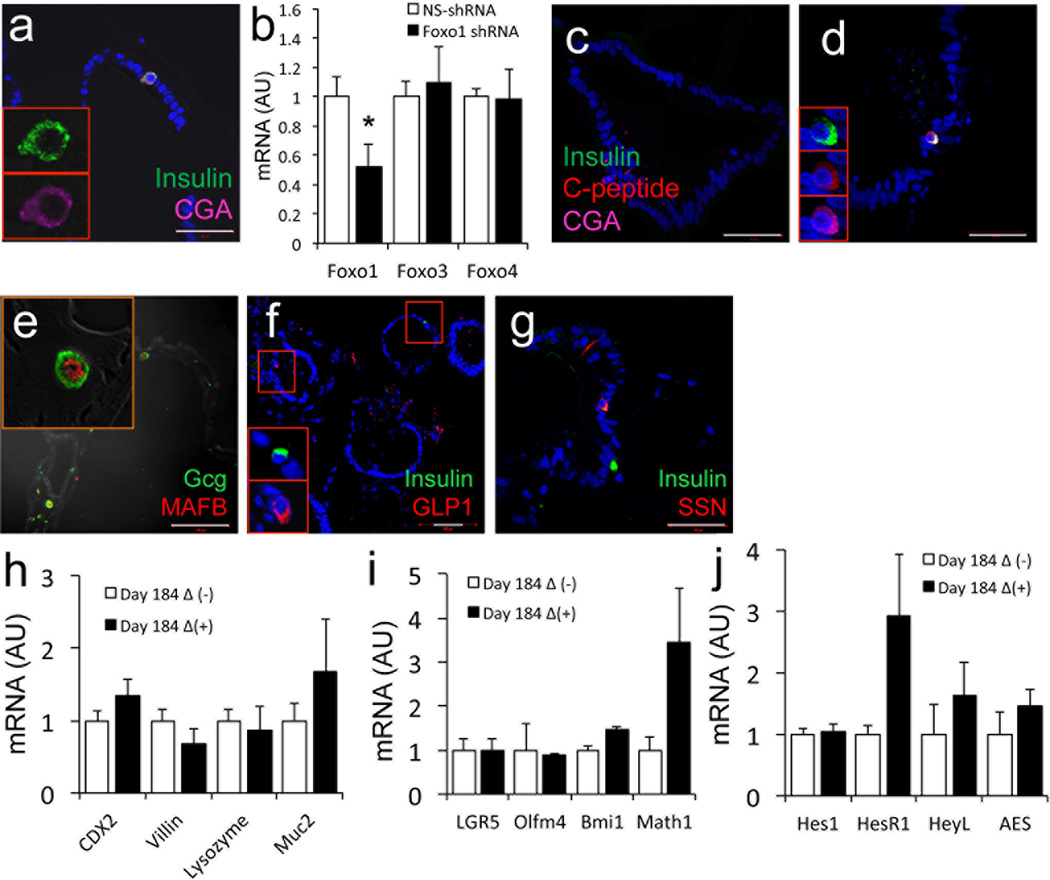
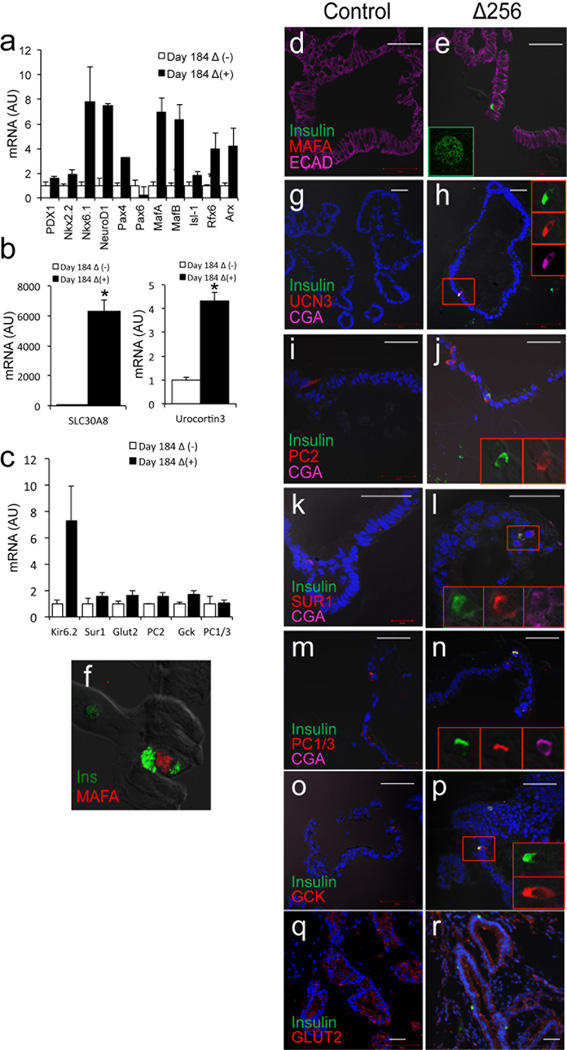
Generation of surrogate sources of insulin-producing β-cells remains a goal of diabetes therapy. While most efforts have been directed at differentiating embryonic or induced pluripotent stem (iPS) cells into β-like-cells through endodermal progenitors, we have shown that gut endocrine progenitor cells of mice can be differentiated into glucose-responsive, insulin-producing cells by ablation of transcription factor Foxo1. Here we show that FOXO1 is present in human gut endocrine progenitor and serotonin-producing cells. Using gut organoids derived from human iPS cells, we show that FOXO1 inhibition using a dominant-negative mutant or lentivirus-encoded small hairpin RNA promotes generation of insulin-positive cells that express all markers of mature pancreatic β-cells, release C-peptide in response to secretagogues and survive in vivo following transplantation into mice. The findings raise the possibility of using gut-targeted FOXO1 inhibition or gut organoids as a source of insulin-producing cells to treat human diabetes.
生成胰岛素分泌β细胞的替代来源仍然是糖尿病治疗的一个目标。虽然大多数努力都致力于通过内胚层祖细胞将胚胎干细胞或诱导多能干细胞(iPS细胞)分化为β样细胞,但我们已经表明,通过敲除转录因子Foxo1,小鼠的肠道内分泌祖细胞可以分化为葡萄糖反应性、胰岛素分泌细胞。在这里,我们表明FOXO1存在于人类肠道内分泌祖细胞和5-羟色胺分泌细胞中。使用源自人类iPS细胞的肠道类器官,我们表明,使用显性负性突变体或慢病毒编码的小发夹RNA抑制FOXO1可促进胰岛素阳性细胞的生成,这些细胞表达成熟胰腺β细胞的所有标志物,对促分泌剂作出反应释放C肽,并在移植到小鼠体内后在体内存活。这些发现增加了利用肠道靶向性FOXO1抑制或肠道类器官作为胰岛素分泌细胞来源来治疗人类糖尿病的可能性。