Allen Institute for Brain Science, Seattle, WA 98103, USA.
Neuron. 2012 Mar 22;73(6):1083-99. doi: 10.1016/j.neuron.2012.03.002. Epub 2012 Mar 21.
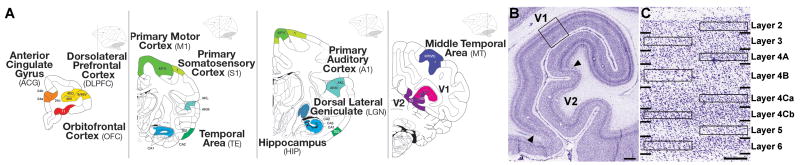
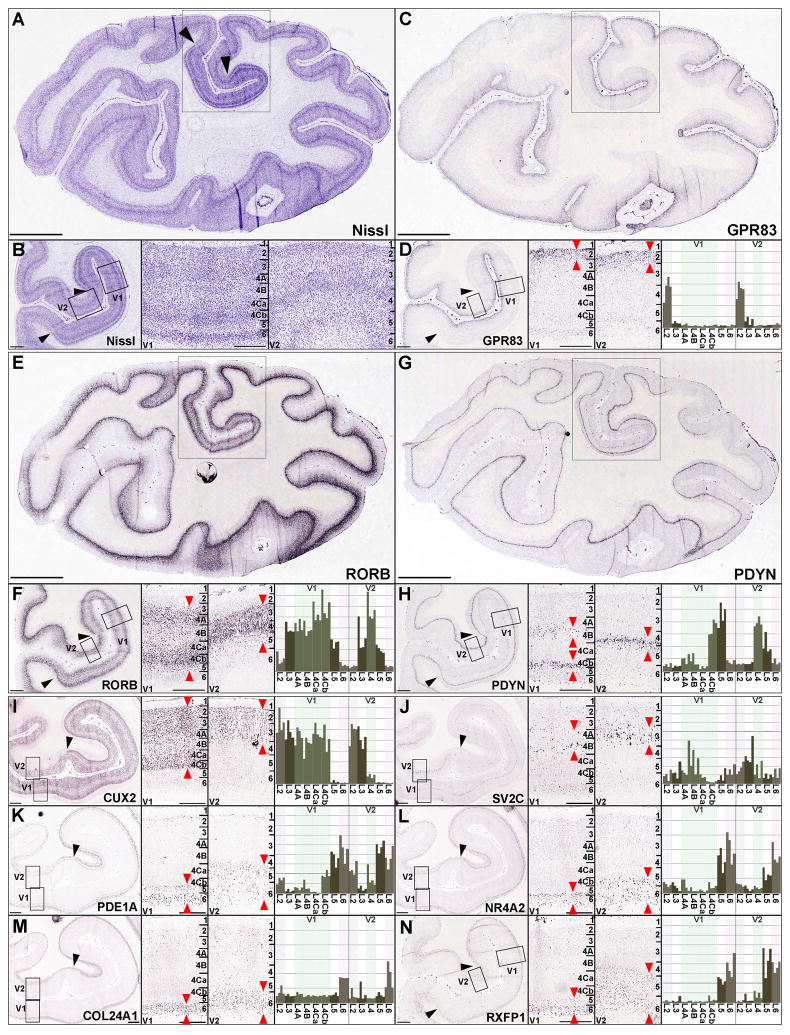
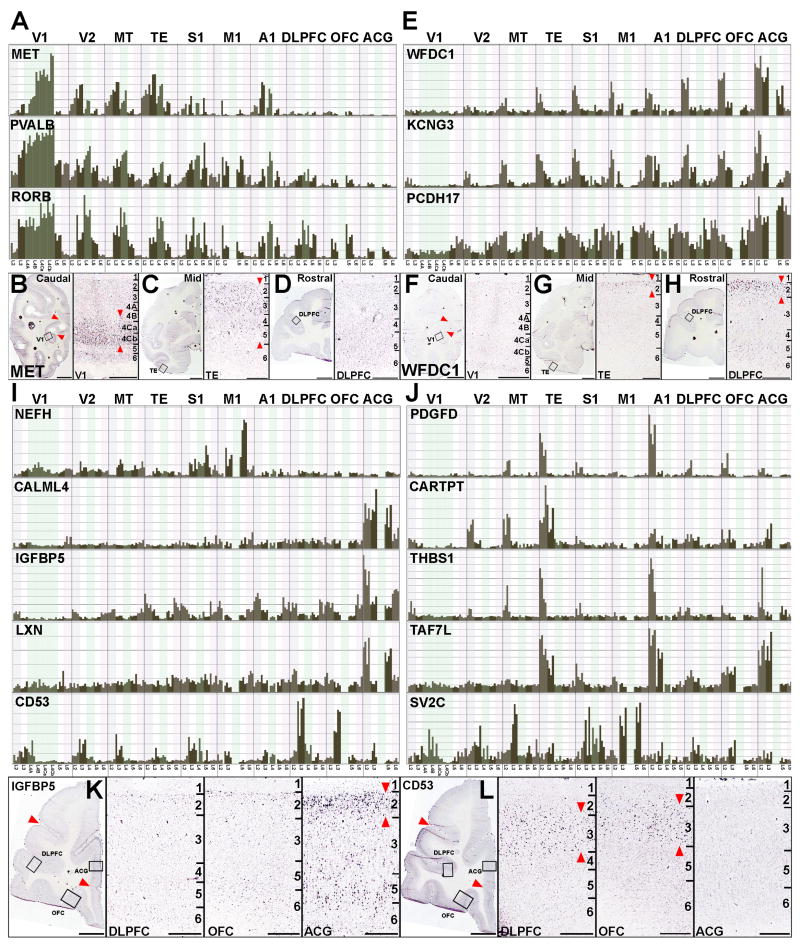
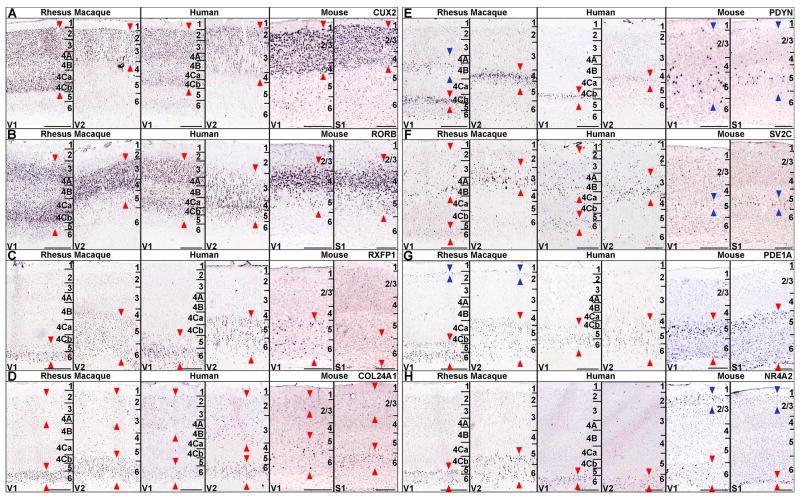
Genome-wide transcriptional profiling was used to characterize the molecular underpinnings of neocortical organization in rhesus macaque, including cortical areal specialization and laminar cell-type diversity. Microarray analysis of individual cortical layers across sensorimotor and association cortices identified robust and specific molecular signatures for individual cortical layers and areas, prominently involving genes associated with specialized neuronal function. Overall, transcriptome-based relationships were related to spatial proximity, being strongest between neighboring cortical areas and between proximal layers. Primary visual cortex (V1) displayed the most distinctive gene expression compared to other cortical regions in rhesus and human, both in the specialized layer 4 as well as other layers. Laminar patterns were more similar between macaque and human compared to mouse, as was the unique V1 profile that was not observed in mouse. These data provide a unique resource detailing neocortical transcription patterns in a nonhuman primate with great similarity in gene expression to human.
利用全基因组转录谱分析来描述猕猴新皮层组织的分子基础,包括皮质区域特化和层状细胞类型多样性。对感觉运动和联合皮层中个体皮层层的微阵列分析确定了个体皮层层和区域的强大而特异的分子特征,突出涉及与特定神经元功能相关的基因。总体而言,基于转录组的关系与空间接近度有关,在相邻的皮质区域之间以及在近邻的层之间最强。与猕猴和人类的其他皮质区域相比,初级视觉皮层 (V1) 显示出最独特的基因表达,无论是在特化的第 4 层还是其他层。与小鼠相比,猕猴和人类的层模式更为相似,而在小鼠中未观察到的独特 V1 图谱也是如此。这些数据提供了一个独特的资源,详细描述了在非人类灵长类动物中的新皮层转录模式,其基因表达与人类非常相似。