Wageningen UR Plant Breeding, Wageningen, the Netherlands.
BMC Plant Biol. 2012 Mar 26;12:43. doi: 10.1186/1471-2229-12-43.
After crop-wild hybridization, some of the crop genomic segments may become established in wild populations through selfing of the hybrids or through backcrosses to the wild parent. This constitutes a possible route through which crop (trans)genes could become established in natural populations. The likelihood of introgression of transgenes will not only be determined by fitness effects from the transgene itself but also by the crop genes linked to it. Although lettuce is generally regarded as self-pollinating, outbreeding does occur at a low frequency. Backcrossing to wild lettuce is a likely pathway to introgression along with selfing, due to the high frequency of wild individuals relative to the rarely occurring crop-wild hybrids. To test the effect of backcrossing on the vigour of inter-specific hybrids, Lactuca serriola, the closest wild relative of cultivated lettuce, was crossed with L. sativa and the F(1) hybrid was backcrossed to L. serriola to generate BC(1) and BC(2) populations. Experiments were conducted on progeny from selfed plants of the backcrossing families (BC(1)S(1) and BC(2)S(1)). Plant vigour of these two backcrossing populations was determined in the greenhouse under non-stress and abiotic stress conditions (salinity, drought, and nutrient deficiency).
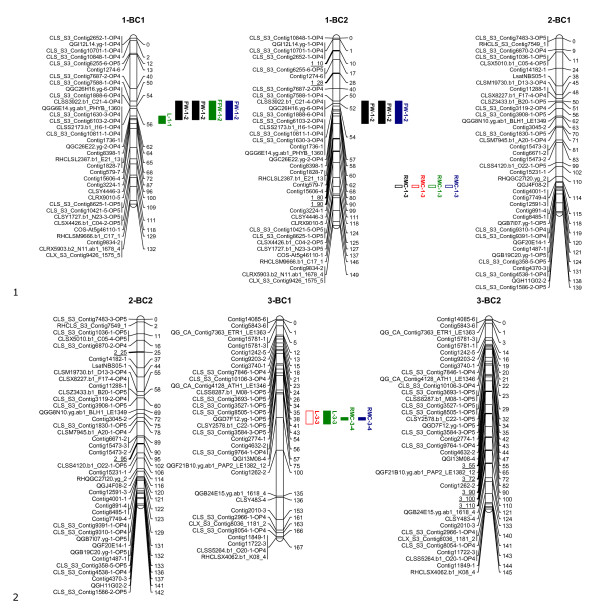
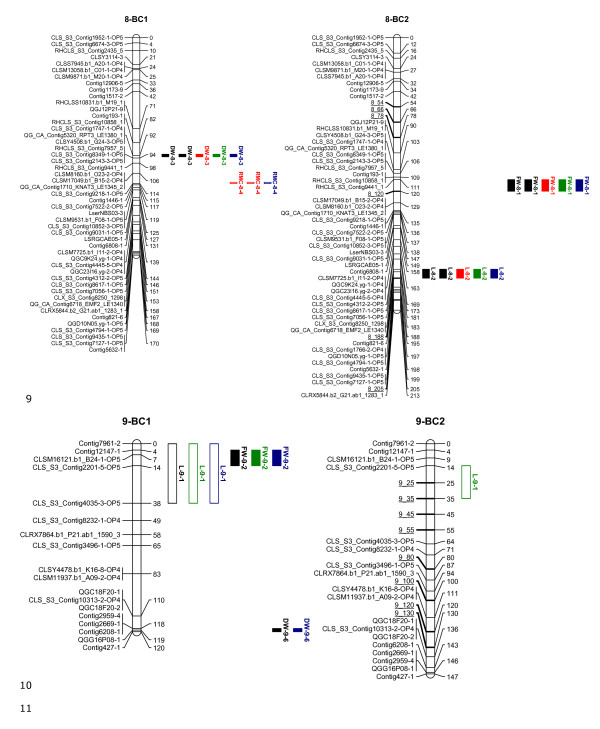
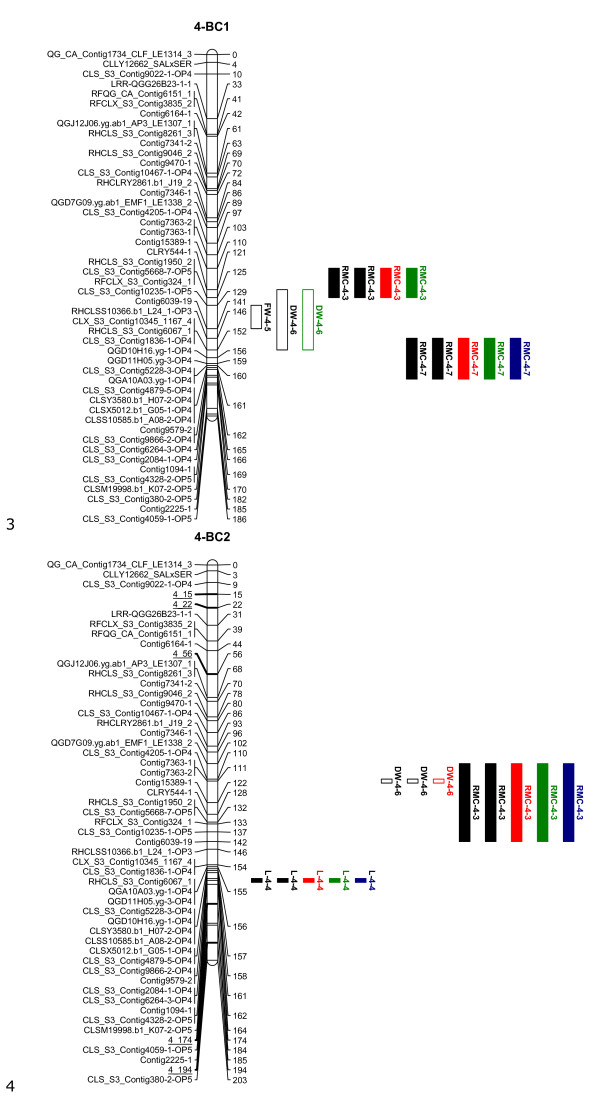
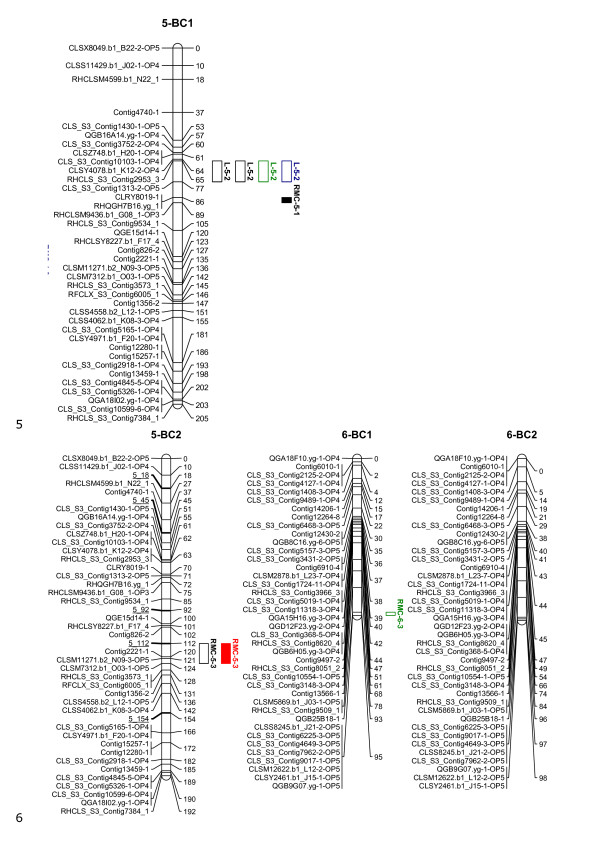
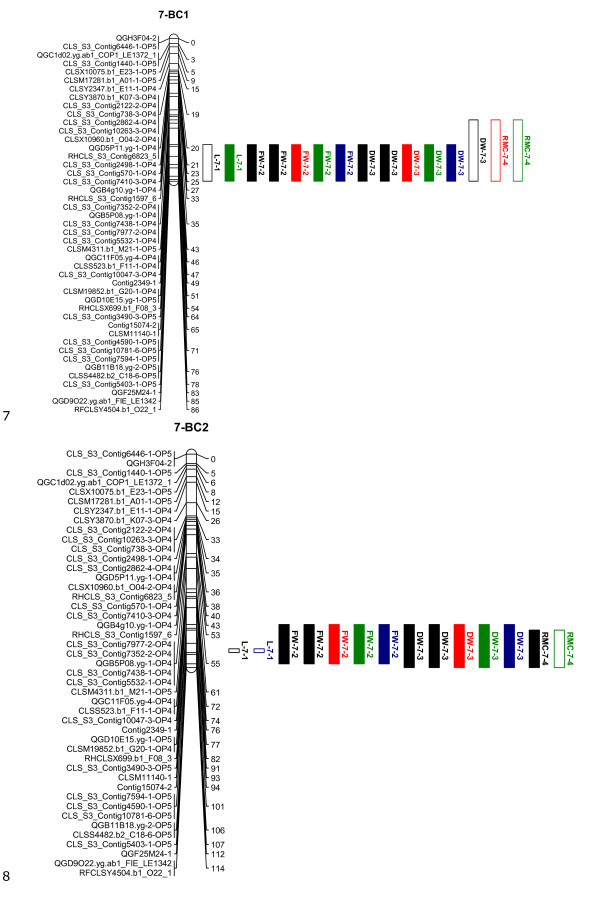
Despite the decreasing contribution of crop genomic blocks in the backcross populations, the BC(1)S(1) and BC(2)S(1) hybrids were characterized by a substantial genetic variation under both non-stress and stress conditions. Hybrids were identified that performed equally or better than the wild genotypes, indicating that two backcrossing events did not eliminate the effect of the crop genomic segments that contributed to the vigour of the BC(1) and BC(2) hybrids. QTLs for plant vigour under non-stress and the various stress conditions were detected in the two populations with positive as well as negative effects from the crop.
As it was shown that the crop contributed QTLs with either a positive or a negative effect on plant vigour, we hypothesize that genomic regions exist where transgenes could preferentially be located in order to mitigate their persistence in natural populations through genetic hitchhiking.
作物-野生杂交后,通过杂种自交或与野生亲本回交,部分作物基因组片段可能在野生种群中固定下来。这构成了作物(转基因)基因在自然种群中固定的一种可能途径。转基因的基因渗入的可能性不仅取决于转基因本身的适合度效应,还取决于与其相连的作物基因。尽管生菜通常被认为是自花授粉的,但异交确实以低频率发生。由于野生个体相对于罕见的作物-野生杂种的频率较高,与自交一起,回交野生生菜是基因渗入的可能途径。为了测试回交对种间杂种活力的影响,将最接近栽培生菜的野生近缘种长叶莴苣与莴苣杂交,然后将 F1 杂种回交长叶莴苣,产生 BC1 和 BC2 群体。对回交家系自交植物的后代(BC1S1 和 BC2S1)进行了实验。在非胁迫和非生物胁迫条件(盐度、干旱和养分缺乏)下,温室中测定了这两个回交群体的植物活力。
尽管回交群体中作物基因组块的贡献不断减少,但 BC1S1 和 BC2S1 杂种在非胁迫和胁迫条件下都表现出大量遗传变异。鉴定出一些杂种的表现与野生基因型相当或更好,这表明两次回交事件并没有消除导致 BC1 和 BC2 杂种活力的作物基因组片段的影响。在两个群体中检测到非胁迫和各种胁迫条件下植物活力的 QTL,这些 QTL 来自作物的正向和负向效应。
由于显示作物对植物活力有正向或负向的 QTL 贡献,我们假设存在基因组区域,转基因可以优先位于这些区域,以通过遗传搭便车减少其在自然种群中的持久性。