Imaging Department, TongJi University, TongJi Hospital Shanghai, China.
PLoS One. 2012;7(3):e33540. doi: 10.1371/journal.pone.0033540. Epub 2012 Mar 23.
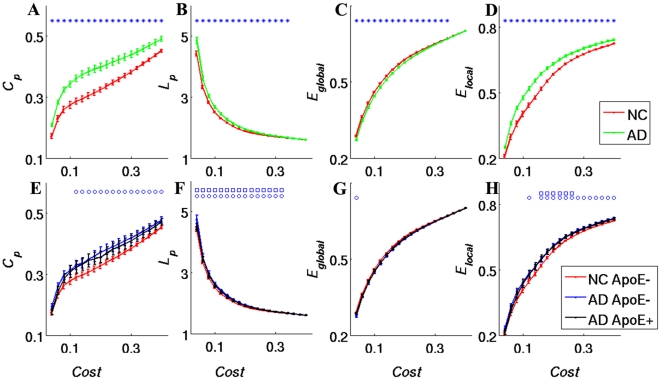
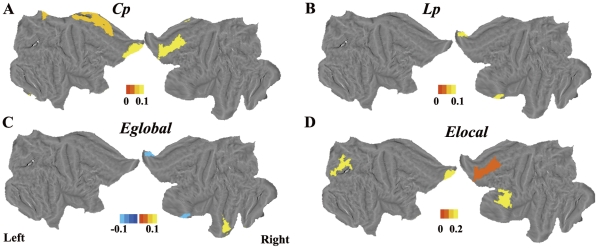
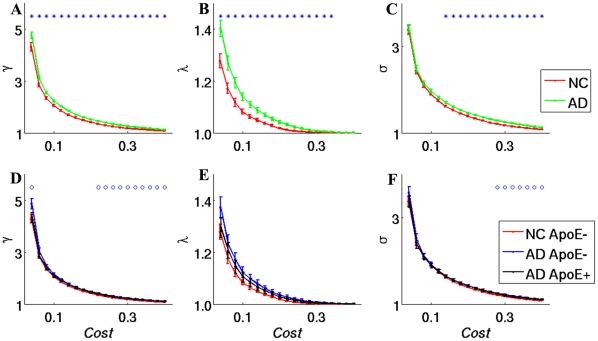
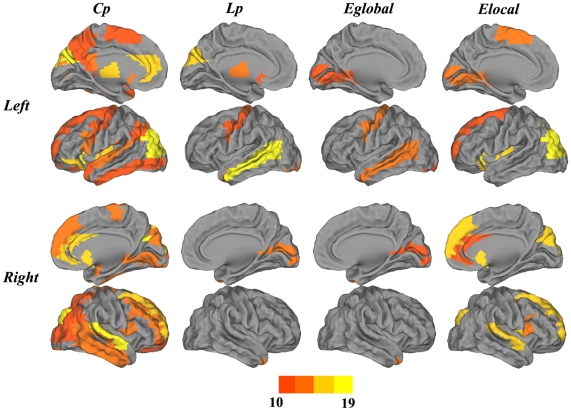
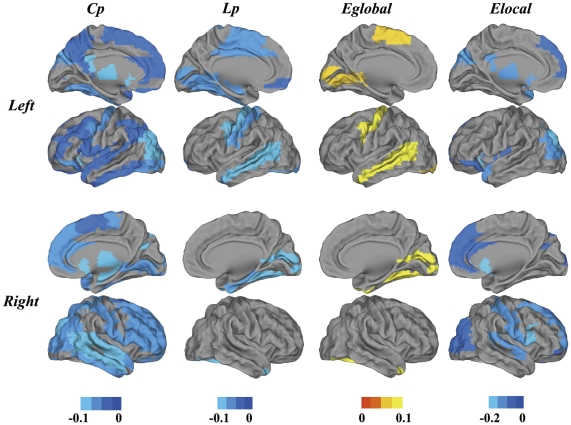
The small-world organization has been hypothesized to reflect a balance between local processing and global integration in the human brain. Previous multimodal imaging studies have consistently demonstrated that the topological architecture of the brain network is disrupted in Alzheimer's disease (AD). However, these studies have reported inconsistent results regarding the topological properties of brain alterations in AD. One potential explanation for these inconsistent results lies with the diverse homogeneity and distinct progressive stages of the AD involved in these studies, which are thought to be critical factors that might affect the results. We investigated the topological properties of brain functional networks derived from resting functional magnetic resonance imaging (fMRI) of carefully selected moderate AD patients and normal controls (NCs). Our results showed that the topological properties were found to be disrupted in AD patients, which showing increased local efficiency but decreased global efficiency. We found that the altered brain regions are mainly located in the default mode network, the temporal lobe and certain subcortical regions that are closely associated with the neuropathological changes in AD. Of note, our exploratory study revealed that the ApoE genotype modulates brain network properties, especially in AD patients.
小世界组织被假设反映了人类大脑中局部处理和全局整合之间的平衡。先前的多模态影像学研究一致表明,在阿尔茨海默病(AD)中,大脑网络的拓扑结构被破坏。然而,这些研究关于 AD 中大脑改变的拓扑性质报告了不一致的结果。这些不一致结果的一个潜在解释在于所涉及的 AD 的异质同质性和不同的渐进阶段,这些被认为是可能影响结果的关键因素。我们研究了从经过精心挑选的中度 AD 患者和正常对照者(NC)的静息功能磁共振成像(fMRI)中获得的大脑功能网络的拓扑性质。我们的结果表明,AD 患者的拓扑性质被发现被破坏,表现为局部效率增加但全局效率降低。我们发现,改变的大脑区域主要位于默认模式网络、颞叶和某些皮质下区域,这些区域与 AD 的神经病理学变化密切相关。值得注意的是,我们的探索性研究表明,载脂蛋白 E 基因型调节大脑网络性质,尤其是在 AD 患者中。