Department of Pharmacology, The University of Melbourne, Melbourne, Victoria, Australia.
PLoS One. 2012;7(3):e33554. doi: 10.1371/journal.pone.0033554. Epub 2012 Mar 21.
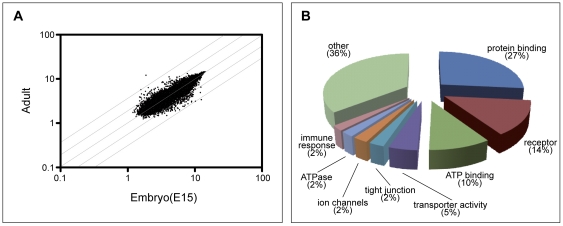
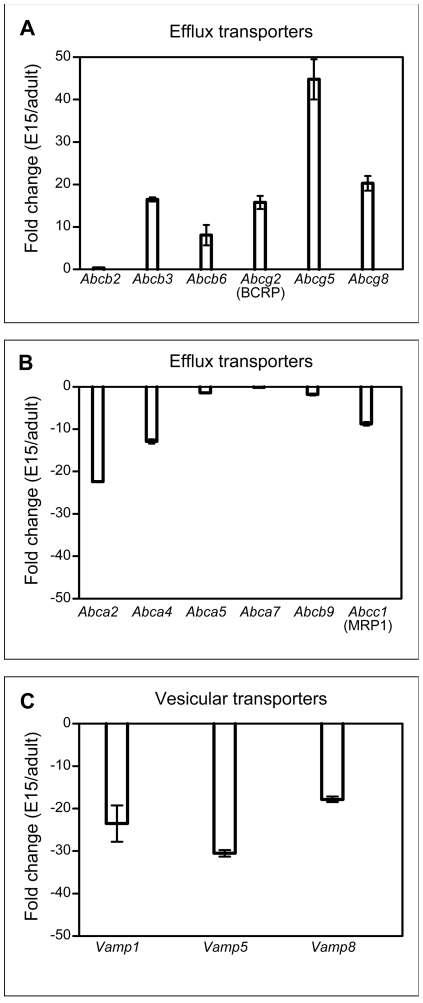
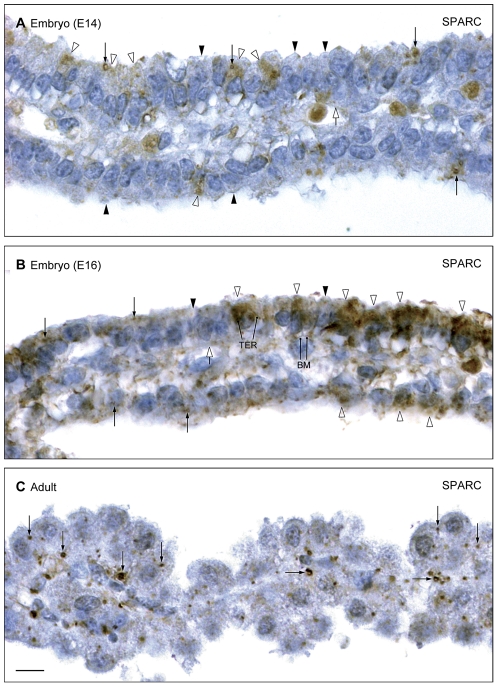
Exchange mechanisms across the blood-cerebrospinal fluid (CSF) barrier in the choroid plexuses within the cerebral ventricles control access of molecules to the central nervous system, especially in early development when the brain is poorly vascularised. However, little is known about their molecular or developmental characteristics. We examined the transcriptome of lateral ventricular choroid plexus in embryonic day 15 (E15) and adult mice. Numerous genes identified in the adult were expressed at similar levels at E15, indicating substantial plexus maturity early in development. Some genes coding for key functions (intercellular/tight junctions, influx/efflux transporters) changed expression during development and their expression patterns are discussed in the context of available physiological/permeability results in the developing brain. Three genes: Secreted protein acidic and rich in cysteine (Sparc), Glycophorin A (Gypa) and C (Gypc), were identified as those whose gene products are candidates to target plasma proteins to choroid plexus cells. These were investigated using quantitative- and single-cell-PCR on plexus epithelial cells that were albumin- or total plasma protein-immunopositive. Results showed a significant degree of concordance between plasma protein/albumin immunoreactivity and expression of the putative transporters. Immunohistochemistry identified SPARC and GYPA in choroid plexus epithelial cells in the embryo with a subcellular distribution that was consistent with transport of albumin from blood to cerebrospinal fluid. In adult plexus this pattern of immunostaining was absent. We propose a model of the cellular mechanism in which SPARC and GYPA, together with identified vesicle-associated membrane proteins (VAMPs) may act as receptors/transporters in developmentally regulated transfer of plasma proteins at the blood-CSF interface.
脑室脉络丛中的血脑屏障交换机制控制着分子进入中枢神经系统的途径,尤其是在大脑血管化程度较低的早期发育阶段。然而,人们对其分子或发育特征知之甚少。我们检测了胚胎第 15 天(E15)和成年小鼠侧脑室脉络丛的转录组。在成年小鼠中鉴定到的许多基因在 E15 时表达水平相似,这表明在发育早期脉络丛具有相当的成熟度。一些编码关键功能(细胞间/紧密连接、内外流转运体)的基因在发育过程中表达发生变化,其表达模式在发育中大脑的现有生理/通透性结果的背景下进行了讨论。三个基因:富含半胱氨酸的酸性分泌蛋白(Sparc)、糖蛋白 A(Gypa)和 C(Gypc),被鉴定为其产物可能是将血浆蛋白靶向脉络丛细胞的候选物。我们使用定量和单细胞 PCR 对白蛋白或总血浆蛋白免疫阳性的脉络丛上皮细胞进行了研究。结果表明,血浆蛋白/白蛋白免疫反应性与假定转运体的表达之间存在显著的一致性。免疫组织化学鉴定出胚胎脉络丛上皮细胞中的 SPARC 和 GYPA,其亚细胞分布与从血液到脑脊液的白蛋白转运一致。在成年脉络丛中,这种免疫染色模式不存在。我们提出了一个细胞机制模型,其中 SPARC 和 GYPA 与鉴定的囊泡相关膜蛋白(VAMPs)一起,可能在血液-CSF 界面处的血浆蛋白发育调控转运中充当受体/转运体。