National Center on Birth Defects and Developmental Disabilities, Centers for Disease Control and Prevention, Atlanta, GA, USA.
Prev Med. 2012 May;54(5):351-7. doi: 10.1016/j.ypmed.2012.03.009. Epub 2012 Mar 21.
Congenital cytomegalovirus (CMV) infection is a common cause of hearing loss and intellectual disability. We assessed CMV knowledge and the frequency of women's behaviors that may enable CMV transmission to inform strategies for communicating prevention messages to women.
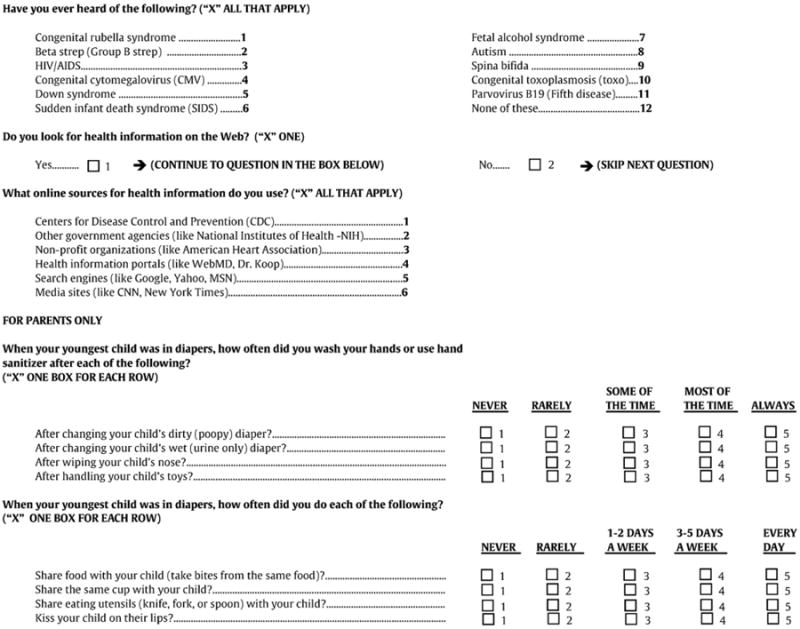
We analyzed survey responses from 4184 participants (2181 women, 2003 men) in the 2010 HealthStyles survey, a national mail survey designed to be similar to the United States population.
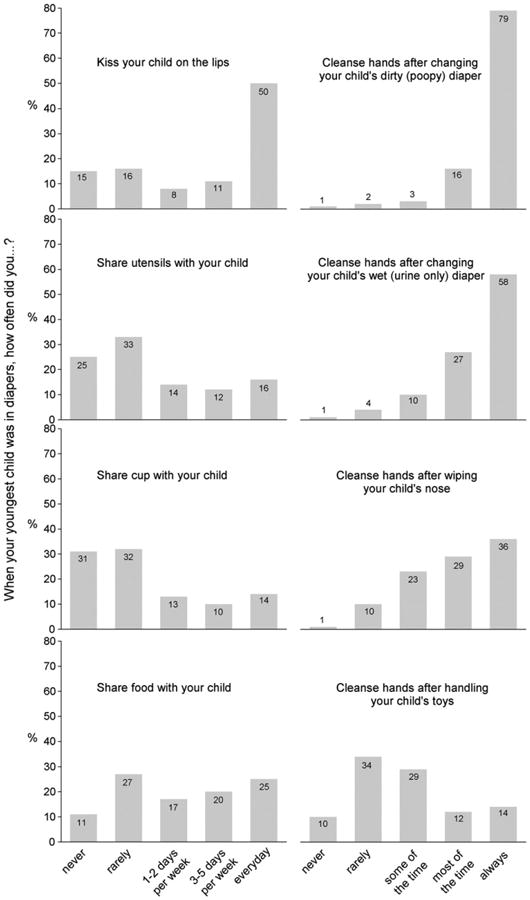
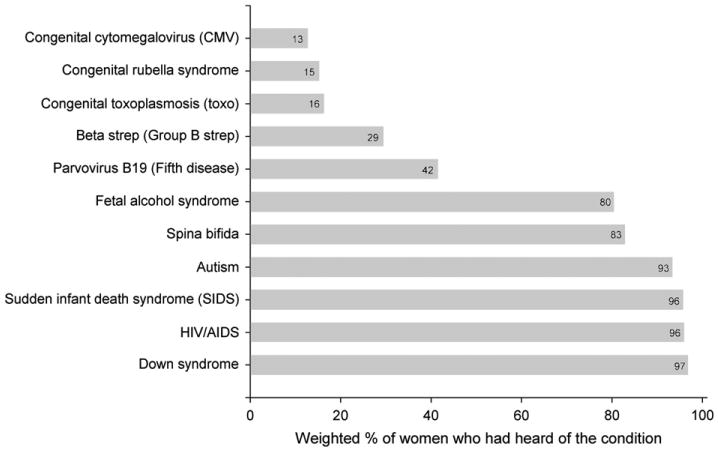
Only 7% of men and 13% of women had heard of congenital CMV. Women with children under age 19 (n=918) practiced the following risk behaviors at least once per week while their youngest child was still in diapers: kissing on the lips (69%), sharing utensils (42%), sharing cups (37%), and sharing food (62%). Women practiced protective, hand cleansing behaviors most of the time or always after: changing a dirty diaper (95%), changing a wet diaper (85%), or wiping the child's nose (65%), but less commonly after handling the child's toys (26%).
Few women are aware of CMV and most regularly practice behaviors that may place them at risk when interacting with young children. Women should be informed of practices that can reduce their risk of CMV infection during pregnancy.
先天性巨细胞病毒(CMV)感染是导致听力损失和智力残疾的常见原因。我们评估了 CMV 相关知识,以及女性可能导致 CMV 传播的行为频率,旨在为向女性传播预防信息提供策略。
我们分析了 2010 年健康生活方式调查(HealthStyles survey)中 4184 名参与者(2181 名女性,2003 名男性)的调查回复,该调查是一项全国性的邮件调查,旨在与美国人口相似。
只有 7%的男性和 13%的女性听说过先天性 CMV。有 19 岁以下孩子的女性(n=918)在其最小的孩子仍在使用尿布时,每周至少进行一次以下风险行为:亲吻嘴唇(69%)、共用餐具(42%)、共用杯子(37%)和共享食物(62%)。女性在以下情况下经常进行保护、手部清洁行为:更换脏尿布(95%)、更换湿尿布(85%)或擦拭孩子的鼻子(65%),但在处理孩子的玩具时很少这样做(26%)。
很少有女性了解 CMV,大多数女性在与幼儿互动时经常进行可能使她们面临风险的行为。应告知女性在怀孕期间减少 CMV 感染风险的做法。