West Virginia University, Morgantown, WV, USA.
Int J Health Geogr. 2012 Apr 2;11:9. doi: 10.1186/1476-072X-11-9.
The study conducts statistical and spatial analyses to investigate amounts and types of permitted surface water pollution discharges in relation to population mortality rates for cancer and non-cancer causes nationwide and by urban-rural setting. Data from the Environmental Protection Agency's (EPA) Discharge Monitoring Report (DMR) were used to measure the location, type, and quantity of a selected set of 38 discharge chemicals for 10,395 facilities across the contiguous US. Exposures were refined by weighting amounts of chemical discharges by their estimated toxicity to human health, and by estimating the discharges that occur not only in a local county, but area-weighted discharges occurring upstream in the same watershed. Centers for Disease Control and Prevention (CDC) mortality files were used to measure age-adjusted population mortality rates for cancer, kidney disease, and total non-cancer causes. Analysis included multiple linear regressions to adjust for population health risk covariates. Spatial analyses were conducted by applying geographically weighted regression to examine the geographic relationships between releases and mortality.
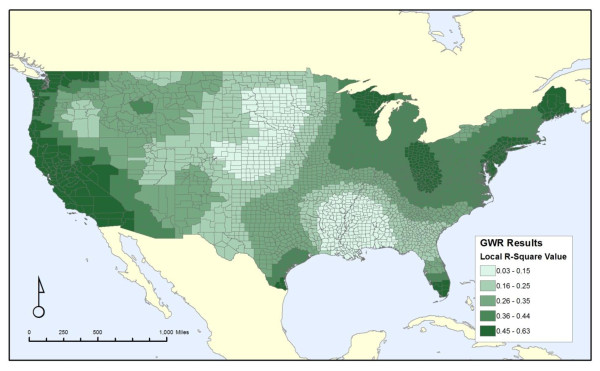
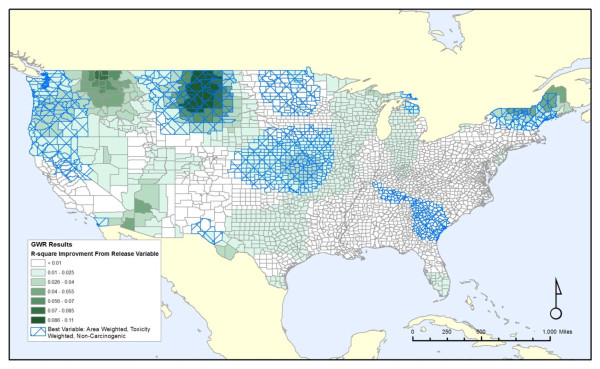
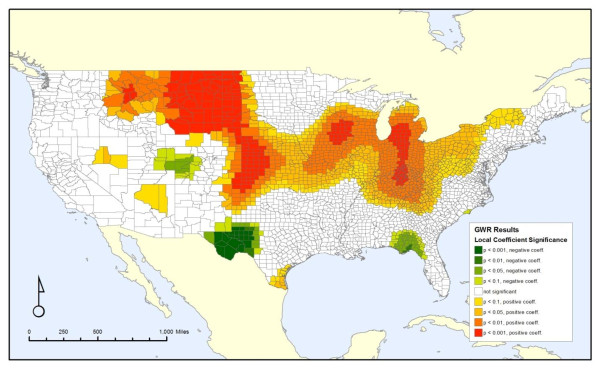
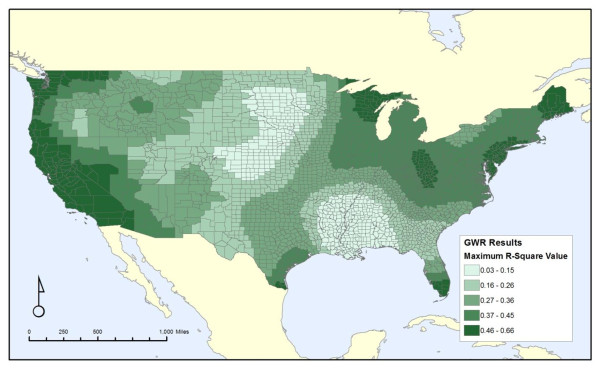
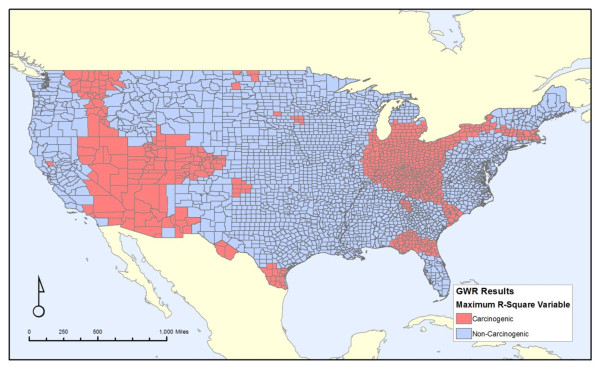
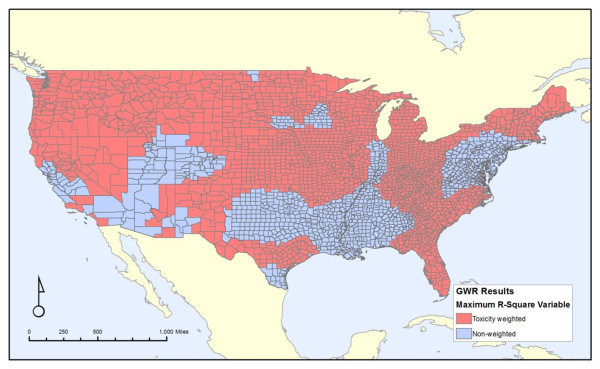
Greater non-carcinogenic chemical discharge quantities were associated with significantly higher non-cancer mortality rates, regardless of toxicity weighting or upstream discharge weighting. Cancer mortality was higher in association with carcinogenic discharges only after applying toxicity weights. Kidney disease mortality was related to higher non-carcinogenic discharges only when both applying toxicity weights and including upstream discharges. Effects for kidney mortality and total non-cancer mortality were stronger in rural areas than urban areas. Spatial results show correlations between non-carcinogenic discharges and cancer mortality for much of the contiguous United States, suggesting that chemicals not currently recognized as carcinogens may contribute to cancer mortality risk. The geographically weighted regression results suggest spatial variability in effects, and also indicate that some rural communities may be impacted by upstream urban discharges.
There is evidence that permitted surface water chemical discharges are related to population mortality. Toxicity weights and upstream discharges are important for understanding some mortality effects. Chemicals not currently recognized as carcinogens may nevertheless play a role in contributing to cancer mortality risk. Spatial models allow for the examination of geographic variability not captured through the regression models.
本研究通过统计和空间分析,调查全国范围内与癌症和非癌症死因相关的允许的地表水污染物排放量及其类型,同时考虑城乡背景。本研究使用来自美国环境保护署(EPA)排放监测报告(DMR)的数据,对全美 10395 个设施的 38 种选定排放化学品的位置、类型和数量进行了测量。通过将化学物质排放量与其对人类健康的估计毒性进行加权,并估计不仅在当地县,而且在同一流域上游发生的区域加权排放量,对暴露情况进行了细化。疾病控制和预防中心(CDC)的死亡率档案被用于衡量癌症、肾病和非癌症总死因的年龄调整人口死亡率。分析包括多元线性回归,以调整人口健康风险协变量。通过应用地理加权回归进行空间分析,以检查排放物与死亡率之间的地理关系。
无论是否进行毒性加权或上游排放物加权,非致癌性化学物质排放物的数量增加与非癌症死亡率的显著升高相关。只有在应用毒性权重后,致癌性排放物与癌症死亡率的相关性才更高。只有在应用毒性权重并包括上游排放物时,肾病死亡率才与非致癌性排放物的增加相关。在农村地区,肾病死亡率和非癌症总死亡率的影响比城市地区更强。空间结果表明,在美国大部分地区,非致癌性排放物与癌症死亡率之间存在相关性,这表明目前尚未被认为是致癌物质的化学物质可能会增加癌症死亡率的风险。地理加权回归结果表明存在效应的空间变异性,并且还表明一些农村社区可能受到上游城市排放物的影响。
有证据表明,允许的地表水化学物质排放物与人口死亡率有关。毒性权重和上游排放物对于理解某些死亡率效应很重要。目前尚未被认为是致癌物质的化学物质可能仍然在导致癌症死亡率风险方面发挥作用。空间模型允许检查回归模型无法捕捉到的地理变异性。