Ren Hongyan, Wan Xia, Yang Fei, Shi Xiaoming, Xu Jianwei, Zhuang Dafang, Yang Gonghuan
State Key Laboratory of Resources and Environmental Information System, Institute of Geographic Sciences and Natural Resources Research, Chinese Academy of Sciences, Beijing 100101, China.
Institute of Basic Medical Sciences, Chinese Academy of Medical Sciences, 5 Dong Dan San Tiao, Beijing 100005, China.
Int J Environ Res Public Health. 2014 Dec 23;12(1):214-26. doi: 10.3390/ijerph120100214.
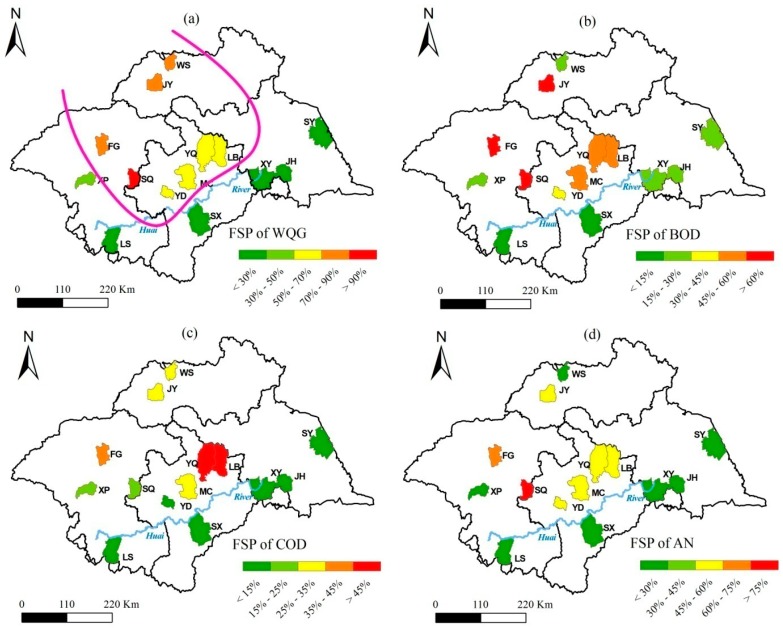
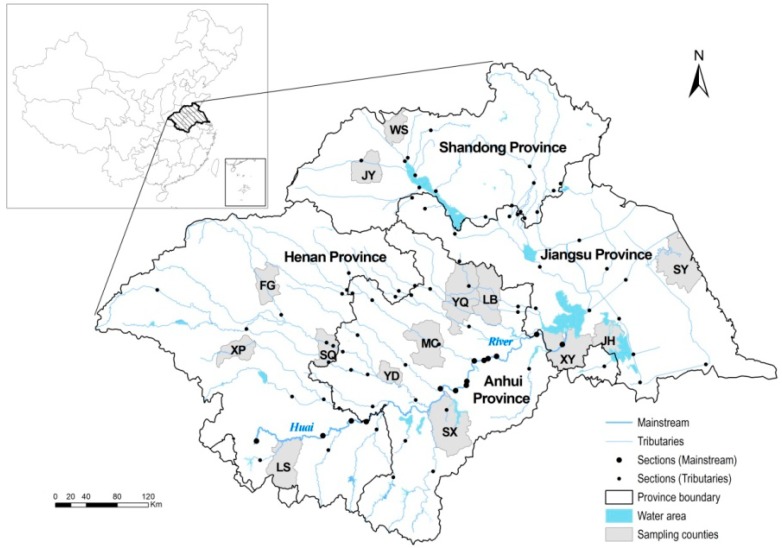
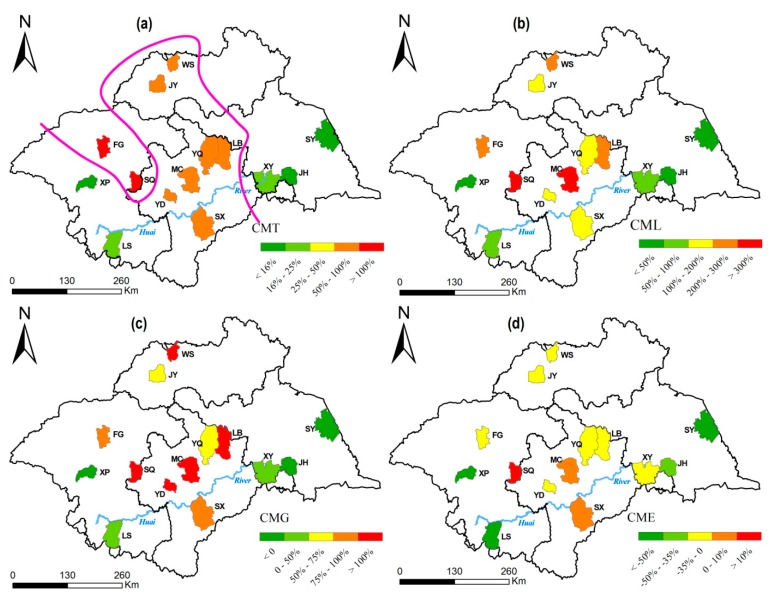
The relationship between the ever-increasing cancer mortality and water pollution is an important public concern in China. This study aimed to explore the association between serious water pollution and increasing digestive cancer mortality in the Huai River Basin (HRB) in China. A series of frequency of serious pollution (FSP) indices including water quality grade (FSPWQG), biochemical oxygen demand (FSPBOD), chemical oxygen demand (FSPCOD), and ammonia nitrogen (FSPAN) were used to characterize the surface water quality between 1997 and 2006. Data on the county-level changing mortality (CM) due to digestive tract cancers between 1975 and 2006 were collected for 14 counties in the study area. Most of investigated counties (eight) with high FSPWQG (>50%) distributed in the northern region of the HRB and had larger CMs of digestive tract cancers. In addition to their similar spatial distribution, significant correlations between FSP indices and CMs were observed by controlling for drinking water safety (DWS), gross domestic product (GDP), and population (POP). Furthermore, the above-mentioned partial correlations were clearly increased when only controlling for GDP and POP. Our study indicated that county-level variations of digestive cancer mortality are remarkably associated with water pollution, and suggested that continuous measures for improving surface water quality and DWS and hygienic interventions should be effectively implemented by local governments.
癌症死亡率不断上升与水污染之间的关系是中国一个重要的公众关切问题。本研究旨在探讨中国淮河流域严重水污染与消化系统癌症死亡率上升之间的关联。一系列严重污染频率(FSP)指标,包括水质等级(FSPWQG)、生化需氧量(FSPBOD)、化学需氧量(FSPCOD)和氨氮(FSPAN),被用于表征1997年至2006年期间的地表水水质。收集了研究区域内14个县1975年至2006年期间因消化道癌症导致的县级死亡率变化(CM)数据。大多数FSPWQG较高(>50%)的被调查县(8个)分布在淮河流域北部地区,且消化道癌症的CM较大。除了相似的空间分布外,通过控制饮用水安全(DWS)、国内生产总值(GDP)和人口(POP),观察到FSP指标与CM之间存在显著相关性。此外,仅控制GDP和POP时,上述偏相关性明显增加。我们的研究表明,县级消化系统癌症死亡率的变化与水污染显著相关,并建议地方政府应有效实施持续措施来改善地表水水质和DWS以及卫生干预措施。