School of Biological Sciences, the University of Hong Kong, Pokfulam, Hong Kong, China.
Biotechnol Biofuels. 2012 Apr 2;5:19. doi: 10.1186/1754-6834-5-19.
Lipids extracted from seeds of Camelina sativa have been successfully used as a reliable source of aviation biofuels. This biofuel is environmentally friendly because the drought resistance, frost tolerance and low fertilizer requirement of Camelina sativa allow it to grow on marginal lands. Improving the species growth and seed yield by genetic engineering is therefore a target for the biofuels industry. In Arabidopsis, overexpression of purple acid phosphatase 2 encoded by Arabidopsis (AtPAP2) promotes plant growth by modulating carbon metabolism. Overexpression lines bolt earlier and produce 50% more seeds per plant than wild type. In this study, we explored the effects of overexpressing AtPAP2 in Camelina sativa.
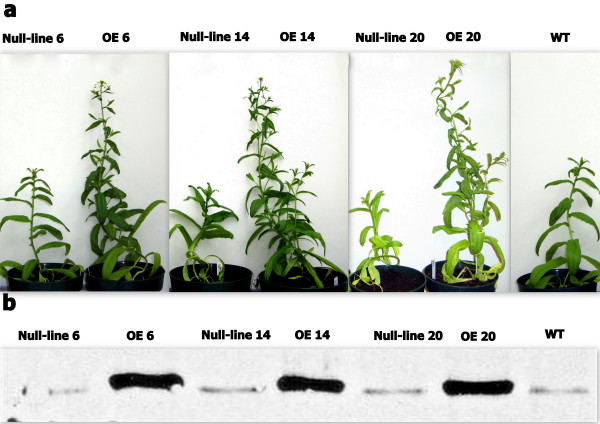
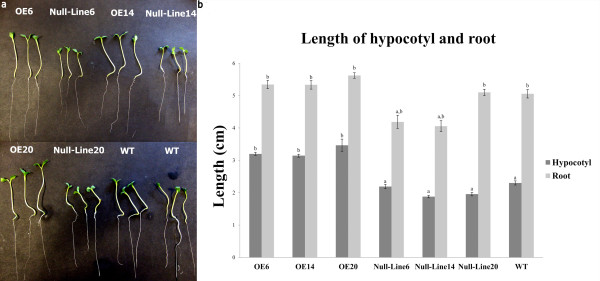
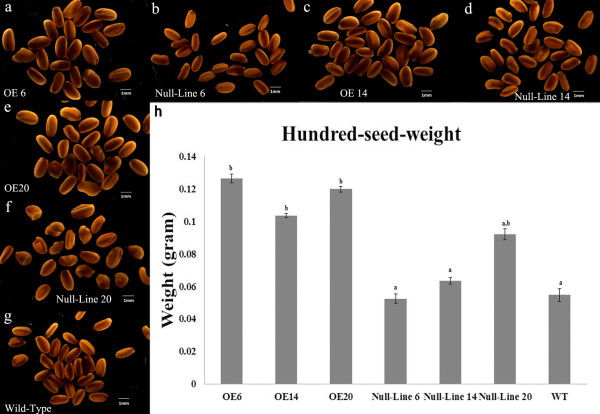
Under controlled environmental conditions, overexpression of AtPAP2 in Camelina sativa resulted in longer hypocotyls, earlier flowering, faster growth rate, higher photosynthetic rate and stomatal conductance, increased seed yield and seed size in comparison with the wild-type line and null-lines. Similar to transgenic Arabidopsis, activity of sucrose phosphate synthase in leaves of transgenic Camelina was also significantly up-regulated. Sucrose produced in photosynthetic tissues supplies the building blocks for cellulose, starch and lipids for growth and fuel for anabolic metabolism. Changes in carbon flow and sink/source activities in transgenic lines may affect floral, architectural, and reproductive traits of plants.
Lipids extracted from the seeds of Camelina sativa have been used as a major constituent of aviation biofuels. The improved growth rate and seed yield of transgenic Camelina under controlled environmental conditions have the potential to boost oil yield on an area basis in field conditions and thus make Camelina-based biofuels more environmentally friendly and economically attractive.
从荠蓝种子中提取的脂类已成功用作可靠的航空生物燃料来源。这种生物燃料是环保的,因为荠蓝耐旱、耐霜、对肥料的需求低,使其能够在边缘土地上生长。因此,通过基因工程提高该物种的生长和种子产量是生物燃料行业的目标。在拟南芥中,由拟南芥(AtPAP2)编码的紫色酸性磷酸酶 2 的过表达通过调节碳代谢来促进植物生长。过表达系比野生型更早抽薹,每株植物产生的种子多 50%。在这项研究中,我们探索了在荠蓝中过表达 AtPAP2 的效果。
在受控环境条件下,荠蓝中过表达 AtPAP2 导致下胚轴更长、开花更早、生长速度更快、光合速率和气孔导度更高、种子产量和种子大小增加,与野生型系和空载体系相比。与转基因拟南芥相似,转基因荠蓝叶片中蔗糖磷酸合酶的活性也显著上调。光合作用组织中产生的蔗糖为纤维素、淀粉和脂质的生长以及合成代谢的燃料提供构建块。转基因系中碳流和源/库活动的变化可能会影响植物的花、结构和生殖特性。
从荠蓝种子中提取的脂类已被用作航空生物燃料的主要成分。在受控环境条件下,转基因荠蓝生长速度和种子产量的提高有可能在田间条件下提高油产量,从而使基于荠蓝的生物燃料更环保、更具经济吸引力。