Innovascreen, Inc., Halifax, Nova Scotia, Canada.
PLoS One. 2012;7(3):e33760. doi: 10.1371/journal.pone.0033760. Epub 2012 Mar 29.
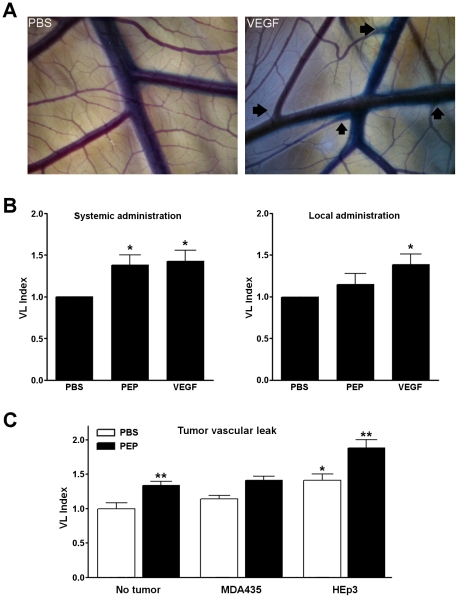
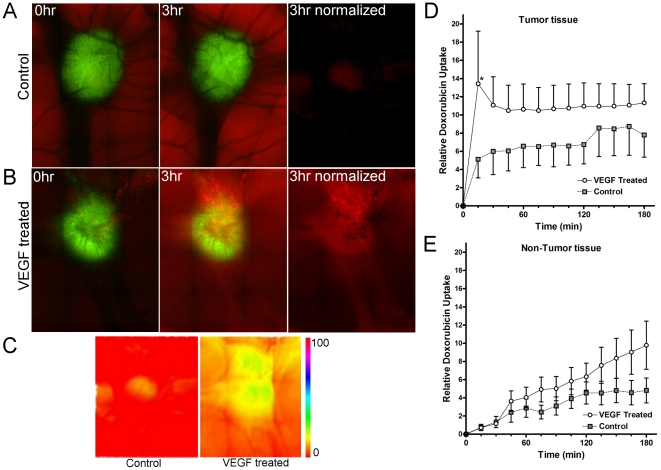
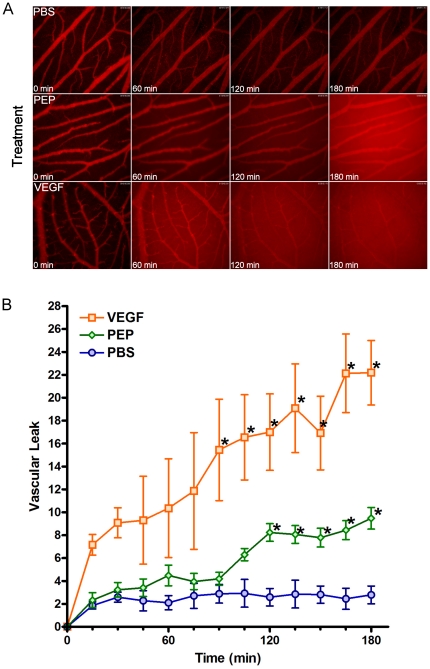
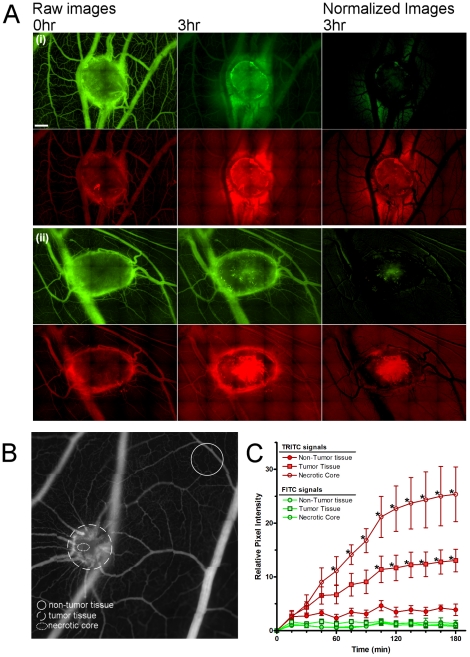
The leaky, heterogeneous vasculature of human tumors prevents the even distribution of systemic drugs within cancer tissues. However, techniques for studying vascular delivery systems in vivo often require complex mammalian models and time-consuming, surgical protocols. The developing chicken embryo is a well-established model for human cancer that is easily accessible for tumor imaging. To assess this model for the in vivo analysis of tumor permeability, human tumors were grown on the chorioallantoic membrane (CAM), a thin vascular membrane which overlays the growing chick embryo. The real-time movement of small fluorescent dextrans through the tumor vasculature and surrounding tissues were used to measure vascular leak within tumor xenografts. Dextran extravasation within tumor sites was selectively enhanced an interleukin-2 (IL-2) peptide fragment or vascular endothelial growth factor (VEGF). VEGF treatment increased vascular leak in the tumor core relative to surrounding normal tissue and increased doxorubicin uptake in human tumor xenografts. This new system easily visualizes vascular permeability changes in vivo and suggests that vascular permeability may be manipulated to improve chemotherapeutic targeting to tumors.
人类肿瘤渗漏、异质性的血管系统阻止了全身性药物在肿瘤组织内的均匀分布。然而,用于研究体内血管输送系统的技术通常需要复杂的哺乳动物模型和耗时的手术方案。发育中的鸡胚是一种成熟的人类癌症模型,很容易进行肿瘤成像。为了评估该模型在体内分析肿瘤通透性方面的应用,将人类肿瘤种植在鸡胚的绒毛尿囊膜(CAM)上,CAM 是一层覆盖在生长中的鸡胚上的薄血管膜。通过实时观察小荧光葡聚糖通过肿瘤血管系统和周围组织的运动,测量肿瘤异种移植物中的血管渗漏。白细胞介素 2(IL-2)肽片段或血管内皮生长因子(VEGF)选择性增强了肿瘤部位的葡聚糖外渗。VEGF 治疗增加了肿瘤核心相对于周围正常组织的血管通透性,并增加了人肿瘤异种移植物中多柔比星的摄取。该新系统可轻松在体内可视化血管通透性变化,并表明可以操纵血管通透性以改善化疗药物对肿瘤的靶向性。