Department of Academic Oncology, School of Molecular Medical Sciences, University of Nottingham, Nottingham University Hospitals NHS Trust, City Hospital Campus, Nottingham, UK.
Mod Pathol. 2012 Aug;25(8):1106-16. doi: 10.1038/modpathol.2012.60. Epub 2012 Apr 6.
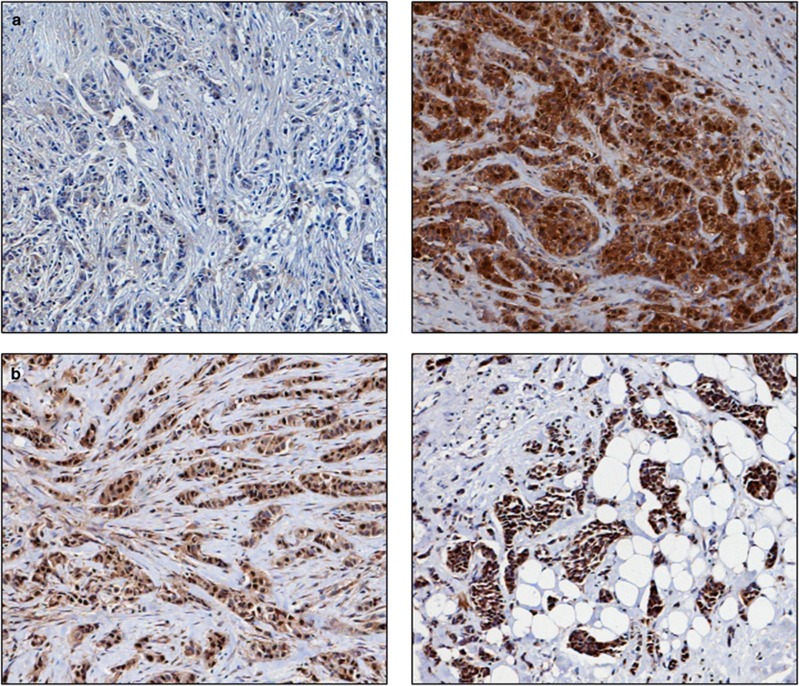
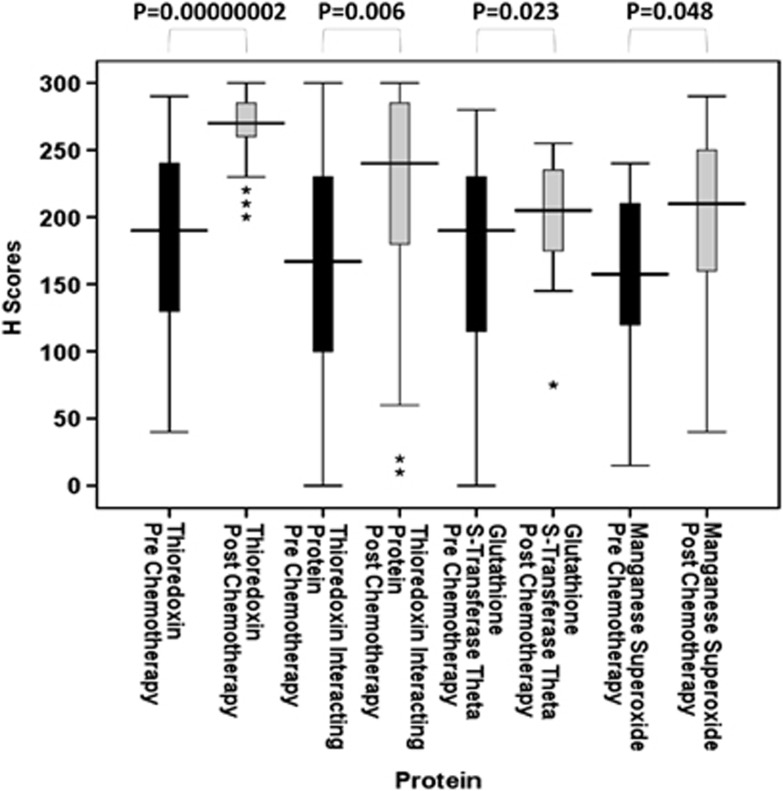
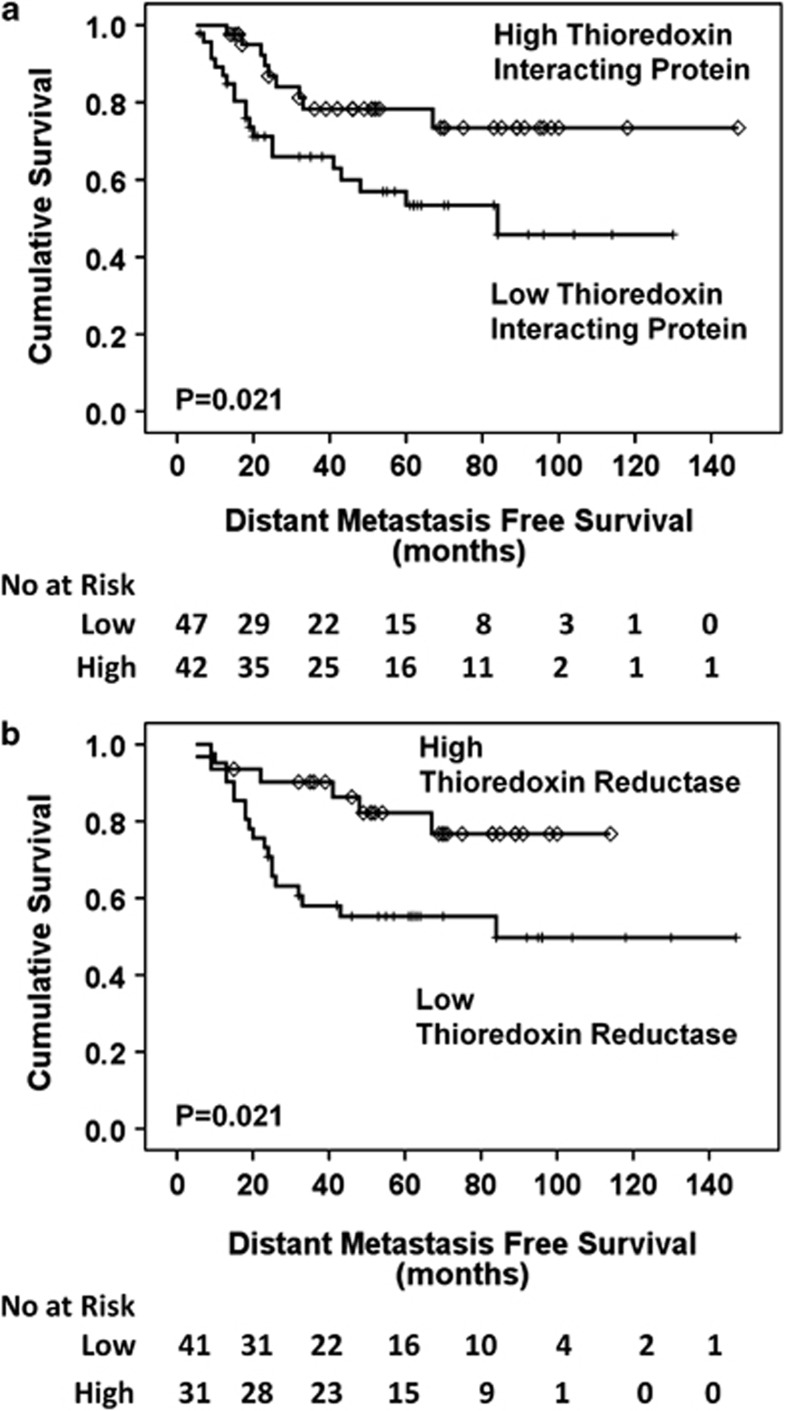
Neoadjuvant chemotherapy has become the standard of care for locally advanced primary breast cancer. Anthracycline-based regimens have proven to be one of the most effective treatments in this setting. As certain cytotoxic antineoplastic agents, such as anthracyclines, generate reactive oxygen species as a by-product of their mechanism of action, we examined whether redox protein expression was involved in the response to anthracycline-based chemotherapy and with clinical outcome. Pre-treatment needle core biopsy and post-anthracycline treatment tumour sections were analysed from 98 cases. In all, 32 individuals had a complete clinical response and 17 had a complete pathological response. Immunohistochemical staining was performed for eight redox proteins: thioredoxin, thioredoxin reductase, thioredoxin interacting protein (TxNIP), glutathione S-transferase (GST) π, θ and α, catalase and manganese superoxide dismutase. GST π (P=0.05) and catalase (P=0.045) were associated with pathological complete response in pre-chemotherapy samples. TxNIP (P=0.017) and thioredoxin reductase (P=0.022) were independent prognostic factors for distant metastasis-free survival and TxNIP for overall survival (P=0.014). In oestrogen receptor negative patients that are known to have a poor overall survival, a considerably worse prognosis was seen in cases that exhibited low expression of TxNIP (P=0.000003), stratifying patients into more defined groups. This study indicates the importance of redox regulation in determining breast cancer response to anthracycline-based chemotherapy and provides ways of further stratifying pre-chemotherapy patients to potentially allow more tailored treatments.
新辅助化疗已成为局部晚期原发性乳腺癌的标准治疗方法。基于蒽环类药物的方案已被证明是该治疗环境中最有效的治疗方法之一。由于某些细胞毒性抗肿瘤药物,如蒽环类药物,在其作用机制中会产生活性氧作为副产物,因此我们研究了氧化还原蛋白表达是否参与了对基于蒽环类药物的化疗的反应以及与临床结果的关系。对 98 例患者的术前针芯活检和蒽环类药物治疗后的肿瘤切片进行了分析。共有 32 人有完全临床反应,17 人有完全病理反应。对 8 种氧化还原蛋白进行了免疫组织化学染色:硫氧还蛋白、硫氧还蛋白还原酶、硫氧还蛋白相互作用蛋白 (TxNIP)、谷胱甘肽 S-转移酶 (GST)π、θ 和 α、过氧化氢酶和锰超氧化物歧化酶。在化疗前样本中,GSTπ(P=0.05)和过氧化氢酶(P=0.045)与病理完全缓解相关。TxNIP(P=0.017)和硫氧还蛋白还原酶(P=0.022)是无远处转移生存的独立预后因素,TxNIP 是总生存的独立预后因素(P=0.014)。在已知总体生存预后较差的雌激素受体阴性患者中,TxNIP 表达水平较低的病例预后明显较差(P=0.000003),将患者分层为更明确的组别。这项研究表明氧化还原调节在确定乳腺癌对基于蒽环类药物的化疗的反应中的重要性,并为进一步对化疗前患者进行分层提供了方法,从而可能实现更具针对性的治疗。