Glass Elizabeth J, Crutchley Sarah, Jensen Kirsty
The Roslin Institute and Royal (Dick) School of Veterinary Studies, University of Edinburgh, Easter Bush, Midlothian EH25 9RG, UK.
Vet Immunol Immunopathol. 2012 Jul 15;148(1-2):178-89. doi: 10.1016/j.vetimm.2012.03.006. Epub 2012 Mar 12.
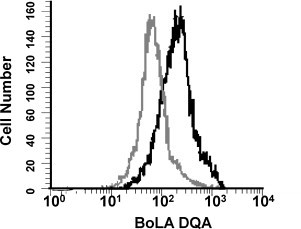
Many breeds of cattle with long histories of living in areas of endemic disease have evolved mechanisms that enable them to co-exist with specific pathogens. Understanding the genes that control tolerance and resistance could provide new strategies to improve the health and welfare of livestock. Around one sixth of the world cattle population is estimated to be at risk from one of the most debilitating tick-borne diseases of cattle, caused by the protozoan parasite, Theileria annulata. The parasite mainly infects cells of the myeloid lineage which are also the main producers of inflammatory cytokines. If an infectious or inflammatory insult is sufficiently great, inflammatory cytokines produced by macrophages enter the circulation and induce an acute phase proteins (APP) response. The Bos taurus Holstein breed produces higher and more prolonged levels of inflammatory cytokine induced APP than the Bos indicus Sahiwal breed in response to experimental infection with T. annulata. The Sahiwal exhibits significantly less pathology and survives infection, unlike the Holstein breed. Therefore, we hypothesised that the causal genes were likely to be expressed in macrophages and control the production of inflammatory cytokines. A functional genomics approach revealed that the transcriptome profile of the B. taurus macrophages was more associated with an inflammatory programme than the B. indicus macrophages. In particular the most differentially expressed gene was a member of the signal regulatory protein (SIRP) family. These are mainly expressed on myeloid cell surfaces and control inflammatory responses. Other differentially expressed genes included bovine major histocompatibility complex (MHC) (BoLA) class II genes, particularly BoLA DQ, and transforming growth factor (TGF)B2. We are now exploring whether sequence and functional differences in the bovine SIRP family may underlie the resistance or tolerance to T. annulata between the breeds. Potentially, our research may also have more general implications for the control of inflammatory processes against other pathogens. Genes controlling the balance between pathology and protection may determine how livestock can survive in the face of infectious onslaught. Next generation sequencing and RNAi methodologies for livestock species will bring new opportunities to link diversity at the genome level to functional differences in health traits in livestock species.
许多在地方病流行地区有着悠久生存历史的牛品种已经进化出了能够使其与特定病原体共存的机制。了解控制耐受性和抗性的基因可为改善家畜的健康和福利提供新策略。据估计,世界上约六分之一的牛群面临感染由原生动物寄生虫环形泰勒虫引起的最使人衰弱的牛蜱传疾病之一的风险。该寄生虫主要感染髓系谱系的细胞,而这些细胞也是炎性细胞因子的主要产生者。如果感染或炎症刺激足够强烈,巨噬细胞产生的炎性细胞因子会进入循环系统并诱导急性期蛋白(APP)反应。在受到环形泰勒虫实验感染时,与瘤牛萨希瓦尔品种相比,荷斯坦奶牛品种产生的炎性细胞因子诱导的APP水平更高且持续时间更长。与荷斯坦品种不同,萨希瓦尔表现出的病理学症状明显较少且能在感染后存活。因此,我们推测相关因果基因可能在巨噬细胞中表达并控制炎性细胞因子的产生。一种功能基因组学方法显示,与瘤牛巨噬细胞相比,奶牛巨噬细胞的转录组图谱与炎症程序的关联更大。特别是,差异表达最明显的基因是信号调节蛋白(SIRP)家族的成员。这些蛋白主要在髓系细胞表面表达并控制炎症反应。其他差异表达的基因包括牛主要组织相容性复合体(MHC)(BoLA)II类基因,尤其是BoLA DQ,以及转化生长因子(TGF)B2。我们目前正在探究牛SIRP家族中的序列和功能差异是否可能是品种间对环形泰勒虫抗性或耐受性的基础。我们的研究可能还对控制针对其他病原体的炎症过程具有更广泛的意义。控制病理学和保护之间平衡的基因可能决定家畜在面对感染冲击时如何存活。用于家畜物种的新一代测序和RNA干扰方法将带来新机会,把基因组水平的多样性与家畜物种健康性状的功能差异联系起来。