Texas Biomedical Research Institute, San Antonio, TX 78245, USA.
Science. 2012 Apr 6;336(6077):79-82. doi: 10.1126/science.1215966.
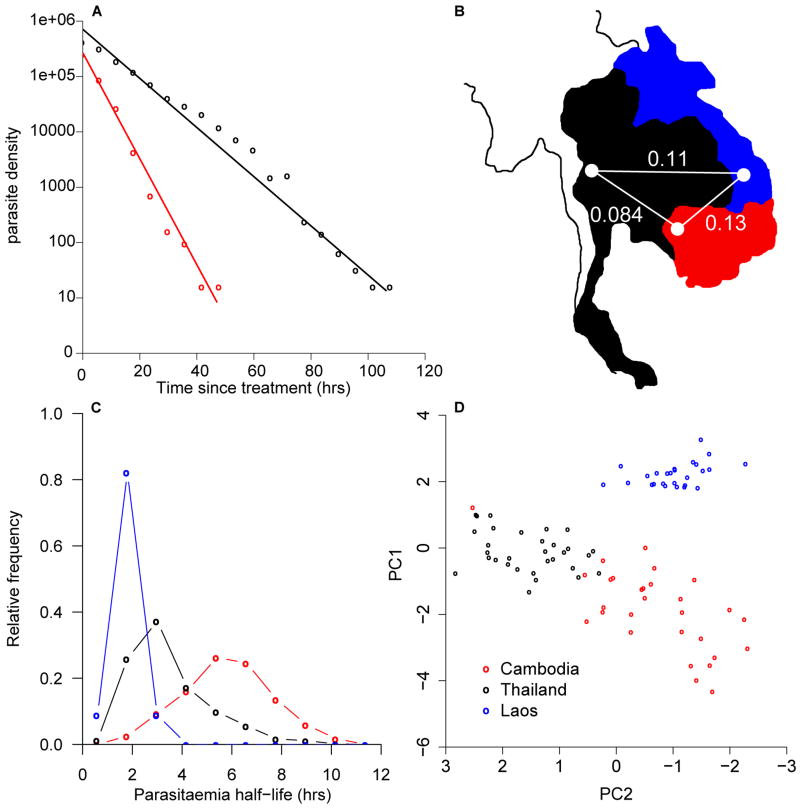
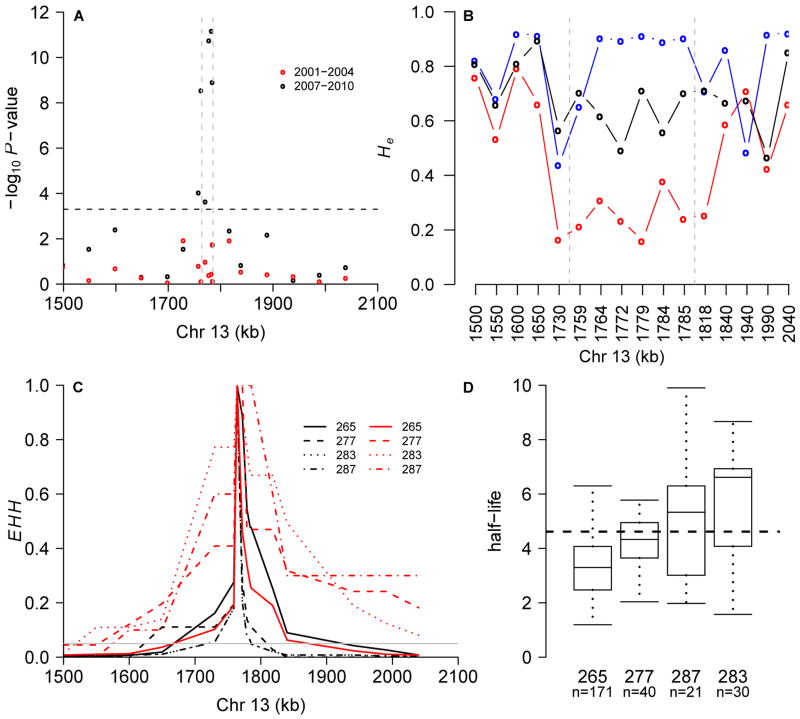
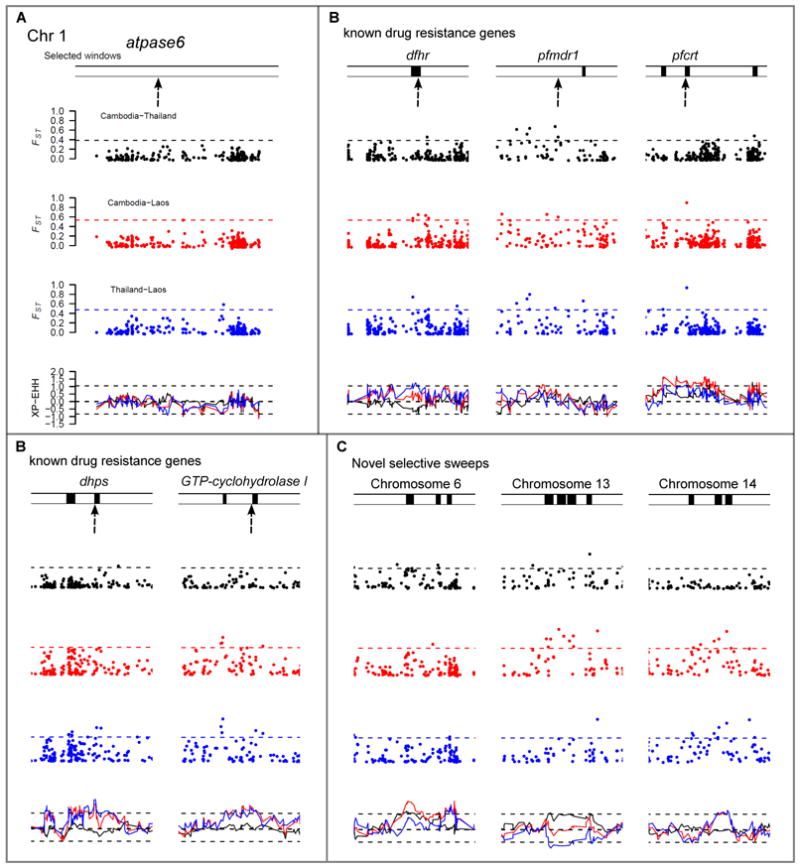
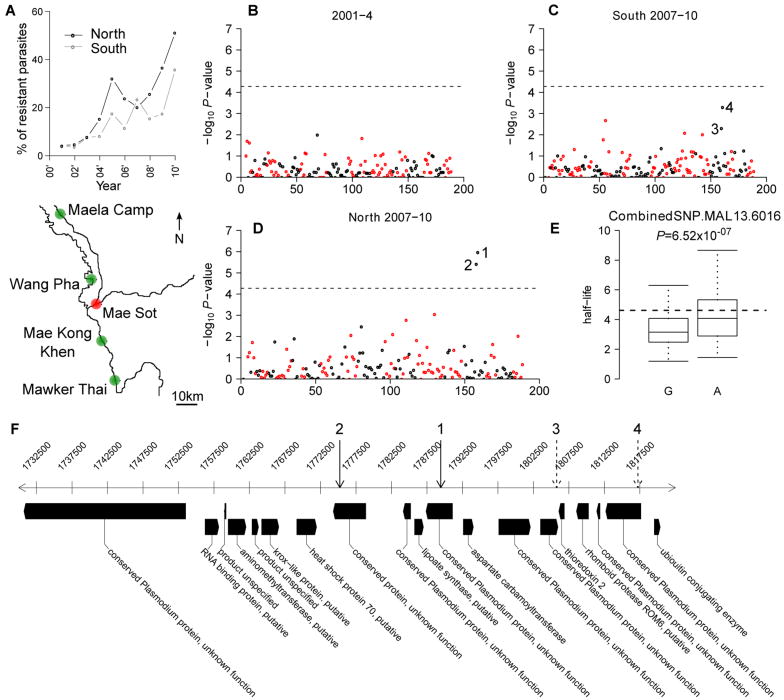
Evolving resistance to artemisinin-based compounds threatens to derail attempts to control malaria. Resistance has been confirmed in western Cambodia and has recently emerged in western Thailand, but is absent from neighboring Laos. Artemisinin resistance results in reduced parasite clearance rates (CRs) after treatment. We used a two-phase strategy to identify genome region(s) underlying this ongoing selective event. Geographical differentiation and haplotype structure at 6969 polymorphic single-nucleotide polymorphisms (SNPs) in 91 parasites from Cambodia, Thailand, and Laos identified 33 genome regions under strong selection. We screened SNPs and microsatellites within these regions in 715 parasites from Thailand, identifying a selective sweep on chromosome 13 that shows strong association (P = 10(-6) to 10(-12)) with slow CRs, illustrating the efficacy of targeted association for identifying the genetic basis of adaptive traits.
青蒿素类化合物耐药性的不断发展威胁着控制疟疾的努力。耐药性已在柬埔寨西部得到证实,最近在泰国西部出现,但在邻国老挝尚未发现。青蒿素耐药性导致治疗后寄生虫清除率 (CR) 降低。我们使用两阶段策略来确定正在进行的选择事件的基因组区域。在柬埔寨、泰国和老挝的 91 个寄生虫中的 6969 个多态性单核苷酸多态性 (SNP) 进行地理分化和单倍型结构分析,确定了 33 个受强烈选择的基因组区域。我们在来自泰国的 715 个寄生虫中筛选了这些区域中的 SNP 和微卫星,鉴定出第 13 号染色体上的一个选择清除,与较慢的 CRs 表现出强烈的关联(P = 10(-6)至 10(-12)),说明了靶向关联识别适应性特征遗传基础的有效性。