Nayak Sourav, Peto Thomas J, Kucharski Michal, Tripura Rupam, Callery James J, Quang Huy Duong Tien, Gendrot Mathieu, Lek Dysoley, Nghia Ho Dang Trung, van der Pluijm Rob W, Dong Nguyen, Long Le Thanh, Vongpromek Ranitha, Rekol Huy, Hoang Chau Nguyen, Miotto Olivo, Mukaka Mavuto, Dhorda Mehul, von Seidlein Lorenz, Imwong Mallika, Roca Xavier, Day Nicholas P J, White Nicholas J, Dondorp Arjen M, Bozdech Zbynek
School of Biological Sciences, Nanyang Technological University, Singapore, Singapore.
Mahidol-Oxford Tropical Medicine Research Unit, Faculty of Tropical Medicine, Mahidol University, Bangkok, Thailand.
Nat Commun. 2024 Dec 5;15(1):10625. doi: 10.1038/s41467-024-54915-6.
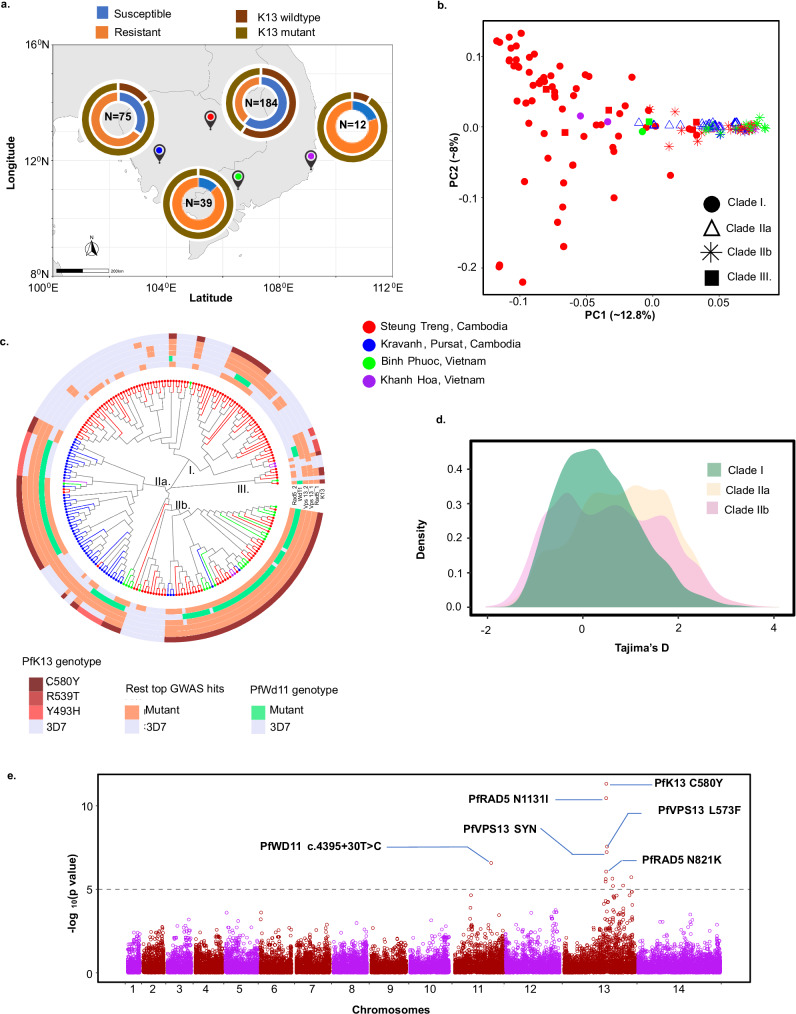
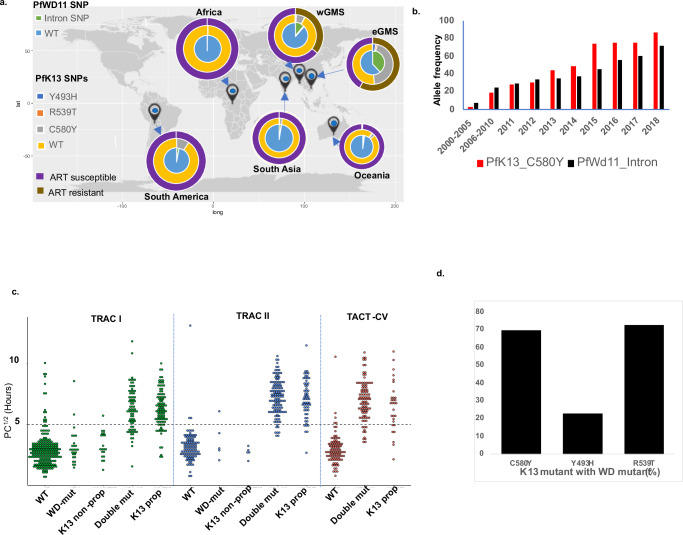
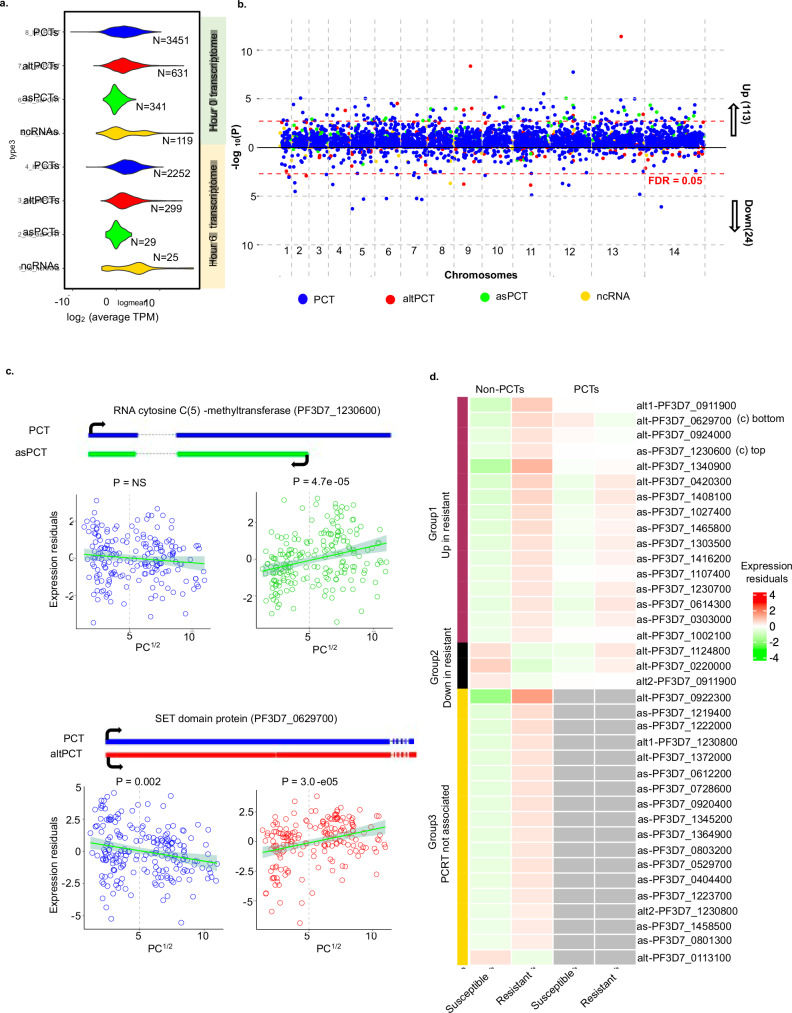
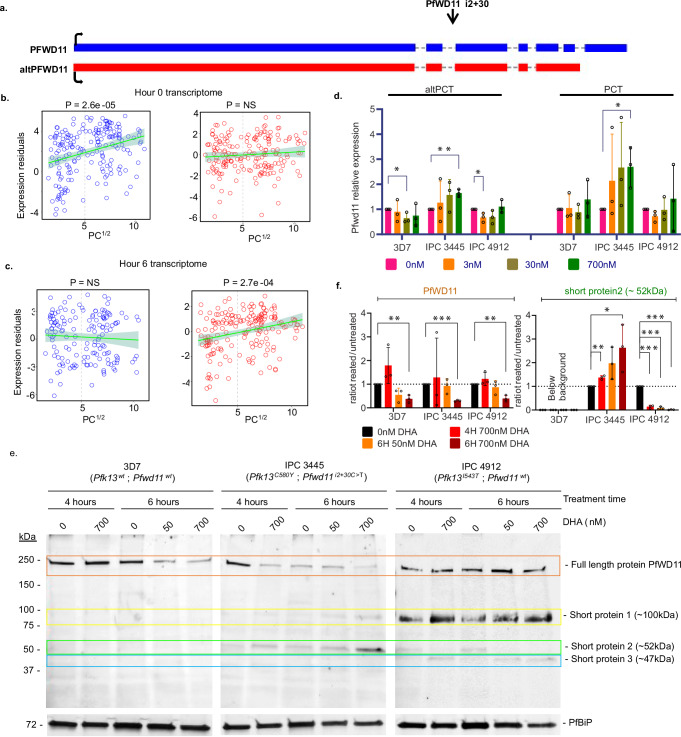
The emergence of Plasmodium falciparum parasites resistant to artemisinins compromises the efficacy of Artemisinin Combination Therapies (ACTs), the global first-line malaria treatment. Artemisinin resistance is a complex genetic trait in which nonsynonymous SNPs in PfK13 cooperate with other genetic variations. Here, we present population genomic/transcriptomic analyses of P. falciparum collected from patients with uncomplicated malaria in Cambodia and Vietnam between 2018 and 2020. Besides the PfK13 SNPs, several polymorphisms, including nonsynonymous SNPs (N1131I and N821K) in PfRad5 and an intronic SNP in PfWD11 (WD40 repeat-containing protein on chromosome 11), appear to be associated with artemisinin resistance, possibly as new markers. There is also a defined set of genes whose steady-state levels of mRNA and/or splice variants or antisense transcripts correlate with artemisinin resistance at the base level. In vivo transcriptional responses to artemisinins indicate the resistant parasite's capacity to decelerate its intraerythrocytic developmental cycle (IDC), which can contribute to the resistant phenotype. During this response, PfRAD5 and PfWD11 upregulate their respective alternatively/aberrantly spliced isoforms, suggesting their contribution to the protective response to artemisinins. PfRAD5 and PfWD11 appear under selective pressure in the Greater Mekong Sub-region over the last decade, suggesting their role in the genetic background of the artemisinin resistance.
恶性疟原虫对青蒿素产生耐药性,这损害了青蒿素联合疗法(ACTs)的疗效,而ACTs是全球一线抗疟治疗方法。青蒿素抗性是一种复杂的遗传性状,其中PfK13中的非同义单核苷酸多态性(SNP)与其他遗传变异相互作用。在此,我们展示了2018年至2020年间从柬埔寨和越南无并发症疟疾患者中收集的恶性疟原虫的群体基因组/转录组分析结果。除了PfK13 SNP外,包括PfRad5中的非同义SNP(N1131I和N821K)以及PfWD11(11号染色体上含WD40重复蛋白)中的内含子SNP在内的几种多态性似乎与青蒿素抗性相关,可能作为新的标志物。还有一组特定的基因,其mRNA和/或剪接变体或反义转录本的稳态水平在基础层面与青蒿素抗性相关。对青蒿素的体内转录反应表明,耐药寄生虫有能力减缓其红细胞内发育周期(IDC),这可能导致耐药表型。在这一反应过程中,PfRAD5和PfWD11上调各自的可变/异常剪接异构体,表明它们对青蒿素的保护反应有贡献。在过去十年中,PfRAD5和PfWD11在大湄公河次区域似乎受到选择压力,表明它们在青蒿素抗性的遗传背景中发挥作用。