Department of Biological Sciences, State University of New York-Buffalo, Buffalo, New York, United States of America.
PLoS One. 2012;7(4):e32294. doi: 10.1371/journal.pone.0032294. Epub 2012 Apr 4.
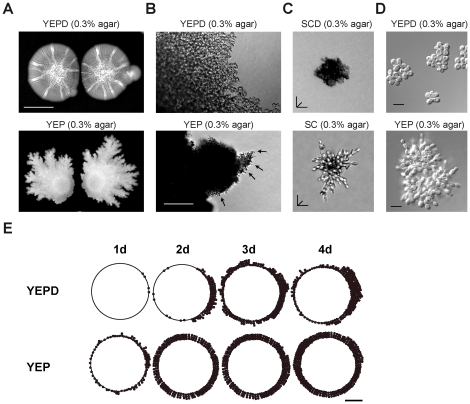
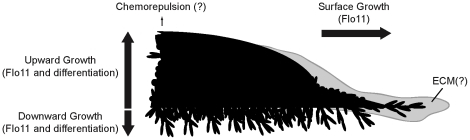
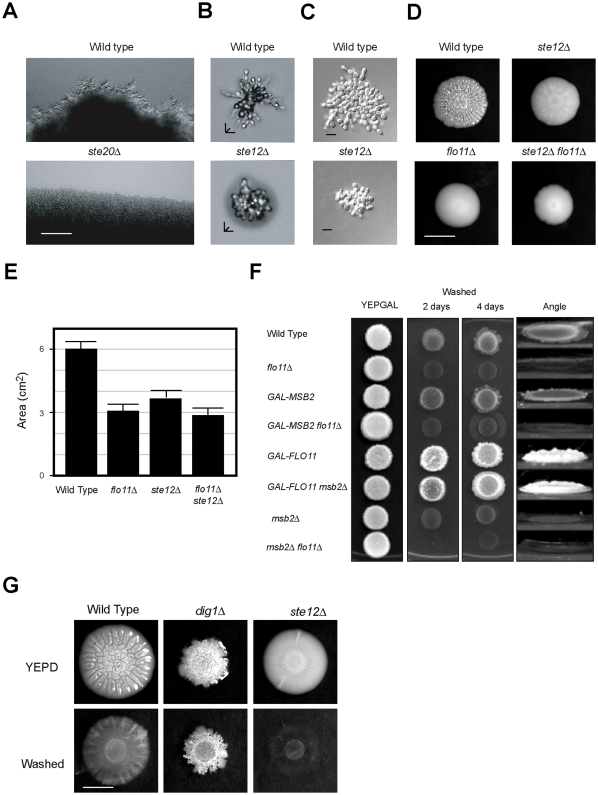
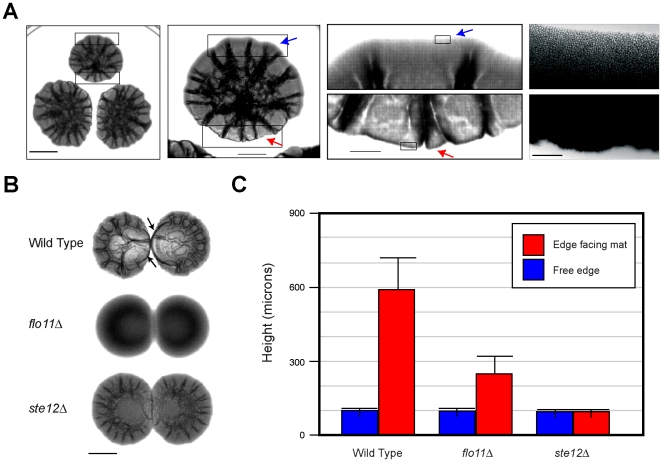
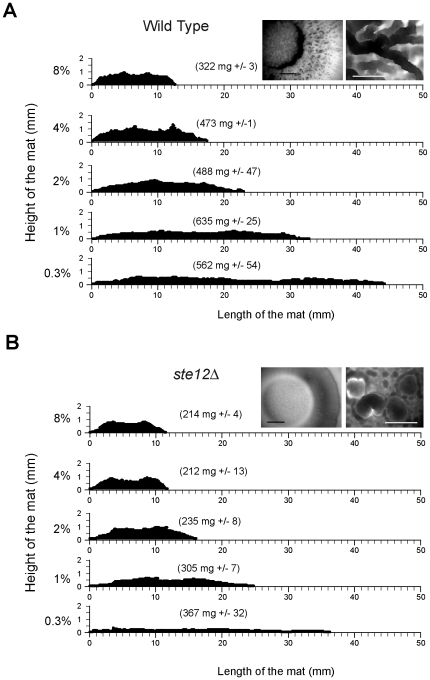
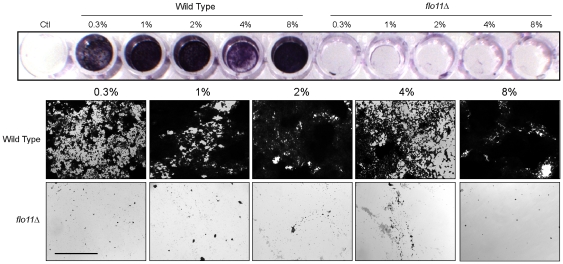
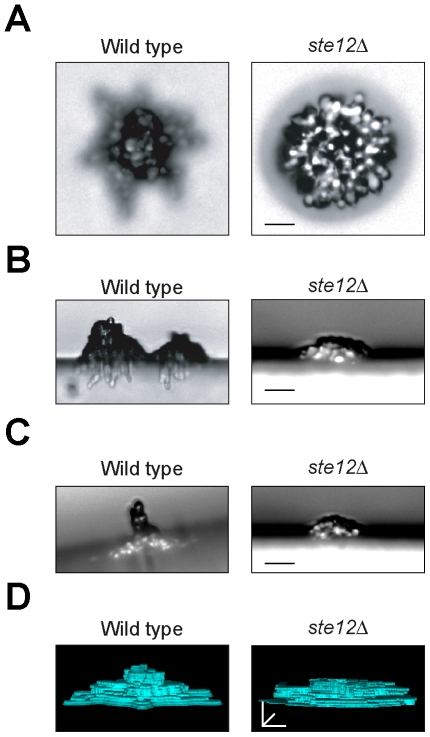
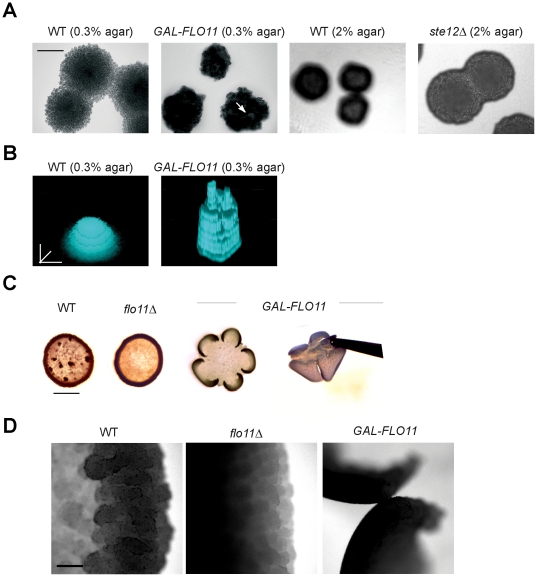
Fungal species exhibit diverse behaviors when presented with extracellular challenges. Pathogenic fungi can undergo cell differentiation and biofilm formation in response to fluctuating nutrient levels, and these responses are required for virulence. In the model fungal eukaryote Saccharomyces cerevisiae, nutrient limitation induces filamentous growth and biofilm/mat formation. Both responses require the same signal transduction (MAPK) pathway and the same cell adhesion molecule (Flo11) but have been studied under different conditions. We found that filamentous growth and mat formation are aspects of a related response that is regulated by the MAPK pathway. Cells in yeast-form mats differentiated into pseudohyphae in response to nutrient limitation. The MAPK pathway regulated mat expansion (in the plane of the XY-axis) and substrate invasion (downward in the plane of the Z-axis), which optimized the mat's response to extracellular nutrient levels. The MAPK pathway also regulated an upward growth pattern (in the plane of the Z-axis) in response to nutrient limitation and changes in surface rigidity. Upward growth allowed for another level of mat responsiveness and resembled a type of colonial chemorepulsion. Together our results show that signaling pathways play critical roles in regulating social behaviors in which fungal cells participate. Signaling pathways may regulate similar processes in pathogens, whose highly nuanced responses are required for virulence.
真菌物种在面临细胞外挑战时表现出多样化的行为。致病性真菌可以根据营养水平的波动进行细胞分化和生物膜形成,这些反应是毒力所必需的。在模式真菌真核生物酿酒酵母中,营养限制诱导丝状生长和生物膜/基质形成。这两种反应都需要相同的信号转导(MAPK)途径和相同的细胞粘附分子(Flo11),但在不同条件下进行了研究。我们发现,丝状生长和基质形成是由 MAPK 途径调节的相关反应的两个方面。在营养限制下,酵母形态基质中的细胞分化为假菌丝。MAPK 途径调节基质扩展(在 XY 轴平面上)和基质向下在 Z 轴平面上的入侵,这优化了基质对细胞外营养水平的反应。MAPK 途径还调节了对营养限制和表面刚性变化的向上生长模式(在 Z 轴平面上)。向上生长允许了另一种基质反应水平,类似于一种殖民地化学回避。总之,我们的研究结果表明,信号通路在调节真菌细胞参与的社会行为中起着关键作用。信号通路可能调节病原体中的类似过程,其高度细致的反应是毒力所必需的。