Instituto Oswaldo Cruz, FIOCRUZ, Rio de Janeiro, Rio de Janeiro, Brazil.
PLoS One. 2012;7(4):e34495. doi: 10.1371/journal.pone.0034495. Epub 2012 Apr 5.
It has been suggested that genes involved in the reproductive biology of insect disease vectors are potential targets for future alternative methods of control. Little is known about the molecular biology of reproduction in phlebotomine sand flies and there is no information available concerning genes that are expressed in male reproductive organs of Lutzomyia longipalpis, the main vector of American visceral leishmaniasis and a species complex.
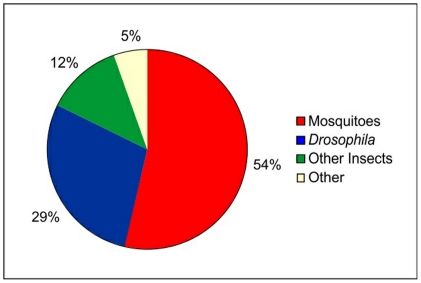
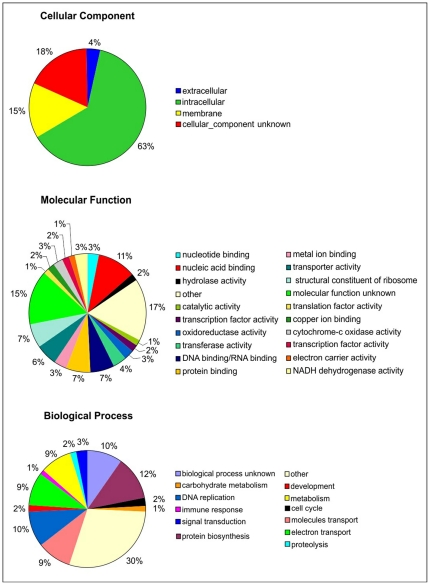
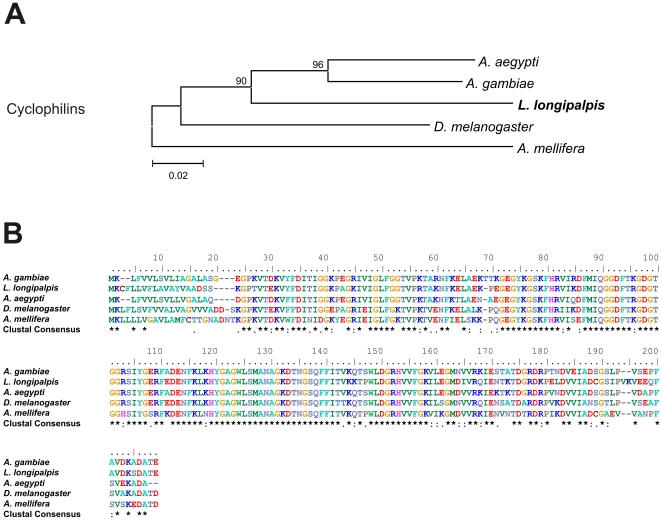
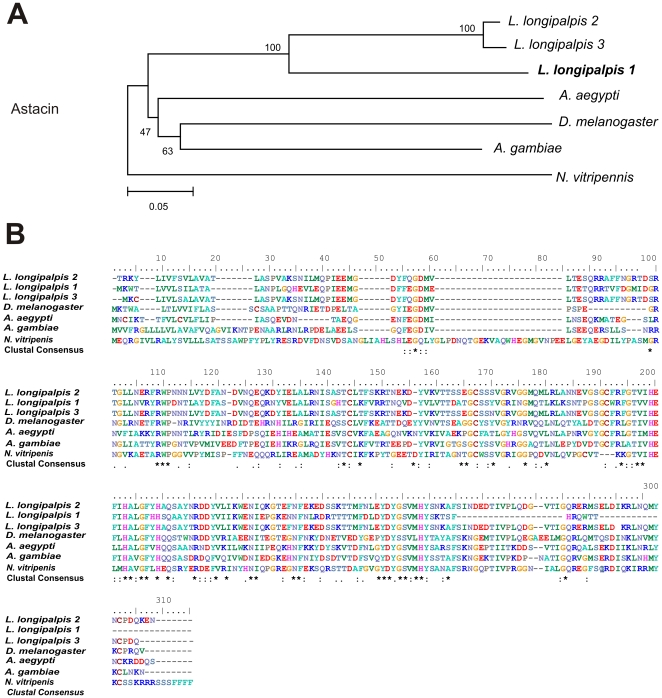
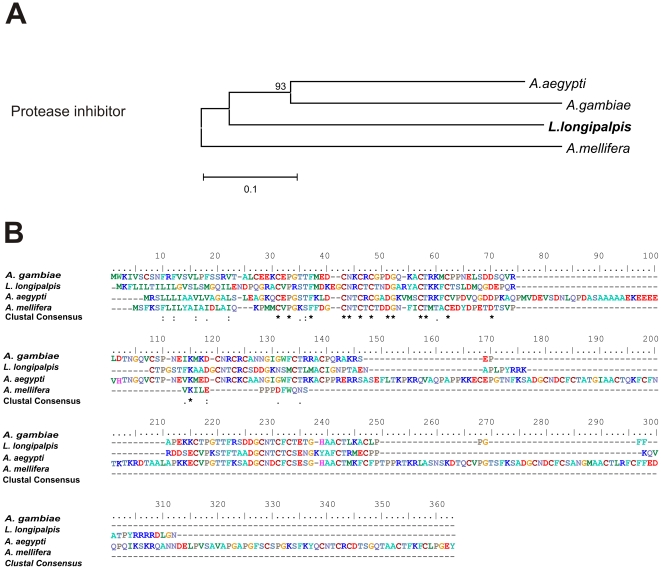
METHODS/PRINCIPAL FINDINGS: We generated 2678 high quality ESTs ("Expressed Sequence Tags") of L. longipalpis male reproductive organs that were grouped in 1391 non-redundant sequences (1136 singlets and 255 clusters). BLAST analysis revealed that only 57% of these sequences share similarity with a L. longipalpis female EST database. Although no more than 36% of the non-redundant sequences showed similarity to protein sequences deposited in databases, more than half of them presented the best-match hits with mosquito genes. Gene ontology analysis identified subsets of genes involved in biological processes such as protein biosynthesis and DNA replication, which are probably associated with spermatogenesis. A number of non-redundant sequences were also identified as putative male reproductive gland proteins (mRGPs), also known as male accessory gland protein genes (Acps).
The transcriptome analysis of L. longipalpis male reproductive organs is one step further in the study of the molecular basis of the reproductive biology of this important species complex. It has allowed the identification of genes potentially involved in spermatogenesis as well as putative mRGPs sequences, which have been studied in many insect species because of their effects on female post-mating behavior and physiology and their potential role in sexual selection and speciation. These data open a number of new avenues for further research in the molecular and evolutionary reproductive biology of sand flies.
有人认为,参与昆虫病媒生殖生物学的基因是未来替代控制方法的潜在目标。关于白蛉的生殖分子生物学知之甚少,关于在美洲内脏利什曼病的主要媒介——长刺舌蝇的雄性生殖器官中表达的基因也没有信息。
方法/主要发现:我们生成了 2678 个高质量的白蛉雄性生殖器官 EST(表达序列标签),这些 EST 分为 1391 个非冗余序列(1136 个单序列和 255 个簇)。BLAST 分析显示,这些序列中只有 57%与白蛉雌虫 EST 数据库具有相似性。尽管不超过 36%的非冗余序列与数据库中存储的蛋白质序列具有相似性,但其中一半以上与蚊子基因具有最佳匹配。GO 分析确定了参与生物过程的基因子集,如蛋白质生物合成和 DNA 复制,这些过程可能与精子发生有关。许多非冗余序列也被鉴定为潜在的雄性生殖腺蛋白(mRGPs),也称为雄性附腺蛋白基因(Acps)。
长刺舌蝇雄性生殖器官的转录组分析是对这一重要种复合体生殖生物学分子基础研究的进一步深入。它鉴定了可能参与精子发生的基因以及潜在的 mRGP 序列,这些序列在许多昆虫物种中都有研究,因为它们对雌性交配后行为和生理学的影响,以及它们在性选择和物种形成中的潜在作用。这些数据为进一步研究沙蝇的分子和进化生殖生物学开辟了许多新途径。