Harrefors Christina, Sävenstedt Stefan, Lundquist Anders, Lundquist Bengt, Axelsson Karin
Department of Health Science, Luleå University of Technology, Luleå, Sweden.
Open Nurs J. 2012;6:20-9. doi: 10.2174/1874434601206010020. Epub 2012 Apr 2.
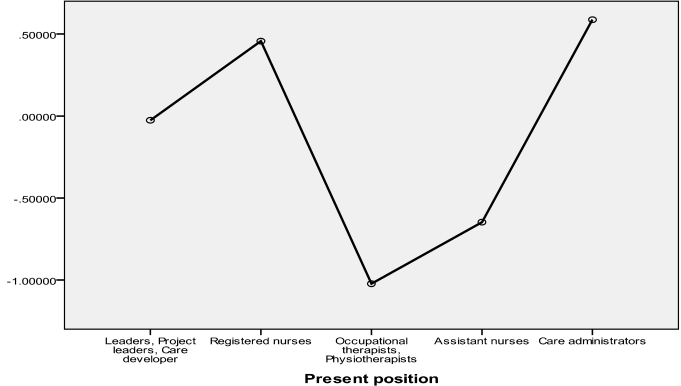
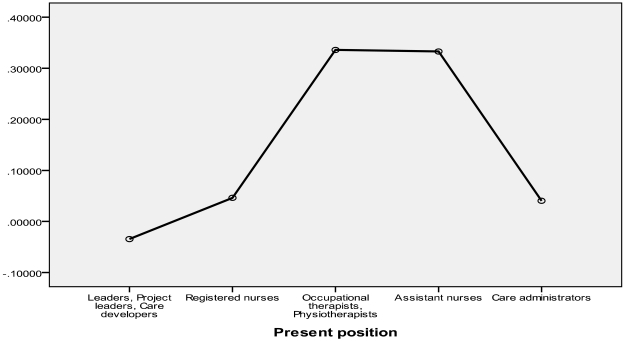
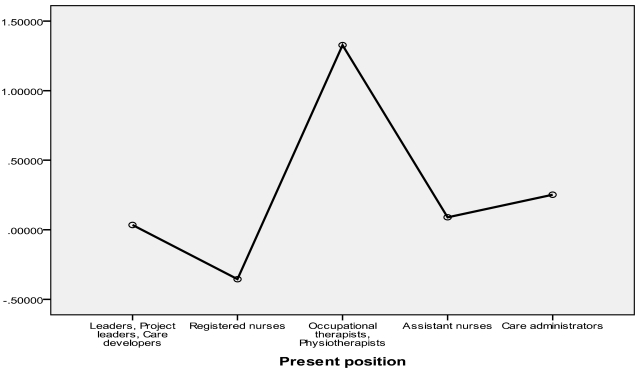
Cognitive impairments influence the possibility of persons with dementia to remember daily events and maintain a sense of self. In order to address these problems a digital photo diary was developed to capture information about events in daily life. The device consisted of a wearable digital camera, smart phone with Global Positioning System (GPS) and a home memory station with computer for uploading the photographs and touch screen. The aim of this study was to describe professional caregiver's perceptions on how persons with mild dementia might experience the usage of this digital photo diary from both a situation when wearing the camera and a situation when viewing the uploaded photos, through a questionnaire with 408 respondents. In order to catch the professional caregivers' perceptions a questionnaire with the semantic differential technique was used and the main question was "How do you think Hilda (the fictive person in the questionnaire) feels when she is using the digital photo diary?". The factor analysis revealed three factors; Sense of autonomy, Sense of self-esteem and Sense of trust. An interesting conclusion that can be drawn is that professional caregivers had an overall positive view of the usage of digital photo diary as supporting autonomy for persons with mild dementia. The meaningfulness of each situation when wearing the camera and viewing the uploaded pictures to be used in two different situations and a part of an integrated assistive device has to be considered separately. Individual needs and desires of the person who is living with dementia and the context of each individual has to be reflected on and taken into account before implementing assistive digital devices as a tool in care.
认知障碍会影响痴呆症患者记住日常事件并保持自我意识的能力。为了解决这些问题,开发了一种数字照片日记来记录日常生活中的事件信息。该设备包括一个可穿戴数码相机、一部带有全球定位系统(GPS)的智能手机以及一个带有用于上传照片的计算机和触摸屏的家庭记忆站。本研究的目的是通过对408名受访者进行问卷调查,描述专业护理人员对于轻度痴呆症患者在佩戴相机和查看上传照片这两种情况下使用这种数字照片日记的体验的看法。为了了解专业护理人员的看法,使用了采用语义差异技术的问卷,主要问题是“你认为希尔达(问卷中的虚构人物)在使用数字照片日记时是什么感受?”。因子分析揭示了三个因素:自主感、自尊感和信任感。可以得出的一个有趣结论是,专业护理人员对数字照片日记的使用总体持积极态度,认为它有助于轻度痴呆症患者的自主。在将辅助数字设备作为护理工具实施之前,必须分别考虑在两种不同情况下佩戴相机和查看上传图片这两种情况的意义,以及作为综合辅助设备一部分的意义。必须考虑痴呆症患者的个人需求和愿望以及每个个体的具体情况。