Bio-Defence Programme, DMERI, DSO National Laboratories, Singapore, Singapore.
PLoS One. 2012;7(4):e33451. doi: 10.1371/journal.pone.0033451. Epub 2012 Apr 3.
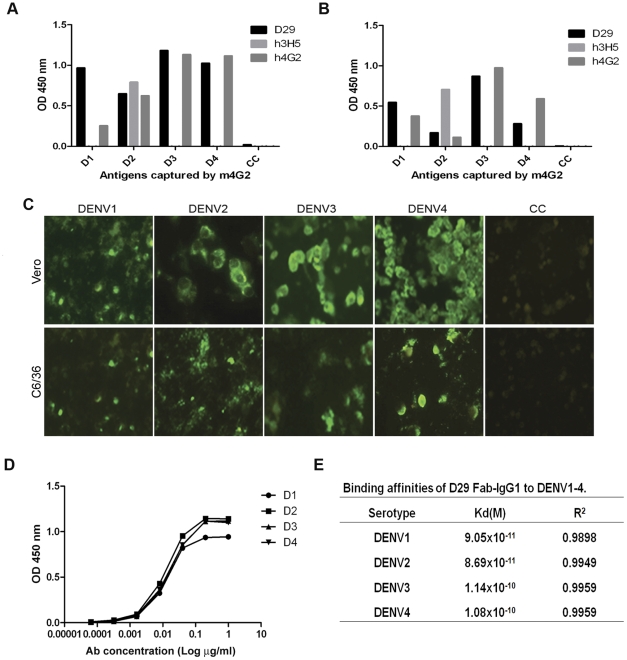
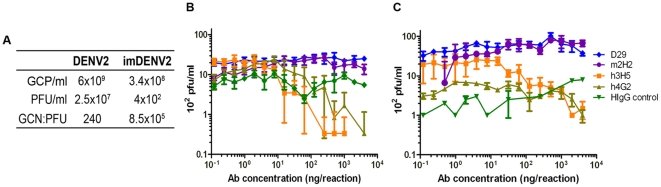
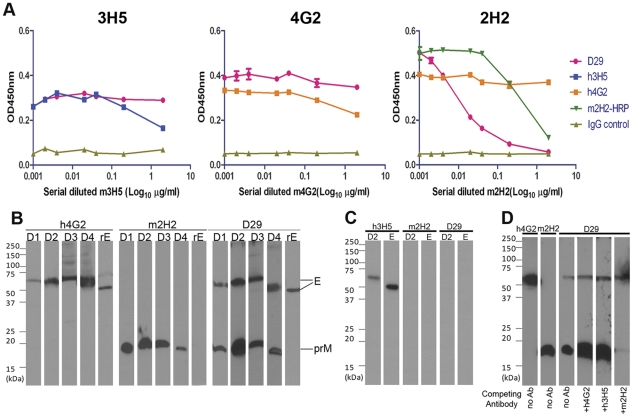
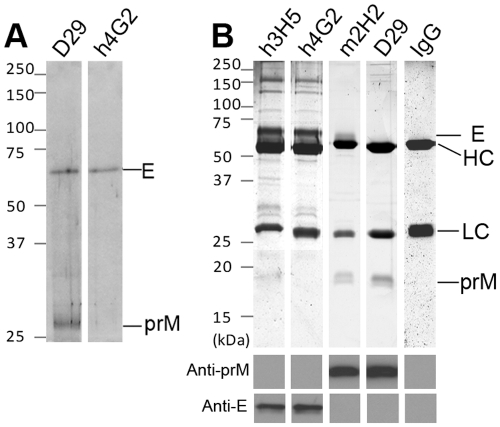
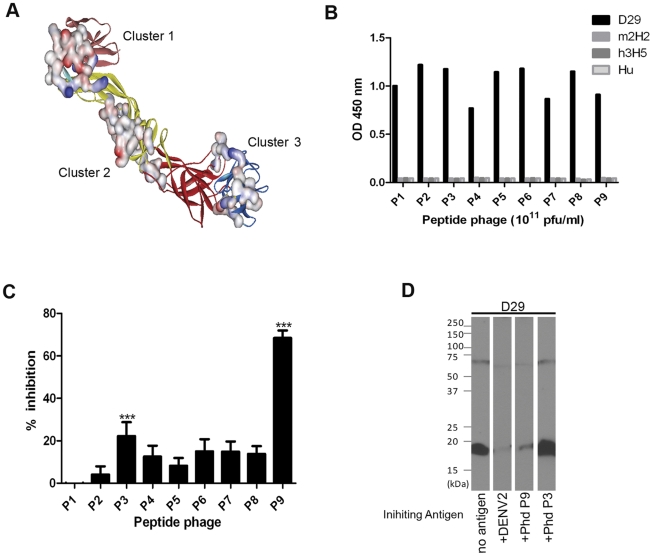
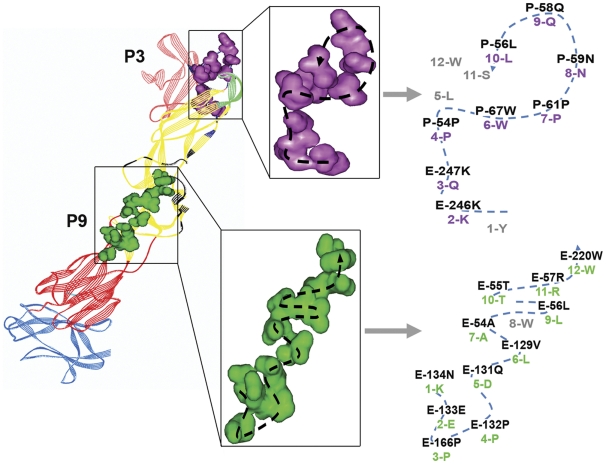
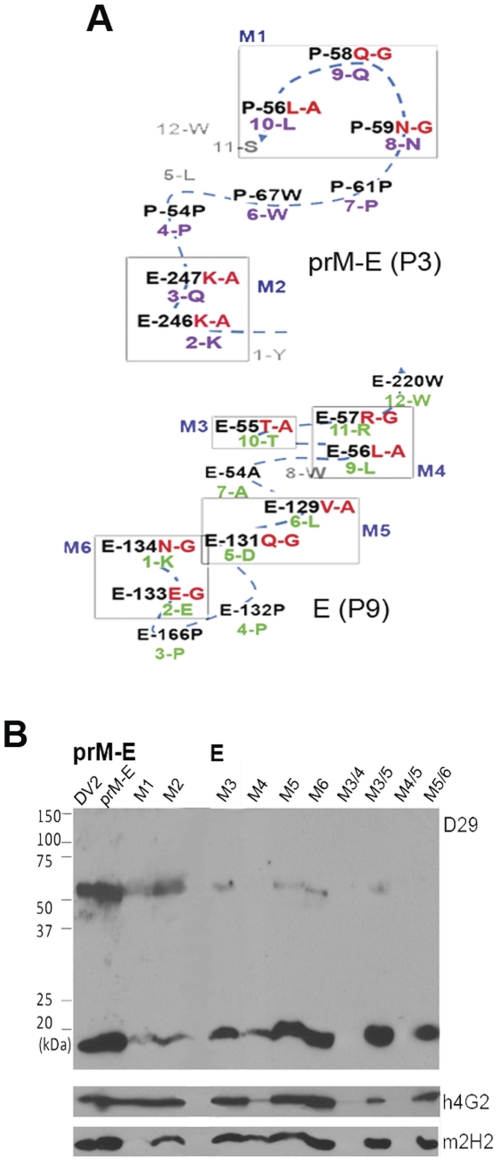
Dengue virus (DENV) is a major mosquito-borne pathogen infecting up to 100 million people each year; so far no effective treatment or vaccines are available. Recently, highly cross-reactive and infection-enhancing pre-membrane (prM)-specific antibodies were found to dominate the anti-DENV immune response in humans, raising concern over vaccine candidates that contain native dengue prM sequences. In this study, we have isolated a broadly cross-reactive prM-specific antibody, D29, during a screen with a non-immunized human Fab-phage library against the four serotypes of DENV. The antibody is capable of restoring the infectivity of virtually non-infectious immature DENV (imDENV) in FcγR-bearing K562 cells. Remarkably, D29 also cross-reacted with a cryptic epitope on the envelope (E) protein located to the DI/DII junction as evidenced by site-directed mutagenesis. This cryptic epitope, while inaccessible to antibody binding in a native virus particle, may become exposed if E is not properly folded. These findings suggest that generation of anti-prM antibodies that enhance DENV infection may not be completely avoided even with immunization strategies employing E protein alone or subunits of E proteins.
登革热病毒(DENV)是一种主要的蚊媒病原体,每年感染多达 1 亿人;迄今为止,尚无有效的治疗方法或疫苗。最近,发现高度交叉反应和感染增强的前膜(prM)特异性抗体主导了人类对登革热病毒的免疫反应,这引起了对含有天然登革热病毒 prM 序列的疫苗候选物的关注。在这项研究中,我们在针对登革热病毒四个血清型的非免疫人 Fab 噬菌体文库筛选中分离到了一种广泛交叉反应的 prM 特异性抗体 D29。该抗体能够恢复在 FcγR 表达的 K562 细胞中具有几乎无感染性的不成熟登革热病毒(imDENV)的感染性。值得注意的是,D29 还与位于 DI/DII 交界处的包膜(E)蛋白上的一个隐蔽表位发生交叉反应,这一点通过定点突变得到了证实。尽管在天然病毒颗粒中,该隐蔽表位无法与抗体结合,但如果 E 蛋白未正确折叠,该表位可能会暴露出来。这些发现表明,即使使用仅含有 E 蛋白或 E 蛋白亚单位的免疫策略,也可能无法完全避免产生增强登革热病毒感染的抗 prM 抗体。