Brain Tumor Treatment and Research Program, University of Alabama at Birmingham, Birmingham, Alabama, USA.
Cancer. 2012 Nov 15;118(22):5601-7. doi: 10.1002/cncr.27585. Epub 2012 Apr 19.
Cilengitide is a selective integrin inhibitor that is well tolerated and has demonstrated biologic activity in patients with recurrent malignant glioma. The primary objectives of this randomized phase 2 trial were to determine the safety and efficacy of cilengitide when combined with radiation and temozolomide for patients with newly diagnosed glioblastoma multiforme and to select a dose for comparative clinical testing.
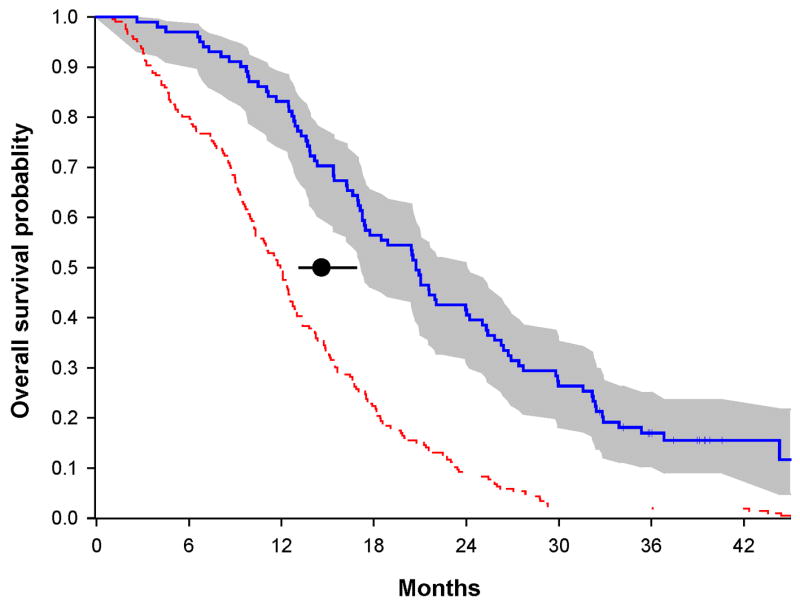
In total, 112 patients were accrued. Eighteen patients received standard radiation and temozolomide with cilengitide in a safety run-in phase followed by a randomized phase 2 trial with 94 patients assigned to either a 500 mg dose group or 2000 mg dose group. The trial was designed to estimate overall survival benefit compared with a New Approaches to Brain Tumor Therapy (NABTT) Consortium internal historic control and data from the published European Organization for Research and Treatment of Cancer (EORTC) trial EORTC 26981.
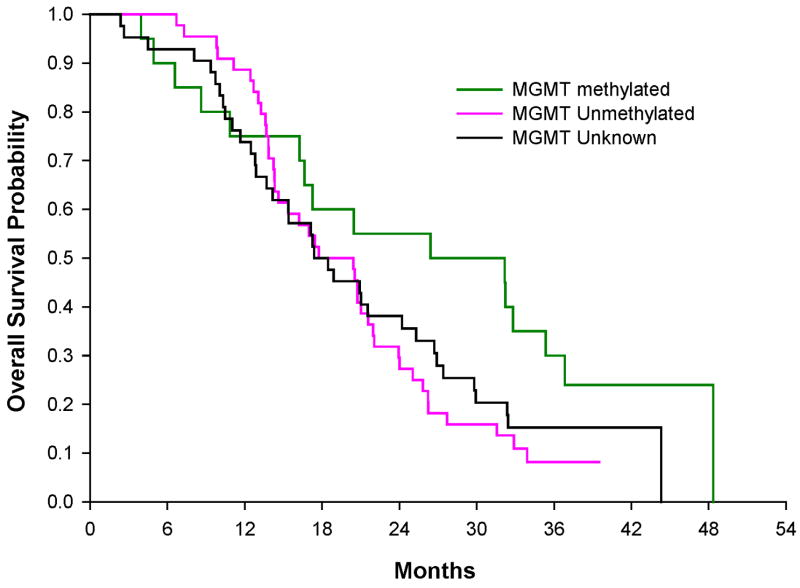
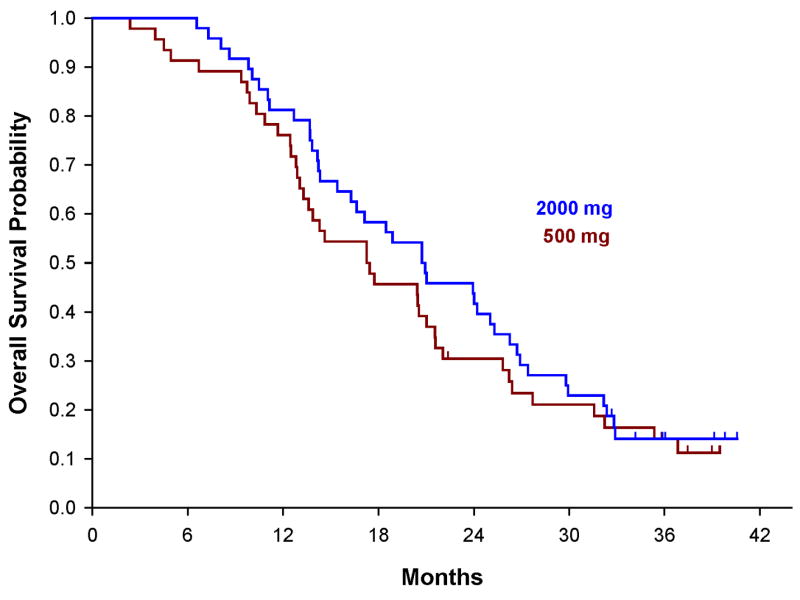
Cilengitide at all doses studied was well tolerated with radiation and temozolomide. The median survival was 19.7 months for all patients, 17.4 months for the patients in the 500 mg dose group, 20.8 months for patients in the 2000 mg dose group, 30 months for patients who had methylated O6-methylguanine-DNA methyltransferase (MGMT) status, and 17.4 months for patients who had unmethylated MGMT status. For patients aged ≤70 years, the median survival and survival at 24 months was superior to what was observed in the EORTC trial (20.7 months vs 14.6 months and 41% vs 27%, respectively; P = .008).
Cilengitide was well tolerated when combined with standard chemoradiation and may improve survival for patients newly diagnosed with glioblastoma multiforme regardless of MGMT methylation status. The authors concluded that, from an efficacy and safety standpoint, future trials of this agent in this population should use the 2000 mg dose.
西仑吉肽是一种选择性整合素抑制剂,在复发性恶性脑胶质瘤患者中具有良好的耐受性和生物活性。这项随机 2 期试验的主要目的是确定新诊断的多形性胶质母细胞瘤患者联合使用西仑吉肽、放疗和替莫唑胺的安全性和疗效,并为比较临床试验选择剂量。
共入组 112 例患者。18 例患者接受标准放疗和替莫唑胺联合西仑吉肽的安全性预试验,随后 94 例患者进入随机 2 期试验,分为 500mg 剂量组和 2000mg 剂量组。该试验旨在估计与新的脑肿瘤治疗方法(NABTT)联盟内部历史对照和已发表的欧洲癌症研究与治疗组织(EORTC)试验 EORTC 26981 的数据相比的总生存获益。
所有研究剂量的西仑吉肽与放疗和替莫唑胺联合应用均具有良好的耐受性。所有患者的中位生存期为 19.7 个月,500mg 剂量组患者为 17.4 个月,2000mg 剂量组患者为 20.8 个月,甲基化 O6-甲基鸟嘌呤-DNA 甲基转移酶(MGMT)状态患者为 30 个月,未甲基化 MGMT 状态患者为 17.4 个月。对于年龄≤70 岁的患者,中位生存期和 24 个月生存率均优于 EORTC 试验(20.7 个月比 14.6 个月,41%比 27%;P=0.008)。
西仑吉肽与标准放化疗联合应用具有良好的耐受性,可能改善新诊断的胶质母细胞瘤患者的生存,无论 MGMT 甲基化状态如何。作者得出结论,从疗效和安全性的角度来看,未来在该人群中进行该药物的试验应使用 2000mg 剂量。